Virginia SOL 5.1
SOL Standard (Key Ideas Cluster)
The student will demonstrate an understanding of scientific and engineering practices by asking questions and defining problems ask testable questions based on observations and predict reasonable outcomes based on patterns develop hypotheses as cause-and-effect relationship define design problems that can be solved through the development of an object, tool, process, or system planning and carrying out investigations collaboratively plan and conduct investigations to produce data identify independent variable, dependent variables, and constants determine data that should be collected to answer a testable question take metric measurements using appropriate tools use tools and/or materials to design and/or build a device that solves a specific problem interpreting, analyzing, and evaluating data represent and analyze data using tables and graphs organize simple data sets to reveal patterns that suggest relationships compare and contrast data collected by different groups and discuss similarities and differences in their findings use data to evaluate and refine design solutions constructing and critiquing conclusions and explanations construct and/or support arguments with evidence, data, and/or a model describe how scientific ideas apply to design solutions generate and compare multiple solutions to problems based on how well they meet the criteria and constraints developing and using models develop models using an analogy, example, or abstract representation to describe a scientific principle or design solution identify limitations of models obtaining, evaluating, and communicating information read and comprehend reading-level-appropriate texts and/or other reliable media communicate scientific information, design ideas, and/or solutions with others
Virginia Standards of Learning for Science
Cluster contents
Key Ideas in This Standard
5.1 is a Standards of Learning science standard. These are the key ideas and practices under it.
- 5.1.a
asking questions and defining problems
- 5.1.a.i
ask testable questions based on observations and predict reasonable outcomes based on patterns
- 5.1.a.ii
develop hypotheses as cause-and-effect relationship
- 5.1.a.iii
define design problems that can be solved through the development of an object, tool, process, or system
- 5.1.b
planning and carrying out investigations
- 5.1.b.i
collaboratively plan and conduct investigations to produce data
- 5.1.b.ii
identify independent variable, dependent variables, and constants
- 5.1.b.iii
determine data that should be collected to answer a testable question
- 5.1.b.iv
take metric measurements using appropriate tools
- 5.1.b.v
use tools and/or materials to design and/or build a device that solves a specific problem
- 5.1.c
interpreting, analyzing, and evaluating data
- 5.1.c.i
represent and analyze data using tables and graphs
- 5.1.c.ii
organize simple data sets to reveal patterns that suggest relationships
- 5.1.c.iii
compare and contrast data collected by different groups and discuss similarities and differences in their findings
- 5.1.c.iv
use data to evaluate and refine design solutions
- 5.1.d
constructing and critiquing conclusions and explanations
- 5.1.d.i
construct and/or support arguments with evidence, data, and/or a model
- 5.1.d.ii
describe how scientific ideas apply to design solutions
- 5.1.d.iii
generate and compare multiple solutions to problems based on how well they meet the criteria and constraints
- 5.1.e
developing and using models
- 5.1.e.i
develop models using an analogy, example, or abstract representation to describe a scientific principle or design solution
- 5.1.e.ii
identify limitations of models
- 5.1.f
obtaining, evaluating, and communicating information
- 5.1.f.i
read and comprehend reading-level-appropriate texts and/or other reliable media
- 5.1.f.ii
communicate scientific information, design ideas, and/or solutions with others
Teacher's field guide
What This Cluster Means
What Students Need to Do
- Students turn observations into testable questions, predictions, and cause-and-effect hypotheses. They plan fair tests, identify variables, measure with metric tools, and organize data in tables and graphs. They also build, test, compare, and explain models or design solutions using evidence.
What Mastery Looks Like
- A student can plan an investigation that changes one factor, controls other conditions, and collects useful measurements. The student can find patterns in data, compare results across groups, and support a conclusion with evidence. The student can improve a design and explain the limits of a model.
Common Misconceptions
- Students may write broad questions that cannot be tested or confuse predictions with hypotheses. They often switch the independent and dependent variables or overlook conditions that should stay constant. They may treat one trial as enough evidence, choose the wrong graph, or claim a model shows every feature of the real object.
How to Assess It
- Give students this prompt: “Does ramp height affect how far a toy car travels?” Ask them to write a hypothesis, name the variables and constants, choose a metric measurement tool, and sketch a data table.
Lesson moves
Ways to Teach It
Test paper helicopters with one blade length changed, measure fall time in seconds, graph three trials, and compare class results.
Discuss two groups’ different plant-growth results, then write which claim is better supported and what evidence makes it stronger.
Play a variable-sort game using investigation cards labeled change, measure, or keep the same, then explain each choice.
Build a foil boat for carrying coins, test three versions, and use the data to improve the design.
Free download
Printable 5.1 Worksheet
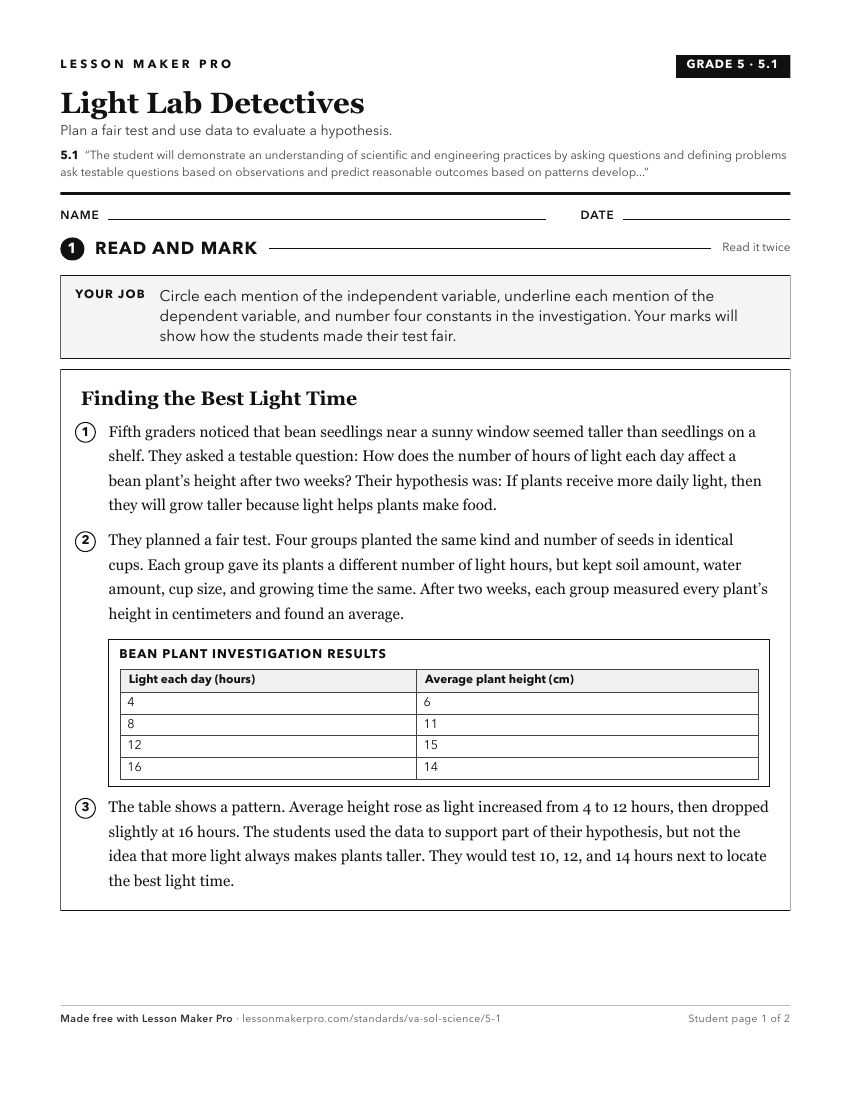
A ready-to-print activity worksheet aligned to 5.1, with an answer key for the teacher on its own page. No account needed.
PDF, US Letter, prints cleanly in black and white.
Download the worksheetKeep exploring
Related Standards
Turn this cluster into a lesson
Grade, subject, topic, and the complete cluster are prefilled. Create one free, no account needed.
Also for this cluster:Make a WorksheetMake a QuizMake a Sub Lesson