Virginia SOL K.1
SOL Standard (Key Ideas Cluster)
The student will demonstrate an understanding of scientific and engineering practices by asking questions and defining problems ask questions based on observations identify a problem based on need make predictions based on observations planning and carrying out investigations make observations to collect data identify characteristics and properties of objects through observations measure the relative length and weight of common objects record information from investigations interpreting, analyzing, and evaluating data describe patterns classify and/or sequence objects based on a single physical characteristic or property organize and represent data read and interpret data in object graphs, picture graphs, and tables constructing and critiquing conclusions and explanations make simple conclusions based on data or observations developing and using models distinguish between a model and an actual object obtaining, evaluating, and communicating information communicate comparative measures (e.g., heavier, lighter, longer, shorter, more, less, hotter, colder) communicate observations using pictures, drawings, and/or speech
Virginia Standards of Learning for Science
Cluster contents
Key Ideas in This Standard
K.1 is a Standards of Learning science standard. These are the key ideas and practices under it.
- K.1.a
asking questions and defining problems
- K.1.a.i
ask questions based on observations
- K.1.a.ii
identify a problem based on need
- K.1.a.iii
make predictions based on observations
- K.1.b
planning and carrying out investigations
- K.1.b.i
make observations to collect data
- K.1.b.ii
identify characteristics and properties of objects through observations
- K.1.b.iii
measure the relative length and weight of common objects
- K.1.b.iv
record information from investigations
- K.1.c
interpreting, analyzing, and evaluating data
- K.1.c.i
describe patterns
- K.1.c.ii
classify and/or sequence objects based on a single physical characteristic or property
- K.1.c.iii
organize and represent data
- K.1.c.iv
read and interpret data in object graphs, picture graphs, and tables
- K.1.d
constructing and critiquing conclusions and explanations
- K.1.d.i
make simple conclusions based on data or observations
- K.1.e
developing and using models
- K.1.e.i
distinguish between a model and an actual object
- K.1.f
obtaining, evaluating, and communicating information
- K.1.f.i
communicate comparative measures (e.g., heavier, lighter, longer, shorter, more, less, hotter, colder)
- K.1.f.ii
communicate observations using pictures, drawings, and/or speech
Teacher's field guide
What This Cluster Means
What Students Need to Do
- Students observe objects, ask questions, make predictions, and carry out simple tests. They compare, measure, sort, sequence, and record findings with pictures or tables. They use data to make conclusions and explain their thinking.
What Mastery Looks Like
- A student can choose one property to sort objects, compare length or weight, and record results clearly. The student can read a simple graph, describe a pattern, support a conclusion with observations, and explain how a model differs from a real object.
Common Misconceptions
- Students may treat a prediction as a random guess or change the sorting rule halfway through. They may assume a larger object is always heavier or count graph pictures incorrectly. They may also think a model must look exactly like the real object.
How to Assess It
- Give each student four classroom objects, a balance, and linking cubes. Ask the student to sort the objects, compare two, record one result, and state a conclusion.
Lesson moves
Ways to Teach It
Have students compare four classroom objects with a balance and linking cubes, then record heavier, lighter, longer, and shorter with drawings.
Show a melting ice cube and ask, “What do you notice, what do you predict, and what observation supports your idea?”
Play Mystery Sort with buttons, where one student sorts by a single property and classmates identify the rule.
Test paper, foil, and fabric as covers for a pretend leaky lunch container, then choose a material using the results.
Free download
Printable K.1 Worksheet
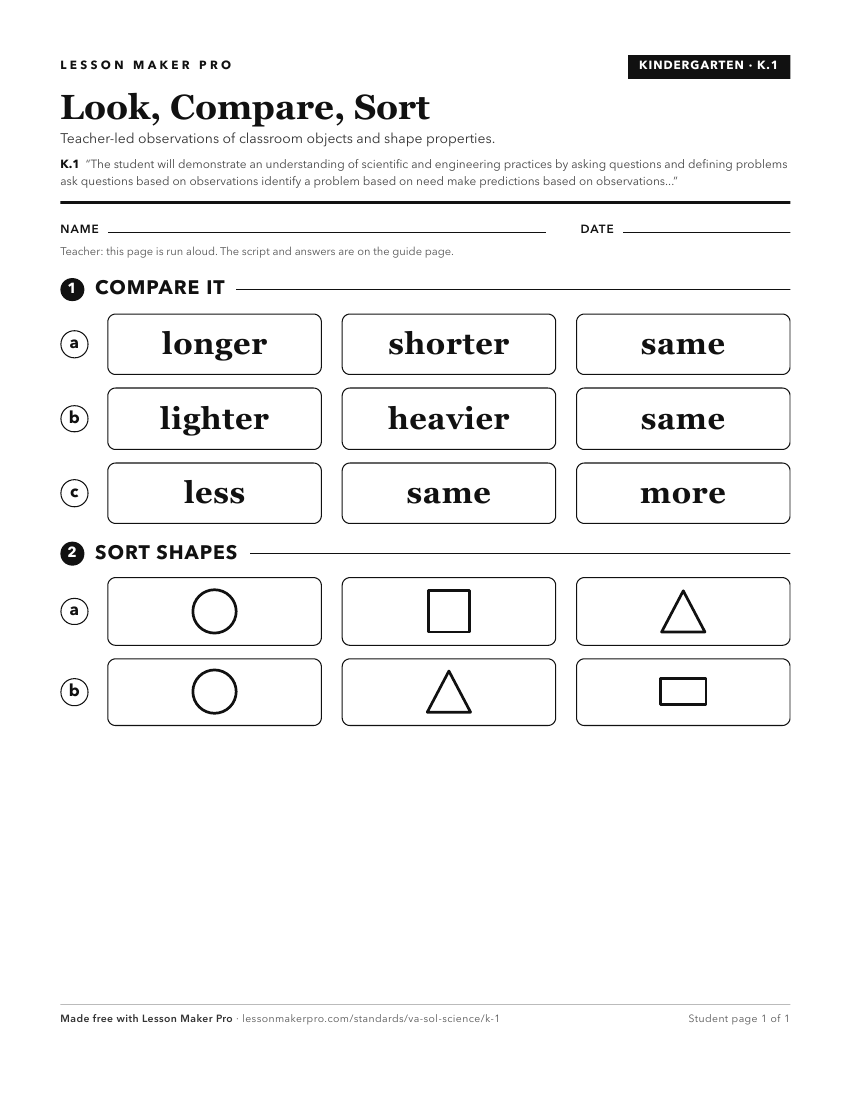
A ready-to-print activity worksheet aligned to K.1, with an answer key for the teacher on its own page. No account needed.
PDF, US Letter, prints cleanly in black and white.
Download the worksheetKeep exploring
Related Standards
Turn this cluster into a lesson
Grade, subject, topic, and the complete cluster are prefilled. Create one free, no account needed.
Also for this cluster:Make a WorksheetMake a QuizMake a Sub Lesson