Virginia SOL 4.1
SOL Standard (Key Ideas Cluster)
The student will demonstrate an understanding of scientific and engineering practices by asking questions and defining problems identify scientific and non-scientific questions develop hypotheses as cause-and-effect relations define a simple design problem that can be solved through the development of an object, tool, process, or system planning and carrying out investigations identify variables when planning an investigation collaboratively plan and conduct investigations use tools and/or materials to design and/or build a device that solves a specific problem take metric measurements using appropriate tools measure elapsed time interpreting, analyzing, and evaluating data organize and represent data in bar graphs and line graphs interpret and analyze data represented in bar graphs and line graphs compare two different representations of the same data (e.g., a set of data displayed on a chart and a graph) analyze data from tests of an object or tool to determine whether it works as intended constructing and critiquing conclusions and explanations use evidence (i.e., measurements, observations, patterns) to construct or support explanations and to make inferences developing and using models develop and/or use models to explain natural phenomena identify limitations of models obtaining, evaluating, and communicating information read and comprehend reading-level-appropriate texts and/or other reliable media communicate scientific information, design ideas, and/or solutions with others
Virginia Standards of Learning for Science
Cluster contents
Key Ideas in This Standard
4.1 is a Standards of Learning science standard. These are the key ideas and practices under it.
- 4.1.a
asking questions and defining problems
- 4.1.a.i
identify scientific and non-scientific questions
- 4.1.a.ii
develop hypotheses as cause-and-effect relations
- 4.1.a.iii
define a simple design problem that can be solved through the development of an object, tool, process, or system
- 4.1.b
planning and carrying out investigations
- 4.1.b.i
identify variables when planning an investigation
- 4.1.b.ii
collaboratively plan and conduct investigations
- 4.1.b.iii
use tools and/or materials to design and/or build a device that solves a specific problem
- 4.1.b.iv
take metric measurements using appropriate tools
- 4.1.b.v
measure elapsed time
- 4.1.c
interpreting, analyzing, and evaluating data
- 4.1.c.i
organize and represent data in bar graphs and line graphs
- 4.1.c.ii
interpret and analyze data represented in bar graphs and line graphs
- 4.1.c.iii
compare two different representations of the same data (e.g., a set of data displayed on a chart and a graph)
- 4.1.c.iv
analyze data from tests of an object or tool to determine whether it works as intended
- 4.1.d
constructing and critiquing conclusions and explanations
- 4.1.d.i
use evidence (i.e., measurements, observations, patterns) to construct or support explanations and to make inferences
- 4.1.e
developing and using models
- 4.1.e.i
develop and/or use models to explain natural phenomena
- 4.1.e.ii
identify limitations of models
- 4.1.f
obtaining, evaluating, and communicating information
- 4.1.f.i
read and comprehend reading-level-appropriate texts and/or other reliable media
- 4.1.f.ii
communicate scientific information, design ideas, and/or solutions with others
Teacher's field guide
What This Cluster Means
What Students Need to Do
- Students ask testable questions, state cause-and-effect hypotheses, identify variables, and plan fair investigations or simple design solutions. They measure with metric tools, graph and compare data, use evidence to explain results, and communicate findings. They also use models, note model limits, and judge whether sources and designs are reliable.
What Mastery Looks Like
- A student can plan and conduct an investigation with one changed variable, accurate measurements, and organized data. The student can choose a bar or line graph, interpret patterns, support a conclusion with evidence, and explain whether a model or design worked.
Common Misconceptions
- Students may treat opinion questions as testable, change several variables at once, or write predictions without a cause-and-effect reason. They may confuse bar and line graphs, make conclusions from guesses, or assume models show every detail of the real object or process.
How to Assess It
- Give students a toy-car ramp scenario. Ask them to write a testable question and hypothesis, name the variables and measuring tools, and explain how they would graph the results.
Lesson moves
Ways to Teach It
In teams, build a paper bridge, measure its span, test its load, record results, and revise the design once.
Compare a data table and graph, then write which display makes the pattern clearer and cite one piece of evidence.
Run a question-sorting relay where teams label cards scientific or non-scientific, then revise two non-scientific questions.
Conduct a cafeteria waste audit, measure each waste category in grams, graph the totals, and propose one practical reduction plan.
Free download
Printable 4.1 Worksheet
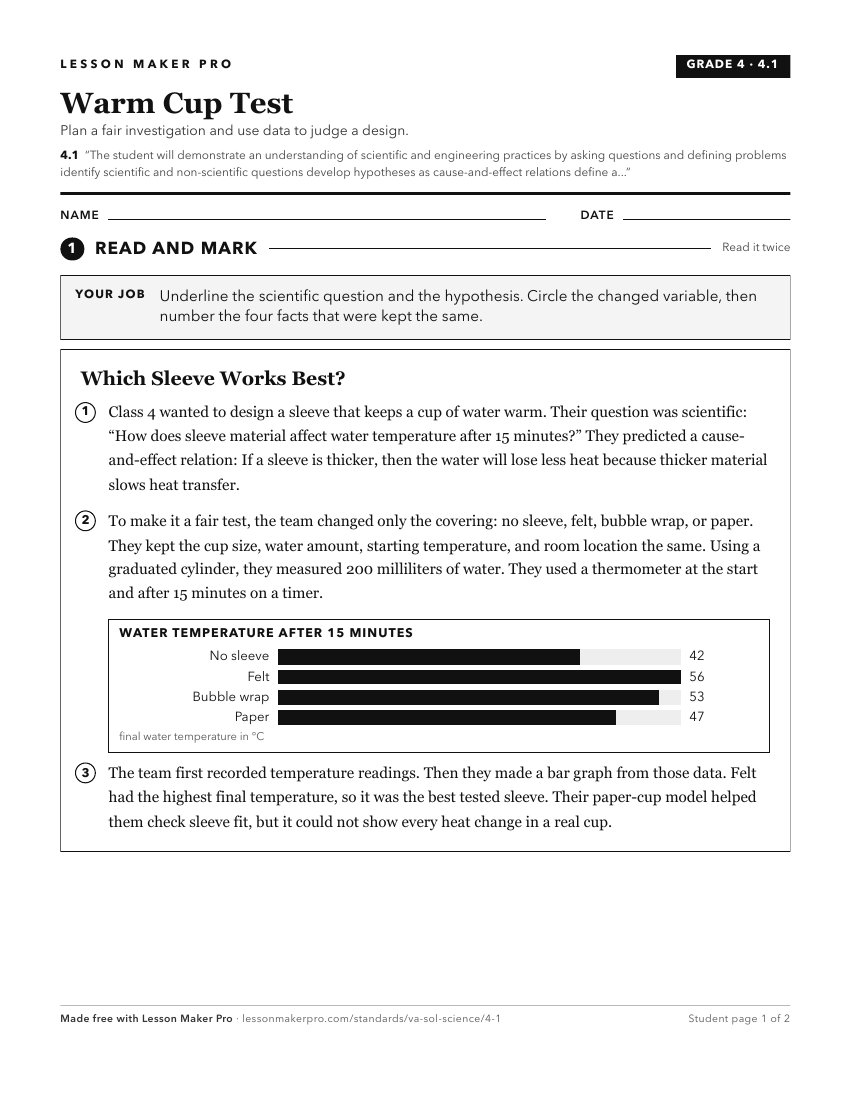
A ready-to-print activity worksheet aligned to 4.1, with an answer key for the teacher on its own page. No account needed.
PDF, US Letter, prints cleanly in black and white.
Download the worksheetKeep exploring
Related Standards
Turn this cluster into a lesson
Grade, subject, topic, and the complete cluster are prefilled. Create one free, no account needed.
Also for this cluster:Make a WorksheetMake a QuizMake a Sub Lesson