Virginia SOL 4.1.b.iv
The Standard
- 4.1
- The student will demonstrate an understanding of scientific and engineering practices by
planning and carrying out investigations take metric measurements using appropriate tools
Virginia Standards of Learning for Science · The student will demonstrate an understanding of scientific and engineering practices by
Teacher's field guide
What This Standard Means
What Students Need to Do
- Students choose a metric ruler, meter stick, balance, graduated cylinder, or thermometer to match what they need to measure. They read the scale carefully and record a number with the correct metric unit.
What Mastery Looks Like
- Students select the right tool and unit without prompting. Their measurements are reasonable, include units, and are accurate to the smallest marked interval on the tool.
Common Misconceptions
- Students may mix up centimeters and meters, or milliliters and liters. They may measure from the ruler’s edge instead of zero or read the top of a liquid’s curve. Some record a number without a unit.
How to Assess It
- Exit ticket: Measure a pencil in centimeters, then name the best tool and unit for measuring 200 mL of water. Require numbers, units, and tool names.
Lesson moves
Ways to Teach It
Set up stations where students measure a book, desk, cup of water, clay ball, and water temperature with labeled metric tools.
Ask students to explain why a meter stick is better than a centimeter ruler for measuring the classroom wall.
Play a tool-match relay using cards showing objects, metric units, and measurement tools, with teams building correct sets.
Have students measure ingredients for a metric snack mix using grams and milliliters, then compare their results with a recipe card.
Free download
Printable 4.1.b.iv Worksheet
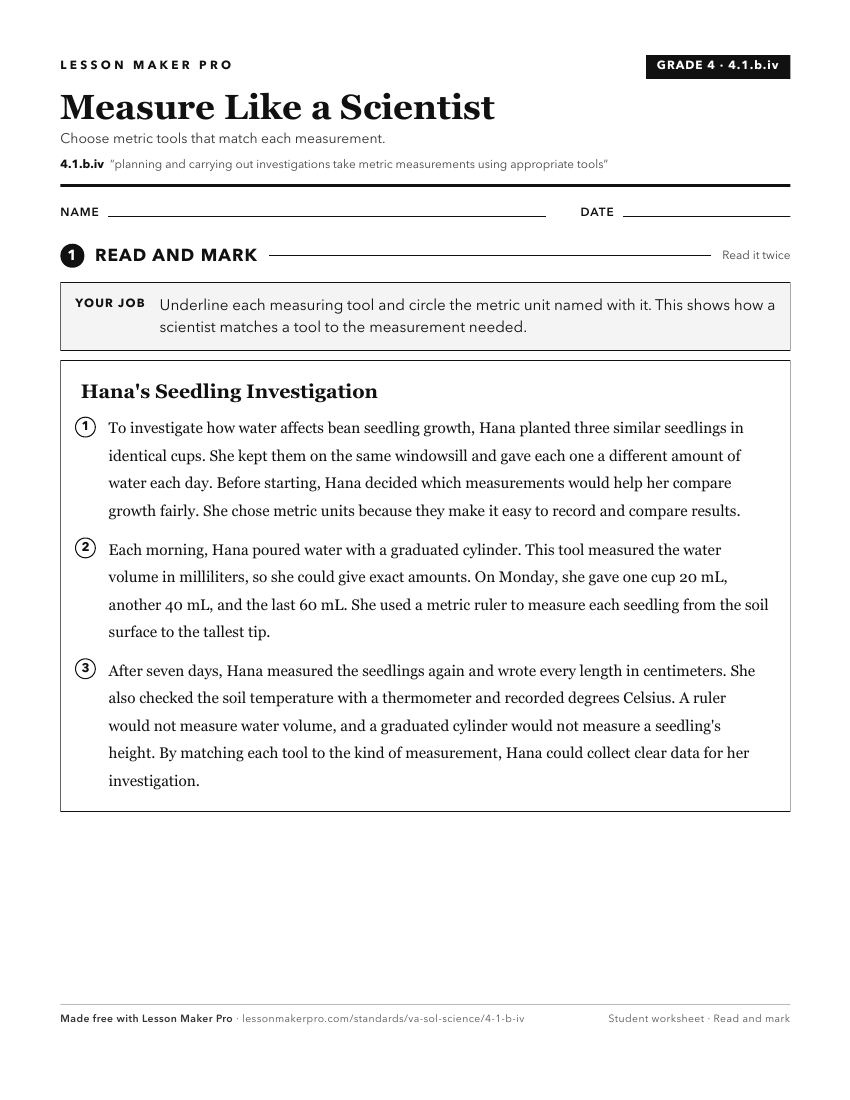
A ready-to-print activity worksheet aligned to 4.1.b.iv, with an answer key for the teacher on its own page. No account needed.
PDF, US Letter, prints cleanly in black and white.
Download the worksheetKeep exploring
Related Standards
Turn this exact standard into a lesson
Grade, subject, topic, and the complete standard are prefilled. Create one free, no account needed.
Also for this standard:Make a WorksheetMake a QuizMake a Sub Lesson