Oklahoma Social Studies MWH.C.5
Standard Cluster
Analyze the massive social, economic, and cultural change brought about by the Industrial Revolution. Examine the causes and characteristics of the Industrial Revolution. Explain how the Industrial Revolution began in England, including its access to natural resources and capital, entrepreneurial culture, labor supply, and political stability. Evaluate the extent to which the Second Agricultural Revolution and innovations in energy, mechanization, and transportation enabled industrialization. Describe the social and economic consequences of industrialization, such as population growth, increased life expectancy, rural to urban migration, harsh living conditions for the urban poor, and growth of the middle class. Analyze responses to and the legacy of the Industrial Revolution. Examine how the abolition of slavery within the British Empire was influenced by Christian humanitarianism and examine the role of various antislavery societies, including the work of William Wilberforce. Explain the rise of trade unionism and the birth of the Labor Party, including the effects of various social and political reforms, such as Liberalism (John Stuart Mill) and modern conservatism (school of Edmund Burke). Examine the concept of economic interventionism (e.g., economic protectionism, child labor laws, legislation for old age pensions, health insurance). Describe the rise of socialism, including the ideas and influence of Robert Owen and Karl Marx, as well as the major ideas of Marx and Engels' The Communist Manifesto. Describe the European intellectual revolution and the ideal of academic freedom, including leading figures (e.g., Marie Curie, Charles Darwin, Gregor Mendel). Evaluate the impact of industrialization on global imperialism. Explain the economic, political, and social justifications supporting imperialist ideology and colonialism ‘ (e.g., Social Darwinism, economic gain and resources, Christian missions, strategic advantage, and Nationalism). Describe the consequences of imperialism in Asia, Africa, and the Americas, i ncluding settler colonies, exploitation of natural resources, and reshaping of colonial economies, resistance movements, and cultural exchange. Describe the outcomes of the Berlin Conference and the impact of superimposed boundaries on Africa’s Indigenous populations. Assess the political, economic, and cultural impact of the British Raj, Britain’s subordination of India, as characterized by economic, educational, and infrastructure investments, at the costs of exploitation and self-rule. Describe major developments contributing to the decline of the Qing dynasty, including Western influence, internal unrest, and the Boxer Rebellion.
Oklahoma Academic Standards for Social Studies (2026)
Cluster contents
Standards in This Cluster
MWH.C.5 is a cluster heading. These are the individual standards under it.
- MWH.C.5.1
Examine the causes and characteristics of the Industrial Revolution.
- MWH.C.5.1.A
Explain how the Industrial Revolution began in England, including its access to natural resources and capital, entrepreneurial culture, labor supply, and politi...
- MWH.C.5.1.B
Evaluate the extent to which the Second Agricultural Revolution and innovations in energy, mechanization, and transportation enabled industrialization.
- MWH.C.5.1.C
Describe the social and economic consequences of industrialization, such as population growth, increased life expectancy, rural to urban migration, harsh living...
- MWH.C.5.2
Analyze responses to and the legacy of the Industrial Revolution.
- MWH.C.5.2.A
Examine how the abolition of slavery within the British Empire was influenced by Christian humanitarianism and examine the role of various antislavery societies...
- MWH.C.5.2.B
Explain the rise of trade unionism and the birth of the Labor Party, including the effects of various social and political reforms, such as Liberalism (John Stu...
- MWH.C.5.2.C
Examine the concept of economic interventionism (e.g., economic protectionism, child labor laws, legislation for old age pensions, health insurance).
- MWH.C.5.2.D
Describe the rise of socialism, including the ideas and influence of Robert Owen and Karl Marx, as well as the major ideas of Marx and Engels’ The Communist Man...
- MWH.C.5.2.E
Describe the European intellectual revolution and the ideal of academic freedom, including leading figures (e.g., Marie Curie, Charles Darwin, Gregor Mendel).
- MWH.C.5.3
Evaluate the impact of industrialization on global imperialism.
- MWH.C.5.3.A
Explain the economic, political, and social justifications supporting imperialist ideology and colonialism (e.g., Social Darwinism, economic gain and resources,...
- MWH.C.5.3.B
Describe the consequences of imperialism in Asia, Africa, and the Americas, i ncluding settler colonies, exploitation of natural resources, and reshaping of col...
- MWH.C.5.3.C
Describe the outcomes of the Berlin Conference and the impact of superimposed boundaries on Africa’s Indigenous populations.
- MWH.C.5.3.D
Assess the political, economic, and cultural impact of the British Raj, Britain’s subordination of India, as characterized by economic, educational, and infrast...
- MWH.C.5.3.E
Describe major developments contributing to the decline of the Qing dynasty, including Western influence, internal unrest, and the Boxer Rebellion.
Teacher's field guide
What This Cluster Means
What Students Need to Do
- Students explain why factories first spread in Britain and how farming changes, steam power, and railways changed work and cities. They compare responses to industrial change and examine how scientists challenged accepted ideas. They connect industrial demand to imperial rule and resistance in Africa, India, and Qing China.
What Mastery Looks Like
- Students can link British coal, investment, and farm labor to factory growth, urban hardship, and a growing middle class. They can distinguish Wilberforce's abolition campaign, union demands, Owen's plans, and Marx's ideas, and explain why academic freedom mattered to scientists such as Darwin. They can explain the effects of the Berlin Conference, weigh gains and costs of British rule in India, and link foreign pressure to unrest in Qing China.
Common Misconceptions
- Students may think coal and machines alone explain Britain's lead, leaving out capital, farm labor, and political stability. They may assume factory jobs improved everyone's life at once or that abolition ended exploitation. They may treat colonial railways as proof that everyone benefited, or assume African communities chose the borders drawn across their lands.
How to Assess It
- Exit ticket: Explain how one farming or technology change helped British factories grow. Then connect factory demand to one specific effect of imperial rule in Africa or India.
Lesson moves
Ways to Teach It
Give pairs cards labeled coal, farm labor, steam engine, factory, railroad, and urban crowding; have them build and defend two cause-and-effect chains.
Ask: Did British railways in India outweigh lost self-rule? Write a claim using one benefit and one cost from a short source packet.
Match Wilberforce, trade unions, Owen, Marx, Mill, and Burke to labeled reform proposals, then justify two matches aloud.
Use a T-shirt's country tag and a supply-chain diagram to compare modern factory locations with Britain's colonial textile trade in India.
Free download
Printable MWH.C.5 Worksheet
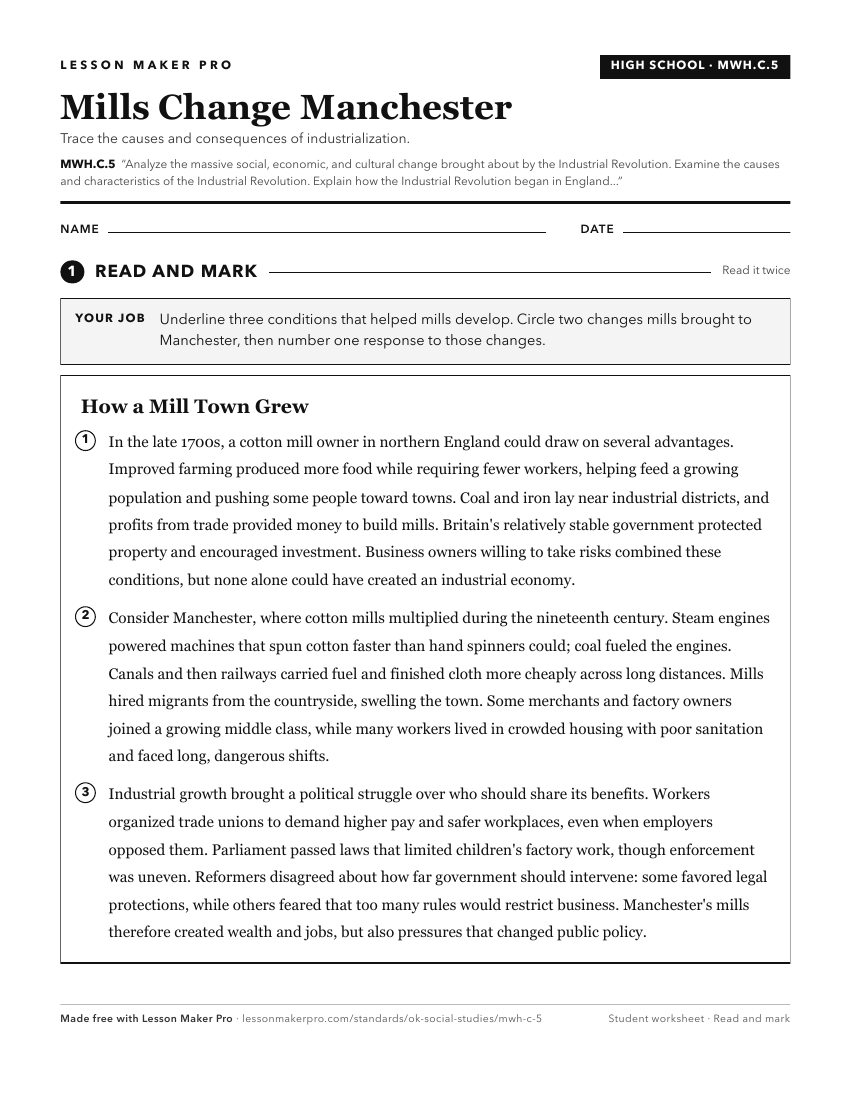
A ready-to-print activity worksheet aligned to MWH.C.5, with an answer key for the teacher on its own page. No account needed.
PDF, US Letter, prints cleanly in black and white.
Download the worksheetKeep exploring
Related Standards
Turn this cluster into a lesson
Grade, subject, topic, and the complete cluster are prefilled. Create one free, no account needed.
Also for this cluster:Make a WorksheetMake a QuizMake a Sub Lesson