Mississippi Science HAP.13
Standard Cluster
Students will investigate the structures and functions of the digestive system, including the cause and effect of diseases and disorders. Analyze the structure-function relationship in organs of the digestive system. Use models to describe structural adaptations present in each organ of the tract and correlate the structures to specific processing of food at each stage (e.g., types of teeth; muscular, elastic wall and mucous lining of the stomach; villi and microvilli of the small intestine; and sphincters along the digestive tract). Identify the accessory organs (i.e., salivary glands, liver, gallbladder, and pancreas) for digestion and describe their function. Plan and conduct an experiment to illustrate the necessity of mechanical digestion for efficient chemical digestion. Research and analyze the activity of digestive enzymes within different organs of the digestive tract, connecting enzyme function to environmental factors such as pH. Evaluate the role of hormones (i.e., gastrin, leptin, and insulin) in the regulation of hunger and satiety/fullness. Research and analyze the causes and effects of various pathological conditions (e.g., GERD/acid reflux, stomach ulcers, lactose intolerance, irritable bowel syndrome, gallstones, appendicitis, and hormonal imbalances and obesity). Enrichment: Use an engineering design process to develop effective treatments for gastrointestinal diseases (e.g., methods to regulate stomach acids or soothe ulcers, treat food intolerance, and dietary requirements/modifications). *
2026 Mississippi College- and Career-Readiness Standards for Science · Digestive System
Cluster contents
Standards in This Cluster
HAP.13 is a cluster heading. These are the individual standards under it.
- HAP.13.1
Analyze the structure-function relationship in organs of the digestive system.
- HAP.13.2
Use models to describe structural adaptations present in each organ of the tract and correlate the structures to specific processing of food at each stage (e.g....
- HAP.13.3
Identify the accessory organs (i.e., salivary glands, liver, gallbladder, and pancreas) for digestion and describe their function.
- HAP.13.4
Plan and conduct an experiment to illustrate the necessity of mechanical digestion for efficient chemical digestion.
- HAP.13.5
Research and analyze the activity of digestive enzymes within different organs of the digestive tract, connecting enzyme function to environmental factors such ...
- HAP.13.6
Evaluate the role of hormones (i.e., gastrin, leptin, and insulin) in the regulation of hunger and satiety/fullness.
- HAP.13.7
Research and analyze the causes and effects of various pathological conditions (e.g., GERD/acid reflux, stomach ulcers, lactose intolerance, irritable bowel syn...
- HAP.13.8
Enrichment: Use an engineering design process to develop effective treatments for gastrointestinal diseases (e.g., methods to regulate stomach acids or soothe u...
Teacher's field guide
What This Cluster Means
What Students Need to Do
- Students trace food through the digestive tract and explain how teeth, stomach walls, villi, and sphincters do different jobs. They identify what the salivary glands, liver, gallbladder, and pancreas provide or store. They test how breaking food apart affects digestion, examine how pH affects enzymes, and link hormones and disorders to changes in the body.
What Mastery Looks Like
- On a diagram, a student links each structure to its job and explains what each accessory organ does. They use results from mashed and cubed food to explain enzyme action and predict how a change in pH affects an enzyme. They explain why a weak sphincter causes reflux and how gastrin, leptin, and insulin affect stomach acid, fullness, and blood sugar.
Common Misconceptions
- Students often say the gallbladder makes bile, but the liver makes it and the gallbladder stores it. They may think villi break food apart instead of absorbing nutrients, or that enzymes work equally well at any pH. They may think acid reflux means too much stomach acid rather than acid moving into the esophagus.
How to Assess It
- Give students a tract diagram and data showing amylase breaks down 0 mg of starch at pH 2 and 8 mg at pH 7 in five minutes. Ask where nutrients enter the blood, which pH favors amylase, and why chewing speeds digestion.
Lesson moves
Ways to Teach It
Weigh equal portions of cooked potato, mash one, cube the other, add equal amylase solution, then test both with iodine after five minutes.
Ask: Why would reduced leptin signaling change hunger, while reduced gastrin changes stomach acid and reduced insulin changes blood sugar?
Give pairs cards for teeth, stomach, villi, liver, gallbladder, pancreas, and salivary glands; have them race to match each organ to its job.
Compare milk and lactose-free milk cartons, then explain why low lactase can cause gas after regular milk but not lactose-free milk.
Free download
Printable HAP.13 Worksheet
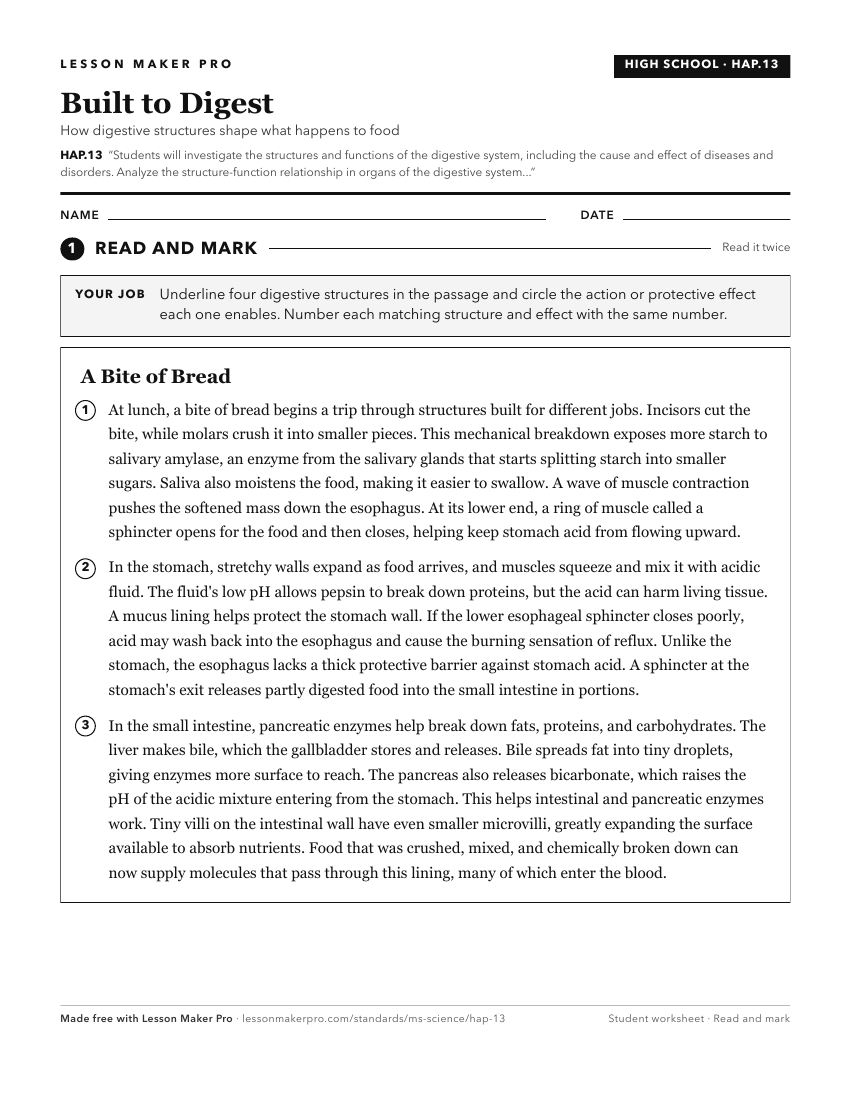
A ready-to-print activity worksheet aligned to HAP.13, with an answer key for the teacher on its own page. No account needed.
PDF, US Letter, prints cleanly in black and white.
Download the worksheetKeep exploring
Related Standards
- HAP.5
Students will investigate the structures and functions of the muscular system, including the cause and effect of diseases and disorders.
- HAP.4
Students will investigate the structures and functions of the skeletal system including the cause and effect of diseases and disorders.
- HAP.14
Students will investigate the structures and functions of the urinary system, including the cause and effect of diseases and disorders.
- HAP.10
Students will investigate the structures and functions of the cardiovascular system, including the cause and effect of diseases and disorders.
Turn this cluster into a lesson
Grade, subject, topic, and the complete cluster are prefilled. Create one free, no account needed.
Also for this cluster:Make a WorksheetMake a QuizMake a Sub Lesson