Mississippi Science HAP.13.7
The Standard
- HAP.13
- Students will investigate the structures and functions of the digestive system, including the cause and effect of diseases and disorders.
Research and analyze the causes and effects of various pathological conditions (e.g., GERD/acid reflux, stomach ulcers, lactose intolerance, irritable bowel syndrome, gallstones, appendicitis, and hormonal imbalances and obesity).
2026 Mississippi College- and Career-Readiness Standards for Science · Digestive System
Teacher's field guide
What This Standard Means
What Students Need to Do
- Students use reliable medical sources to investigate several digestive conditions. They explain what changes in the body, what may cause the change, and how it leads to symptoms.
What Mastery Looks Like
- A student can explain how low lactase leads to symptoms after drinking milk and how acid reflux causes heartburn. They can compare those mechanisms, identify risk factors, and cite sources for their claims.
Common Misconceptions
- Students may think spicy food causes ulcers, though H. pylori infection and certain pain medicines are common causes. They may also confuse lactose intolerance with a milk allergy or treat every stomachache as the same condition.
How to Assess It
- Exit ticket: Explain why a person with low lactase may get gas after drinking milk, while a person with acid reflux may feel burning after a meal. Name the affected body part in each case.
Lesson moves
Ways to Teach It
Give pairs a digestive tract diagram and cause cards for reflux, gallstones, and appendicitis; have them place each card and mark where symptoms occur.
Ask: Does spicy food cause ulcers, or can it worsen symptoms? Have students answer using an NIH fact sheet.
Read four patient clues aloud; have teams match each case to reflux, lactose intolerance, gallstones, or appendicitis and explain their choice.
Compare milk and lactose-free milk labels, then explain why someone with lactose intolerance might choose one over the other.
Free download
Printable HAP.13.7 Worksheet
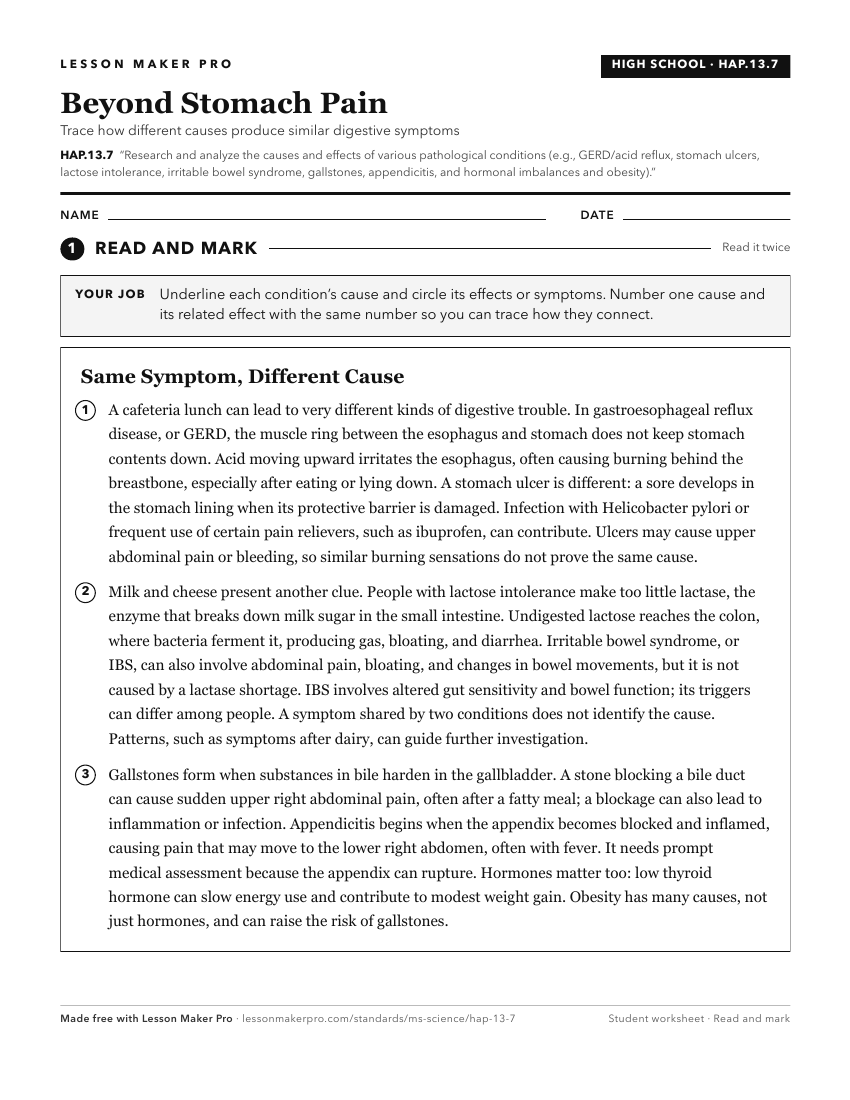
A ready-to-print activity worksheet aligned to HAP.13.7, with an answer key for the teacher on its own page. No account needed.
PDF, US Letter, prints cleanly in black and white.
Download the worksheetKeep exploring
Related Standards
- HAP.5.7
Research and analyze the causes and effects of various pathological conditions, (e.g., fibromyalgia, muscular dystrophy, cerebral palsy, muscle cramps/strains, ...
- HAP.14.6
Research and analyze the causes and effects of various pathological conditions and other kidney abnormalities (e.g., kidney stones, urinary tract infections, go...
- HAP.12.5
Research and analyze the causes and effects of various pathological conditions (e.g., asthma, bronchitis, pneumonia, and COPD).
- HAP.7.4
Research and analyze the effects of various pathological conditions (e.g., diabetes mellitus, pituitary dwarfism, Graves’ disease, Cushing’s syndrome, hypothyro...
Turn this exact standard into a lesson
Grade, subject, topic, and the complete standard are prefilled. Create one free, no account needed.
Also for this standard:Make a WorksheetMake a QuizMake a Sub Lesson