Mississippi Science HAP.13.6
The Standard
- HAP.13
- Students will investigate the structures and functions of the digestive system, including the cause and effect of diseases and disorders.
Evaluate the role of hormones (i.e., gastrin, leptin, and insulin) in the regulation of hunger and satiety/fullness.
2026 Mississippi College- and Career-Readiness Standards for Science · Digestive System
Teacher's field guide
What This Standard Means
What Students Need to Do
- Students identify where gastrin, leptin, and insulin come from and what prompts their release. They explain how each relates to digestion, hunger, or fullness.
What Mastery Looks Like
- Given a meal timeline, students place gastrin after food enters the stomach and insulin after blood glucose rises. They explain that leptin signals longer-term energy stores, while gastrin mainly stimulates stomach acid.
Common Misconceptions
- Students may mistake gastrin for a direct hunger signal. They may think leptin spikes after every meal or that insulin affects blood sugar but has no role in appetite.
How to Assess It
- Exit ticket: After lunch, food enters the stomach and blood glucose rises. Which two hormones respond, and why is leptin a different kind of appetite signal?
Lesson moves
Ways to Teach It
Give groups organ and hormone cards; have them build a meal timeline showing gastrin and insulin responses and leptin's longer-term signal.
Ask students to write: Why does insulin rise after lunch while leptin usually changes more slowly, and what is gastrin doing?
Play hormone clue bingo with cards for gastrin, leptin, and insulin; read organ and action clues, then ask winners to explain their matches.
Use a cafeteria lunch timeline to mark when stomach acid and blood glucose rise, then identify the hormones involved.
Free download
Printable HAP.13.6 Worksheet
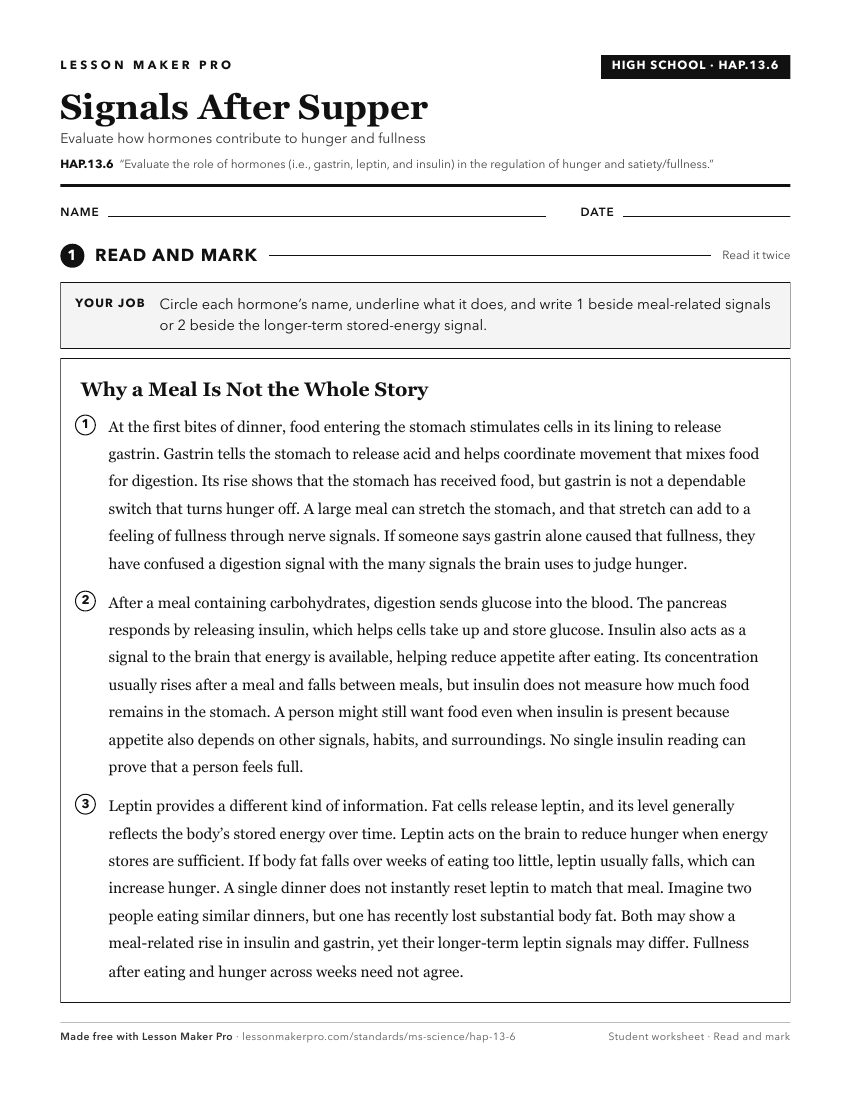
A ready-to-print activity worksheet aligned to HAP.13.6, with an answer key for the teacher on its own page. No account needed.
PDF, US Letter, prints cleanly in black and white.
Download the worksheetKeep exploring
Related Standards
- HAP.7.3
Model specific mechanisms through which the endocrine system maintains homeostasis (e.g., insulin/glucagon and glucose regulation; T3 / T4 and metabolic rates; ...
- HAP.7.4
Research and analyze the effects of various pathological conditions (e.g., diabetes mellitus, pituitary dwarfism, Graves’ disease, Cushing’s syndrome, hypothyro...
- HAP.8.4
Construct explanations detailing the role of hormones in the regulation of sperm and egg development. Analyze the role of negative feedback in regulation of the...
- HAP.7.1
Obtain, evaluate, and communicate information to illustrate that the endocrine glands secrete hormones that help the body maintain homeostasis through feedback ...
Turn this exact standard into a lesson
Grade, subject, topic, and the complete standard are prefilled. Create one free, no account needed.
Also for this standard:Make a WorksheetMake a QuizMake a Sub Lesson