Mississippi Science HAP.10
Standard Cluster
Students will investigate the structures and functions of the cardiovascular system, including the cause and effect of diseases and disorders. Design and use models to investigate the functions of the organs of the cardiovascular system. Describe the flow of blood through the pulmonary system and systemic circulation. Investigate the structure and function of different types of blood vessels (e.g., arteries, capillaries, veins). Identify the role each plays in the transport and the exchange of materials. Demonstrate the role of valves in regulating blood flow. Plan and conduct an investigation to test the effects of various stimuli on heart rate and/or blood pressure. Construct graphs to analyze data and communicate conclusions. Research and analyze the effects of various pathological conditions (e.g., hypertension, myocardial infarction, mitral valve prolapses, varicose veins, and arrhythmia). Enrichment: Use an engineering design process to develop, model, and test effective treatments for cardiovascular diseases (e.g., methods to regulate heart rate, artificial replacement valves, open blood vessels, strengthening leaky valves). *
2026 Mississippi College- and Career-Readiness Standards for Science · Cardiovascular System
Cluster contents
Standards in This Cluster
HAP.10 is a cluster heading. These are the individual standards under it.
- HAP.10.1
Design and use models to investigate the functions of the organs of the cardiovascular system.
- HAP.10.2
Describe the flow of blood through the pulmonary system and systemic circulation.
- HAP.10.3
Investigate the structure and function of different types of blood vessels (e.g., arteries, capillaries, veins). Identify the role each plays in the transport a...
- HAP.10.4
Demonstrate the role of valves in regulating blood flow.
- HAP.10.5
Plan and conduct an investigation to test the effects of various stimuli on heart rate and/or blood pressure. Construct graphs to analyze data and communicate c...
- HAP.10.6
Research and analyze the effects of various pathological conditions (e.g., hypertension, myocardial infarction, mitral valve prolapses, varicose veins, and arrh...
- HAP.10.7
Enrichment: Use an engineering design process to develop, model, and test effective treatments for cardiovascular diseases (e.g., methods to regulate heart rate...
Teacher's field guide
What This Cluster Means
What Students Need to Do
- Students trace blood through the heart, lungs, and body. They model how valves prevent backflow and explain what arteries, capillaries, and veins do. They measure and graph pulse changes, then research how a disease affects circulation.
What Mastery Looks Like
- A student can trace blood from the right side of the heart to the lungs, left side, body, and back. They explain that arteries carry blood away from the heart, capillaries exchange materials, veins return blood, and valves stop backflow. They use a graph to explain a pulse change and a source to explain the effects of one disease.
Common Misconceptions
- Students often think every artery carries oxygen-rich blood, overlooking the pulmonary artery. They may think valves pump blood or miss that exchange happens in capillaries. Some treat high blood pressure and a fast pulse as the same thing.
How to Assess It
- Give students a blank heart-lungs-body diagram and pulse data: 72 beats per minute at rest, 108 after stepping, and 84 one minute later. Have them trace blood flow, label a valve and a capillary exchange site, then graph and explain the pulse change.
Lesson moves
Ways to Teach It
Make paper valve flaps on a heart diagram, then move a paper blood cell through to test which direction the flaps allow.
Write three sentences explaining how a blocked coronary artery can damage heart muscle.
Play a circulation relay with heart, lung, and body cards; pass a token through arteries, capillaries, and veins in order.
Compare pulse before stepping, after one minute of stepping, and after one minute of rest; graph the readings and explain the change.
Free download
Printable HAP.10 Worksheet
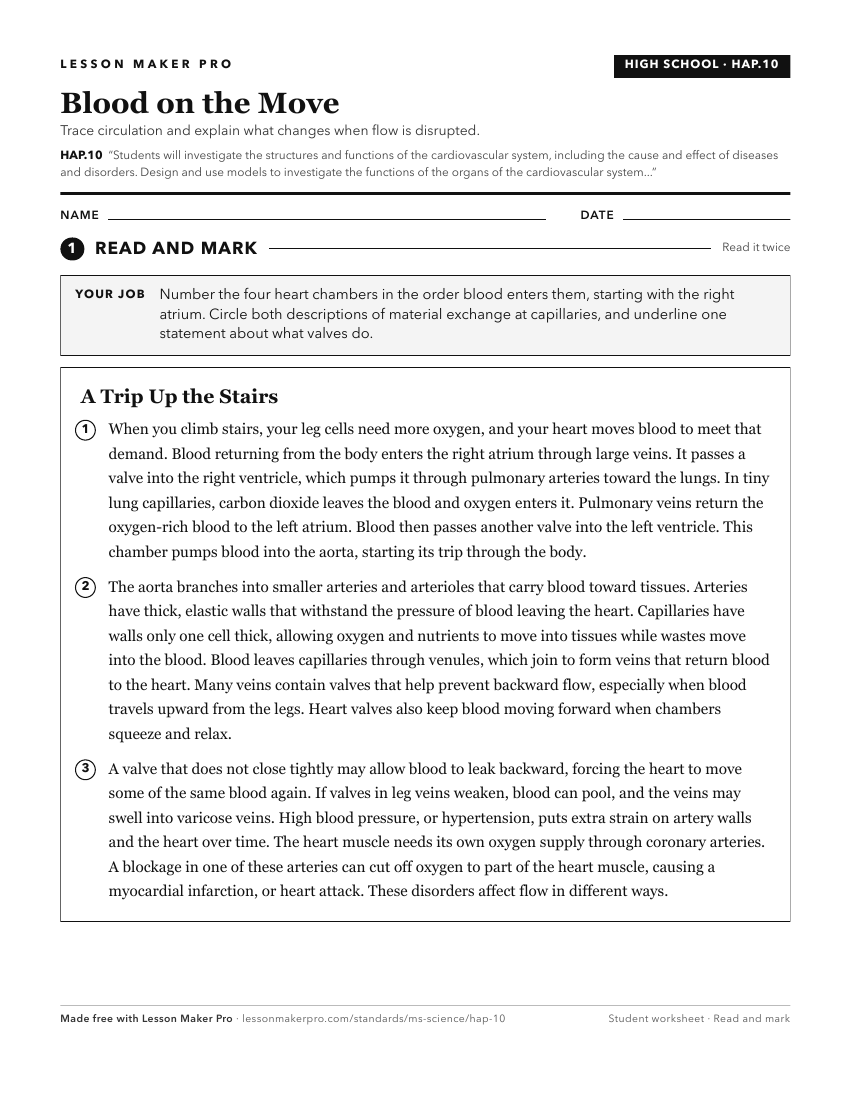
A ready-to-print activity worksheet aligned to HAP.10, with an answer key for the teacher on its own page. No account needed.
PDF, US Letter, prints cleanly in black and white.
Download the worksheetKeep exploring
Related Standards
- HAP.5
Students will investigate the structures and functions of the muscular system, including the cause and effect of diseases and disorders.
- HAP.4
Students will investigate the structures and functions of the skeletal system including the cause and effect of diseases and disorders.
- HAP.13
Students will investigate the structures and functions of the digestive system, including the cause and effect of diseases and disorders.
- HAP.6
Students will investigate the structures and functions of the nervous system, including the cause and effect of diseases and disorders.
Turn this cluster into a lesson
Grade, subject, topic, and the complete cluster are prefilled. Create one free, no account needed.
Also for this cluster:Make a WorksheetMake a QuizMake a Sub Lesson