Mississippi Science HAP.6
Standard Cluster
Students will investigate the structures and functions of the nervous system, including the cause and effect of diseases and disorders. Describe and evaluate how the nervous system functions and interconnects with all other body systems. Analyze the structure and function of neurons and their supporting neuroglia cells (e.g., astrocytes, oligodendrocytes, Schwann cells, microglial). Discuss the structure and function of the brain and spinal cord. Compare and contrast the structures and functions of the central and peripheral nervous systems. Investigate how the systems interact to maintain homeostasis (e.g., reflex responses, sensory responses). Enrichment: Plan and conduct an experiment to test reflex response rates under varying conditions. Using technology, construct graphs in order to analyze and interpret data to explain and communicate conclusions. Describe the major characteristics of the autonomic nervous system. Contrast the roles of the sympathetic and parasympathetic nervous systems in maintaining homeostasis. Describe the structure and function of the special senses (i.e., vision, hearing, taste, and olfaction). Research and analyze the causes and effects of various pathological conditions (e.g., addiction, depression, schizophrenia, Alzheimer’s, sports-related chronic traumatic encephalopathy [CTE], dementia, chronic migraine, stroke, and epilepsy). Enrichment: Use an engineering design process to develop, model, and test preventative devices for neurological injuries and/or disorders (e.g., concussion-proof helmets or medications for addiction and depression). *
2026 Mississippi College- and Career-Readiness Standards for Science · Nervous System
Cluster contents
Standards in This Cluster
HAP.6 is a cluster heading. These are the individual standards under it.
- HAP.6.1
Describe and evaluate how the nervous system functions and interconnects with all other body systems.
- HAP.6.2
Analyze the structure and function of neurons and their supporting neuroglia cells (e.g., astrocytes, oligodendrocytes, Schwann cells, microglial).
- HAP.6.3
Discuss the structure and function of the brain and spinal cord.
- HAP.6.4
Compare and contrast the structures and functions of the central and peripheral nervous systems. Investigate how the systems interact to maintain homeostasis (e...
- HAP.6.5
Enrichment: Plan and conduct an experiment to test reflex response rates under varying conditions. Using technology, construct graphs in order to analyze and in...
- HAP.6.6
Describe the major characteristics of the autonomic nervous system. Contrast the roles of the sympathetic and parasympathetic nervous systems in maintaining hom...
- HAP.6.7
Describe the structure and function of the special senses (i.e., vision, hearing, taste, and olfaction).
- HAP.6.8
Research and analyze the causes and effects of various pathological conditions (e.g., addiction, depression, schizophrenia, Alzheimer’s, sports-related chronic ...
- HAP.6.9
Enrichment: Use an engineering design process to develop, model, and test preventative devices for neurological injuries and/or disorders (e.g., concussion-proo...
Teacher's field guide
What This Cluster Means
What Students Need to Do
- Students trace signals from the eyes, ears, nose, or tongue through nerves to the brain. They map a spinal reflex and explain how neurons, glial cells, and brain regions help the body respond. They predict how nerve damage or disease can affect movement and other organs.
What Mastery Looks Like
- A student can label the path from a skin receptor through the spinal cord to a muscle and show where the brain receives the pain signal. They distinguish central from peripheral nerves and explain how myelin helps signals travel. They can predict how sympathetic and parasympathetic signals change heart rate.
Common Misconceptions
- Students may think the brain must approve a withdrawal reflex, or that sensory nerves are part of the central nervous system. They may confuse glial cells with neurons or think sympathetic activity stays high during rest.
How to Assess It
- Exit ticket: Draw the signal path from touching a hot pan to pulling your hand away. Mark where the brain receives the pain signal and explain how damaged myelin might affect the response.
Lesson moves
Ways to Teach It
Give groups yarn and labeled cards for skin receptor, sensory neuron, spinal cord, motor neuron, muscle, and brain; have them build a reflex circuit.
Show a diagram marking a left-brain stroke; ask why right-side movement changes and which body system carries out the movement.
Play a matching game with cards for astrocytes, oligodendrocytes, Schwann cells, and microglia, paired with their jobs and locations.
Record pulse before and after a one-minute walk, then after rest; graph results and explain sympathetic and parasympathetic effects.
Free download
Printable HAP.6 Worksheet
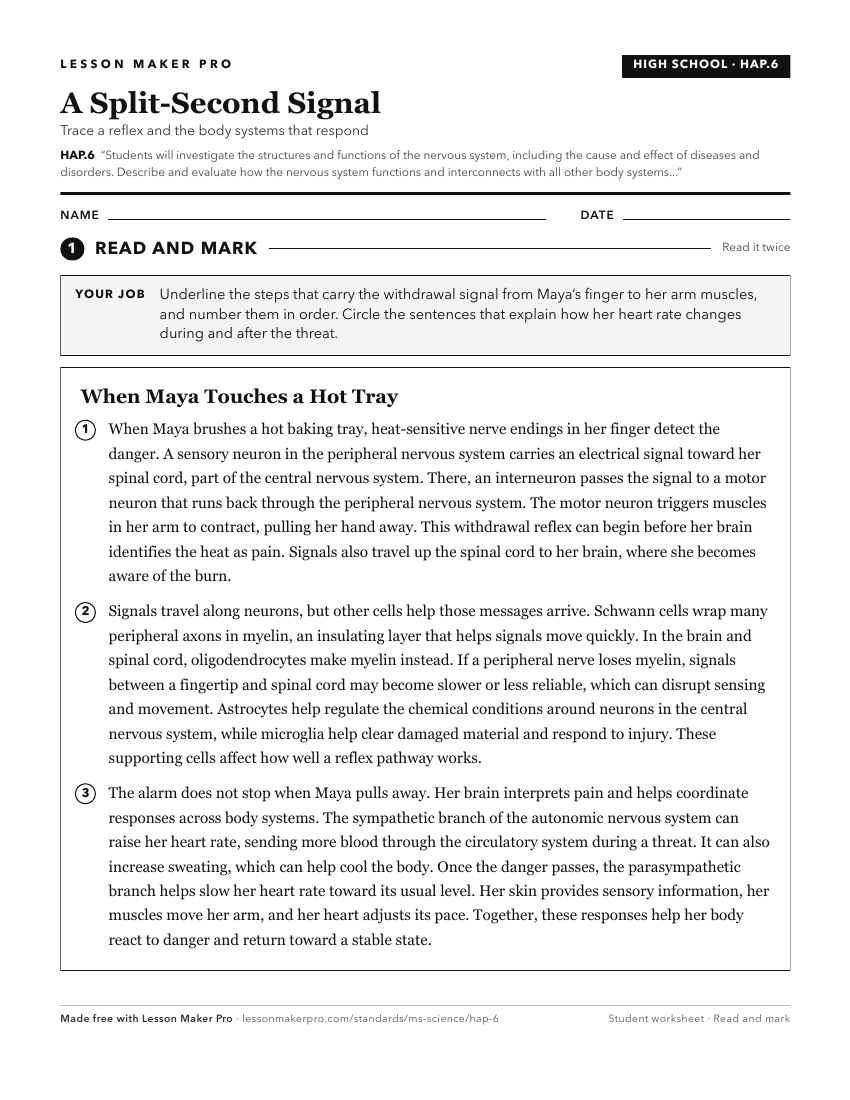
A ready-to-print activity worksheet aligned to HAP.6, with an answer key for the teacher on its own page. No account needed.
PDF, US Letter, prints cleanly in black and white.
Download the worksheetKeep exploring
Related Standards
- HAP.5
Students will investigate the structures and functions of the muscular system, including the cause and effect of diseases and disorders.
- HAP.4
Students will investigate the structures and functions of the skeletal system including the cause and effect of diseases and disorders.
- HAP.13
Students will investigate the structures and functions of the digestive system, including the cause and effect of diseases and disorders.
- HAP.10
Students will investigate the structures and functions of the cardiovascular system, including the cause and effect of diseases and disorders.
Turn this cluster into a lesson
Grade, subject, topic, and the complete cluster are prefilled. Create one free, no account needed.
Also for this cluster:Make a WorksheetMake a QuizMake a Sub Lesson