Virginia SOL 3.1
SOL Standard (Skills Cluster)
The student will apply history and social science skills to define citizenship and explain the rights and responsibilities of United States citizenship by recognizing that Americans are people of diverse ethnic origins, customs, and traditions that are united by the basic principles of a republican form of government and respect for individual rights and freedoms; describing the rights guaranteed to citizens in the First Amendment; understanding the importance of supporting and defending the Constitution of the United States and the Bill of Rights; respecting and following local, state, and federal laws; taking part in the voting process when making classroom decisions; running for elected office; serving on a jury; paying local, state, and federal taxes; describing the purpose of rules; and understanding responsible digital citizenship.
Virginia Standards of Learning for History and Social Science
Cluster contents
Skills in This Standard
3.1 is a Standards of Learning history and social science standard. These are the skills expectations under it.
- 3.1.a
recognizing that Americans are people of diverse ethnic origins, customs, and traditions that are united by the basic principles of a republican form of governm...
- 3.1.b
describing the rights guaranteed to citizens in the First Amendment
- 3.1.c
understanding the importance of supporting and defending the Constitution of the United States and the Bill of Rights
- 3.1.d
respecting and following local, state, and federal laws
- 3.1.e
taking part in the voting process when making classroom decisions
- 3.1.f
running for elected office
- 3.1.g
serving on a jury
- 3.1.h
paying local, state, and federal taxes
- 3.1.i
describing the purpose of rules
- 3.1.j
understanding responsible digital citizenship
Teacher's field guide
What This Cluster Means
What Students Need to Do
- Students explain citizenship and how people with different backgrounds can share democratic principles and individual freedoms. They identify First Amendment rights and distinguish rights from duties such as obeying laws, voting, jury service, paying taxes, and supporting constitutional rights. They also explain why rules matter and choose safe, respectful actions online.
What Mastery Looks Like
- A student can name the five First Amendment freedoms and apply them to school or community examples. The student can explain why citizens follow laws, vote, serve on juries, pay taxes, and may run for office. The student can participate in a fair classroom vote and identify responsible online behavior.
Common Misconceptions
- Students may think all Americans share the same customs, or that differences weaken citizenship. They often confuse rights with anything they want to do, and may see taxes, jury service, or laws only as punishments. Some assume online speech has no rules or consequences.
How to Assess It
- Exit ticket: Label speech, worship, paying taxes, jury service, and obeying laws as a right, responsibility, or both. Then explain why a class vote should protect every student's rights, including students whose choice loses.
Lesson moves
Ways to Teach It
Sort picture cards showing speech, worship, voting, jury service, taxes, law-following, and safe posting into rights, responsibilities, or both.
Write: How can Americans have different customs yet share rights, freedoms, and rules? Use one example.
Run a classroom election with candidate speeches, secret ballots, vote counting, and a short reflection on fair participation.
Study a store receipt, identify sales tax, and match that money to public services such as roads, schools, or firefighters.
Free download
Printable 3.1 Worksheet
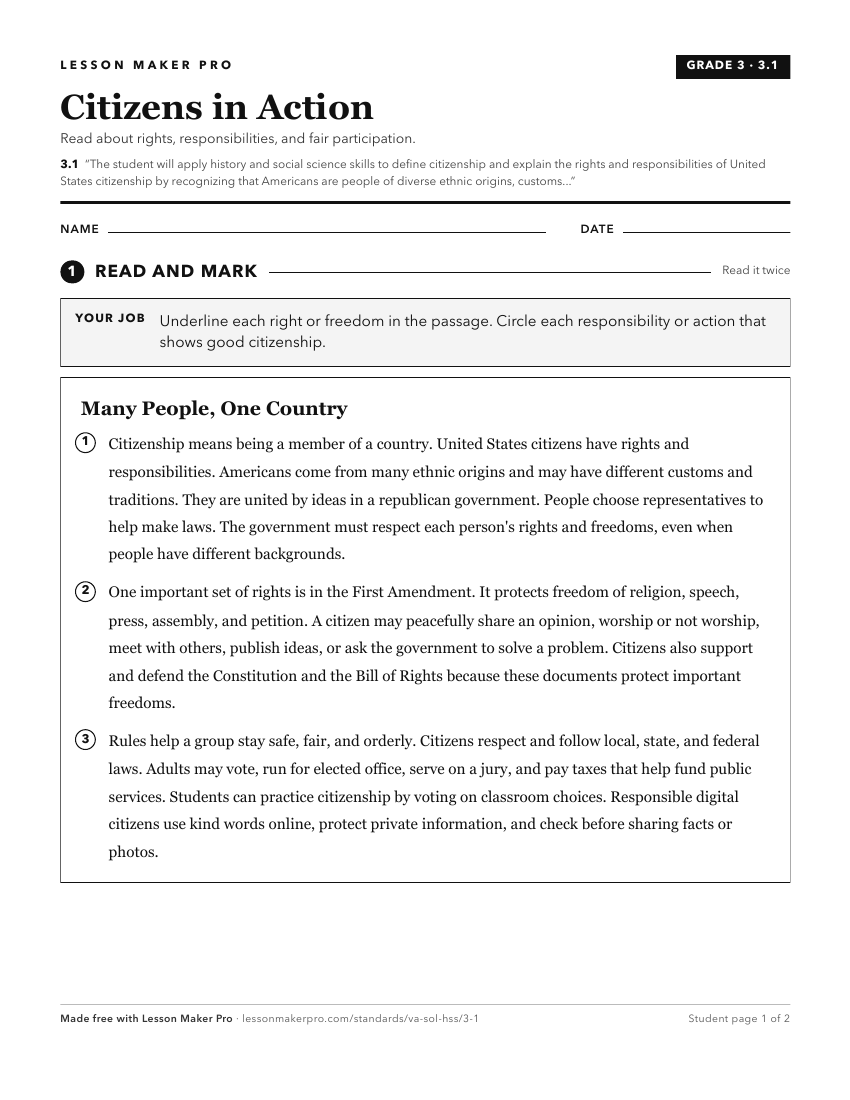
A ready-to-print activity worksheet aligned to 3.1, with an answer key for the teacher on its own page. No account needed.
PDF, US Letter, prints cleanly in black and white.
Download the worksheetKeep exploring
Related Standards
- K.1
The student will apply history and social science skills to practice citizenship in the classroom by
- 2.1
The student will apply history and social science skills to distinguish between the rights and responsibilities that individuals have in the United States inclu...
- 2.2
The student will apply history and social science skills to understand citizenship by
- CE.6
The student will apply history and social science skills to define citizenship by
Turn this cluster into a lesson
Grade, subject, topic, and the complete cluster are prefilled. Create one free, no account needed.
Also for this cluster:Make a WorksheetMake a QuizMake a Sub Lesson