Virginia SOL 3.1.f
The Standard
- 3.1
- The student will apply history and social science skills to define citizenship and explain the rights and responsibilities of United States citizenship by
running for elected office
Virginia Standards of Learning for History and Social Science
Teacher's field guide
What This Standard Means
What Students Need to Do
- Students explain how a citizen becomes a candidate for a public leadership role. They identify basic actions such as choosing an office, stating positions, campaigning, and participating in an election.
What Mastery Looks Like
- Students can describe a candidate’s role and put the main campaign steps in order. They can present a simple platform and explain how voters choose among candidates.
Common Misconceptions
- Students may think a candidate already holds the position or automatically receives it. They may confuse campaigning with voting. Some assume every office has the same age, residency, and citizenship requirements.
How to Assess It
- Give students this exit prompt: “List three things a candidate does before an election, then explain how the winner is chosen.”
Lesson moves
Ways to Teach It
Hold a mock class council election using nomination forms, one-minute speeches, paper ballots, and a public vote count.
Ask students to write: “What qualities should voters look for in a candidate, and why?”
Give pairs campaign-step cards to arrange in order, then have them explain each step to another pair.
Examine a local candidate flyer and identify the office, two stated goals, and what the candidate asks voters to do.
Free download
Printable 3.1.f Worksheet
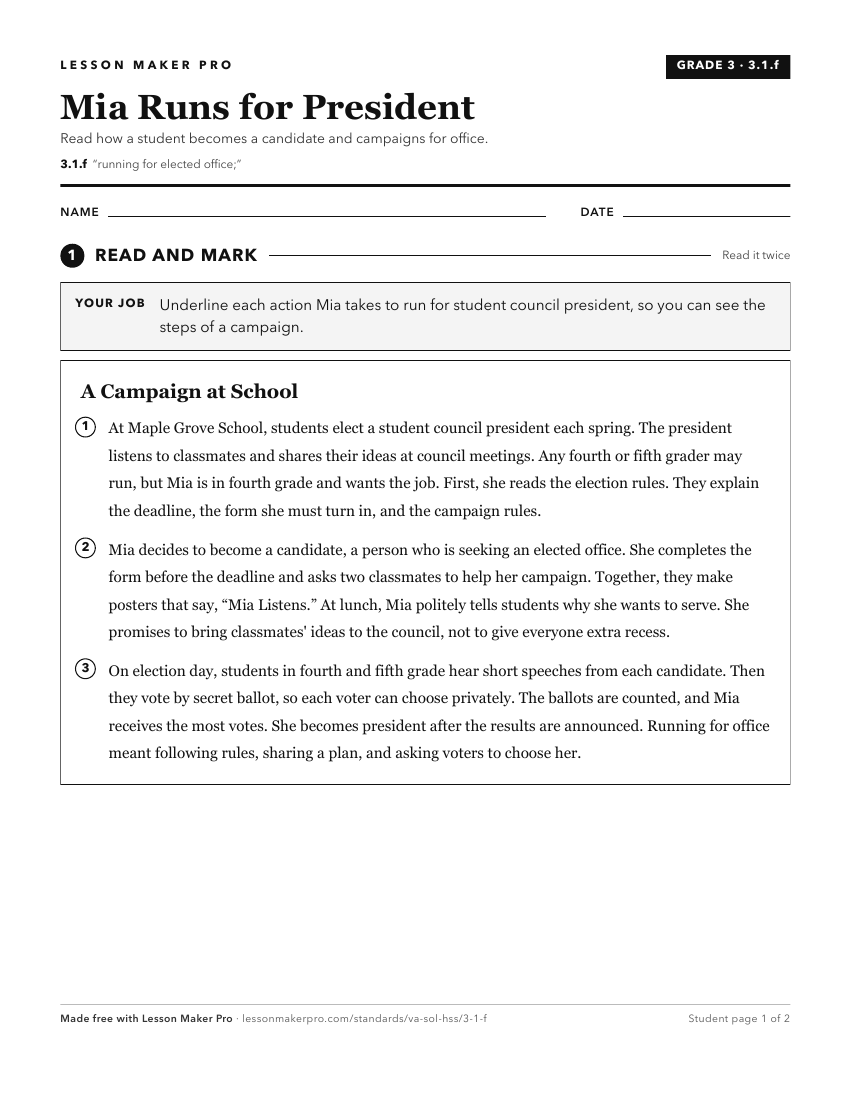
A ready-to-print activity worksheet aligned to 3.1.f, with an answer key for the teacher on its own page. No account needed.
PDF, US Letter, prints cleanly in black and white.
Download the worksheetKeep exploring
Related Standards
- 1.1.g
understanding that local and state government representatives are elected by citizens who vote
- 2.1.d
voting for local, state, and national representatives
- CE.8.b
analyzing campaigns for elective office, with emphasis on the roles of candidates, volunteers, the media, voters, and poll watchers
- 1.2.c
Election Day
Turn this exact standard into a lesson
Grade, subject, topic, and the complete standard are prefilled. Create one free, no account needed.
Also for this standard:Make a WorksheetMake a QuizMake a Sub Lesson