Virginia SOL CE.6
SOL Standard (Skills Cluster)
The student will apply history and social science skills to define citizenship by describing the processes by which an individual becomes a citizen of the United States; describing the rights and privileges guaranteed by the First Amendment, including freedoms of religion, speech, press, assembly, and petition, the rights guaranteed by due process and equal protection under the law (Fifth, Sixth, and Fourteenth Amendments), and protection from unreasonable government search and seizure (Fourth Amendment); examining ways to peacefully work for change in communities or the nation by participating in political campaigns and methods of peacefully petitioning the government for change; examining how civic participation can address community needs and serve the public good, including the importance of volunteering, staying informed about current issues, and respecting differing beliefs in a diverse society; examining the process and importance of immigration policies at different points in U.S. history; and reviewing the criteria and exam for naturalizing U.S. citizens.
Virginia Standards of Learning for History and Social Science
Cluster contents
Skills in This Standard
CE.6 is a Standards of Learning history and social science standard. These are the skills expectations under it.
- CE.6.a
describing the processes by which an individual becomes a citizen of the United States
- CE.6.b
describing the rights and privileges guaranteed by the First Amendment, including freedoms of religion, speech, press, assembly, and petition, the rights guaran...
- CE.6.c
examining ways to peacefully work for change in communities or the nation by participating in political campaigns and methods of peacefully petitioning the gove...
- CE.6.d
examining how civic participation can address community needs and serve the public good, including the importance of volunteering, staying informed about curren...
- CE.6.e
examining the process and importance of immigration policies at different points in U.S. history
- CE.6.f
reviewing the criteria and exam for naturalizing U.S. citizens.
Teacher's field guide
What This Cluster Means
What Students Need to Do
- Students explain citizenship by birth and naturalization, including the application, interview, civics test, and oath. They connect real situations to freedoms and legal protections in the First, Fourth, Fifth, Sixth, and Fourteenth Amendments. They compare immigration policies over time and explain how informed, peaceful civic action can address community needs.
What Mastery Looks Like
- Students can sequence the main naturalization steps and distinguish immigration from citizenship. Given a scenario, they can identify the freedom or legal protection involved and explain their choice. They can use evidence to explain how volunteering, campaigning, petitioning, or staying informed serves the public good.
Common Misconceptions
- Students often treat immigration and citizenship as the same process, or assume every immigrant must naturalize. They may think First Amendment freedoms are unlimited and that due process only means having a trial. They may also overlook volunteering and staying informed as forms of civic participation.
How to Assess It
- Exit ticket: Identify the right or civic process in each case and explain why: police search a backpack without cause, residents petition city council, and a permanent resident takes the civics test.
Lesson moves
Ways to Teach It
Give pairs cards naming naturalization steps and past immigration policies to sequence, then label each card's purpose or effect.
Discuss: Which peaceful civic action would best address a proposed park closure, and how could residents respect opposing views?
Play Rights Referee by reading scenario cards as teams identify the amendment, legal protection, or limit involved.
Use a local news article to identify a community need, then propose one government action and one volunteer response.
Free download
Printable CE.6 Worksheet
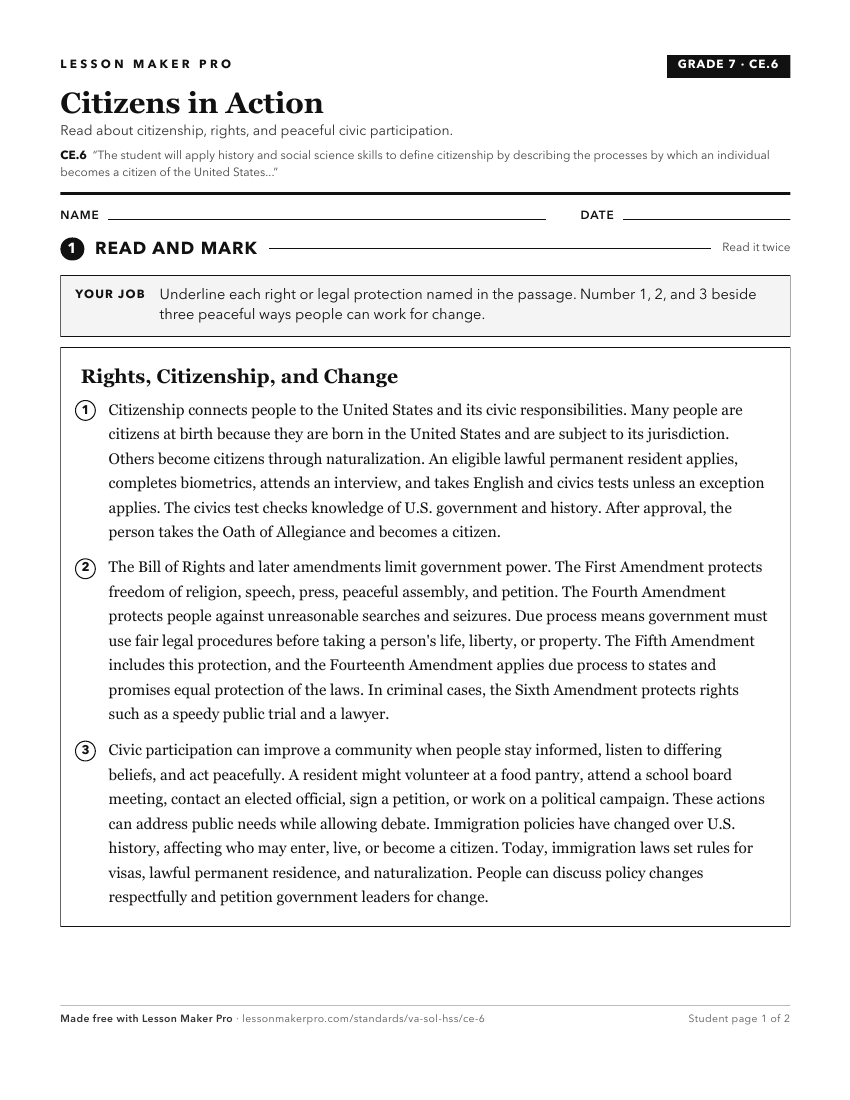
A ready-to-print activity worksheet aligned to CE.6, with an answer key for the teacher on its own page. No account needed.
PDF, US Letter, prints cleanly in black and white.
Download the worksheetKeep exploring
Related Standards
- K.1
The student will apply history and social science skills to practice citizenship in the classroom by
- 1.1
The student will apply history and social science skills to practice citizenship in the classroom by
- 3.1
The student will apply history and social science skills to define citizenship and explain the rights and responsibilities of United States citizenship by
- 2.2
The student will apply history and social science skills to understand citizenship by
Turn this cluster into a lesson
Grade, subject, topic, and the complete cluster are prefilled. Create one free, no account needed.
Also for this cluster:Make a WorksheetMake a QuizMake a Sub Lesson