Mississippi Science MAQ.4
Standard Cluster
Students will examine characteristics of specific aquatic ecosystems and the effects of human and natural phenomena on those ecosystems. Compare and contrast the unique biotic and abiotic characteristics of the following selected aquatic ecosystems: intertidal zone, wetlands/estuaries, coral reef, barrier islands, continental slope/shelf, abyss, rivers/streams/watersheds, and lakes/ponds. Recognize representative examples of plants and animals that would be specifically adapted to the aquatic ecosystems and identify adaptations necessary to survive. Determine the niches within trophic levels in the aquatic ecosystems by creating food webs and researching the symbiotic relationships that exist. Research, analyze, and communicate the effects of urbanization and continued expansion by humans on the aquatic ecosystems’ biodiversity (e.g., land use changes, erosion and sedimentation, over-fishing, invasive/exotic species, and pollution). Explore the importance of species diversity to the biological resources needed by human populations, including food (e.g., aquaculture and mariculture), medicine, and natural aesthetics. Research, analyze, and communicate the effects of natural phenomena (e.g., hurricanes, floods, drought, and sea-level rise) on the aquatic ecosystems. Research, analyze, and communicate which and in what capacity local, state, and federal regulatory agencies are involved in different aquatic ecosystems, including current environmental policies already in place (e.g., the Clean Water Act and the Endangered Species Act). Research should include, but is not limited to, how humans can preserve animal diversity using habitat creation and conservation, research, legislation, medical and breeding programs, and management of genetic diversity at local and global levels. Enrichment: Choose an environmental issue that currently exists in one of the aquatic ecosystems and use an engineering design process to propose and develop a solution using scientific knowledge and best management practices (BMPs). Create an environmental action plan to include moral, legal, societal, political, and economic decisions that impact animal diversity in both the short and long term. Results from developed plans will be communicated with classmates. *
2026 Mississippi College- and Career-Readiness Standards for Science · Flora and Fauna
Cluster contents
Standards in This Cluster
MAQ.4 is a cluster heading. These are the individual standards under it.
- MAQ.4.1
Compare and contrast the unique biotic and abiotic characteristics of the following selected aquatic ecosystems: intertidal zone, wetlands/estuaries, coral reef...
- MAQ.4.2
Recognize representative examples of plants and animals that would be specifically adapted to the aquatic ecosystems and identify adaptations necessary to survi...
- MAQ.4.3
Determine the niches within trophic levels in the aquatic ecosystems by creating food webs and researching the symbiotic relationships that exist.
- MAQ.4.4
Research, analyze, and communicate the effects of urbanization and continued expansion by humans on the aquatic ecosystems’ biodiversity (e.g., land use changes...
- MAQ.4.5
Explore the importance of species diversity to the biological resources needed by human populations, including food (e.g., aquaculture and mariculture), medicin...
- MAQ.4.6
Research, analyze, and communicate the effects of natural phenomena (e.g., hurricanes, floods, drought, and sea-level rise) on the aquatic ecosystems.
- MAQ.4.7
Research, analyze, and communicate which and in what capacity local, state, and federal regulatory agencies are involved in different aquatic ecosystems, includ...
- MAQ.4.8
Enrichment: Choose an environmental issue that currently exists in one of the aquatic ecosystems and use an engineering design process to propose and develop a ...
Teacher's field guide
What This Cluster Means
What Students Need to Do
- Students compare the conditions and living things in coastal, deep-ocean, and freshwater habitats. They connect species adaptations, food webs, and symbiosis to survival. They use evidence to explain how development and natural events change biodiversity.
What Mastery Looks Like
- A student can explain how light, salinity, depth, and water movement affect where a species lives. They can draw a food web, explain a symbiotic relationship, and predict effects of runoff or a storm. They can defend a protection step, explain a benefit to people, and name a relevant agency or law.
Common Misconceptions
- Students may assume all aquatic habitats have saltwater or sunlight. They may draw one food chain instead of a web, or assume both species benefit in every symbiotic relationship. They may blame only pollution and overlook storms, erosion, or invasive species.
How to Assess It
- Exit ticket: A new road sends muddy runoff into an estuary. Sketch a four-species food web, predict one change, and name a law or agency that could limit the damage.
Lesson moves
Ways to Teach It
Shape sand into a barrier island in a tray, pour water along its edge, and sketch where erosion and new sediment appear.
Compare an estuary and the abyss using salinity, light, and one species adaptation in each; explain how each adaptation helps.
Race to build a coral reef food web from species cards, then justify each feeding link and one symbiotic pair.
Trace a nearby stream on a watershed map, find one runoff source, and check a state environmental agency website for a rule protecting it.
Free download
Printable MAQ.4 Worksheet
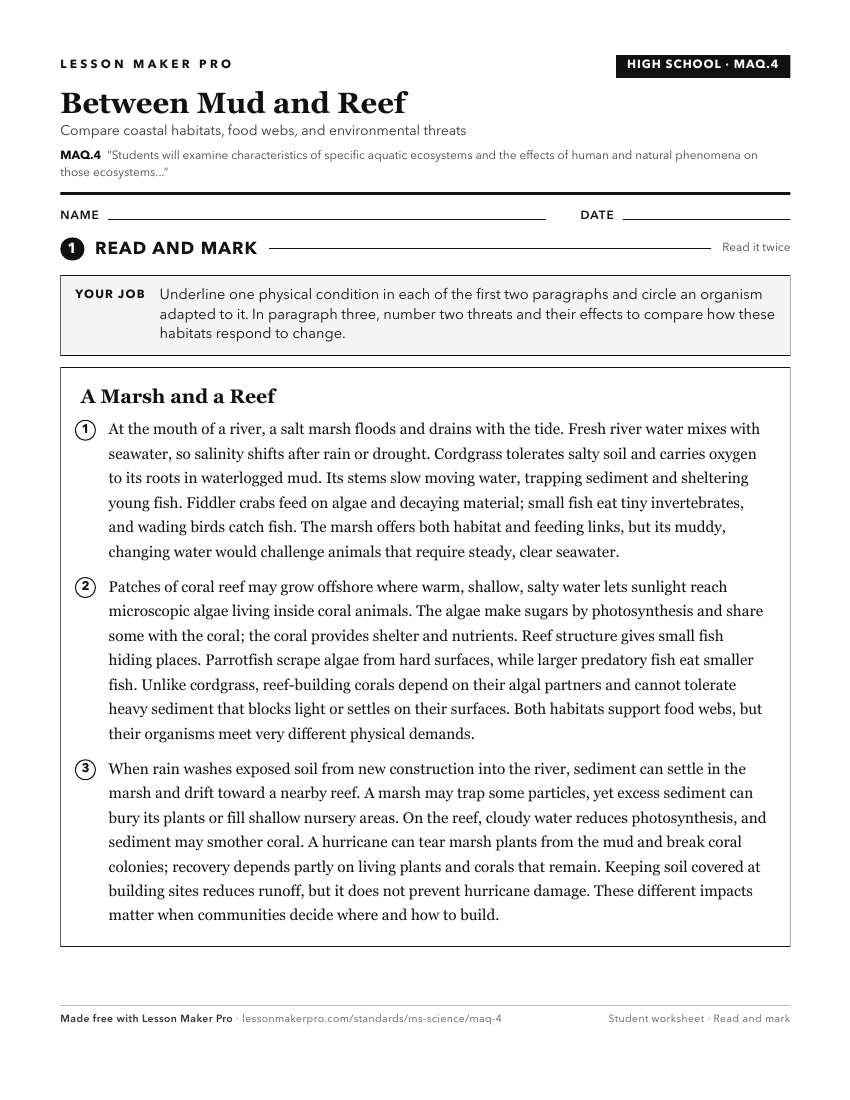
A ready-to-print activity worksheet aligned to MAQ.4, with an answer key for the teacher on its own page. No account needed.
PDF, US Letter, prints cleanly in black and white.
Download the worksheetKeep exploring
Related Standards
- E.4.9C
Students will demonstrate an understanding of how natural processes and human activities affect the features of Earth's landforms and oceans.
- MAQ.5
Students will explore the biodiversity and interactions among aquatic life.
- MAQ.6
Students will investigate characteristics of aquatic invertebrates.
- ENV.2
Students will relate the impact of human activities on the environment, conservation activities, and efforts to maintain and restore ecosystems.
Turn this cluster into a lesson
Grade, subject, topic, and the complete cluster are prefilled. Create one free, no account needed.
Also for this cluster:Make a WorksheetMake a QuizMake a Sub Lesson