Mississippi Science E.4.9C
Standard Cluster
Students will demonstrate an understanding of how natural processes and human activities affect the features of Earth’s landforms and oceans. Analyze and interpret data to describe (i.e., NASA, NOAA, USGS) and predict how natural processes (e.g., weathering, erosion, deposition, earthquakes, tsunamis, hurricanes, or storms) affect Earth’s surface. Develop and use models of natural processes to explain the effect of the movement of water on the ocean shore zone, including beaches, barrier islands, estuaries, and inlets (e.g., marshes, bays, lagoons, fjords, or sound). Construct scientific arguments from evidence to support claims that human activities, such as conservation efforts or pollution, affect the land, oceans, and atmosphere of Earth. Research and explain how systems (i.e., the atmosphere, geosphere, and/or hydrosphere) interact and support life in the biosphere. Obtain and communicate information about severe weather phenomena (e.g., thunderstorms, hurricanes, or tornadoes) to explain steps humans can take to reduce the impact of severe weather events.
2026 Mississippi College- and Career-Readiness Standards for Science · Earth’s Systems and Cycles
Cluster contents
Standards in This Cluster
E.4.9C is a cluster heading. These are the individual standards under it.
- E.4.9C.1
Analyze and interpret data to describe (i.e., NASA, NOAA, USGS) and predict how natural processes (e.g., weathering, erosion, deposition, earthquakes, tsunamis,...
- E.4.9C.2
Develop and use models of natural processes to explain the effect of the movement of water on the ocean shore zone, including beaches, barrier islands, estuarie...
- E.4.9C.3
Construct scientific arguments from evidence to support claims that human activities, such as conservation efforts or pollution, affect the land, oceans, and at...
- E.4.9C.4
Research and explain how systems (i.e., the atmosphere, geosphere, and/or hydrosphere), interact and support life in the biosphere.
- E.4.9C.5
Obtain and communicate information about severe weather phenomena (e.g., thunderstorms, hurricanes, or tornadoes) to explain steps humans can take to reduce the...
Teacher's field guide
What This Cluster Means
What Students Need to Do
- Students use maps and photos to explain and predict changes to land and shorelines. They model how moving water reshapes a coast and explain how air, land, and water support life. They use evidence to explain human impacts and ways to stay safe in storms.
What Mastery Looks Like
- Given two shoreline photos, a student identifies where sand washed away, where it piled up, and what might change next. They can explain how rain carries soil into a marsh and affects plants. They can use evidence to support a way to reduce runoff or storm damage.
Common Misconceptions
- Students may think waves destroy sand instead of moving it. They may miss how rain carries fertilizer from land into water and harms marsh life. They may assume a storm warning prevents damage without a safety plan.
How to Assess It
- Show two photos of a beach before and after a storm. Ask, "Where did sand move, what might happen next, and what in the photos supports your answer?"
Lesson moves
Ways to Teach It
Build a sand beach and low barrier island in a tray, pour water along the shore, and mark where sand moves.
Show a photo of marsh grass and ask, "How do air, water, and soil help this grass grow?"
Give partners two labeled shoreline sketches from before and after a storm, then have them circle lost sand and predict the next change.
Read a sample hurricane alert and write two family actions, such as charging a phone and avoiding floodwater.
Free download
Printable E.4.9C Worksheet
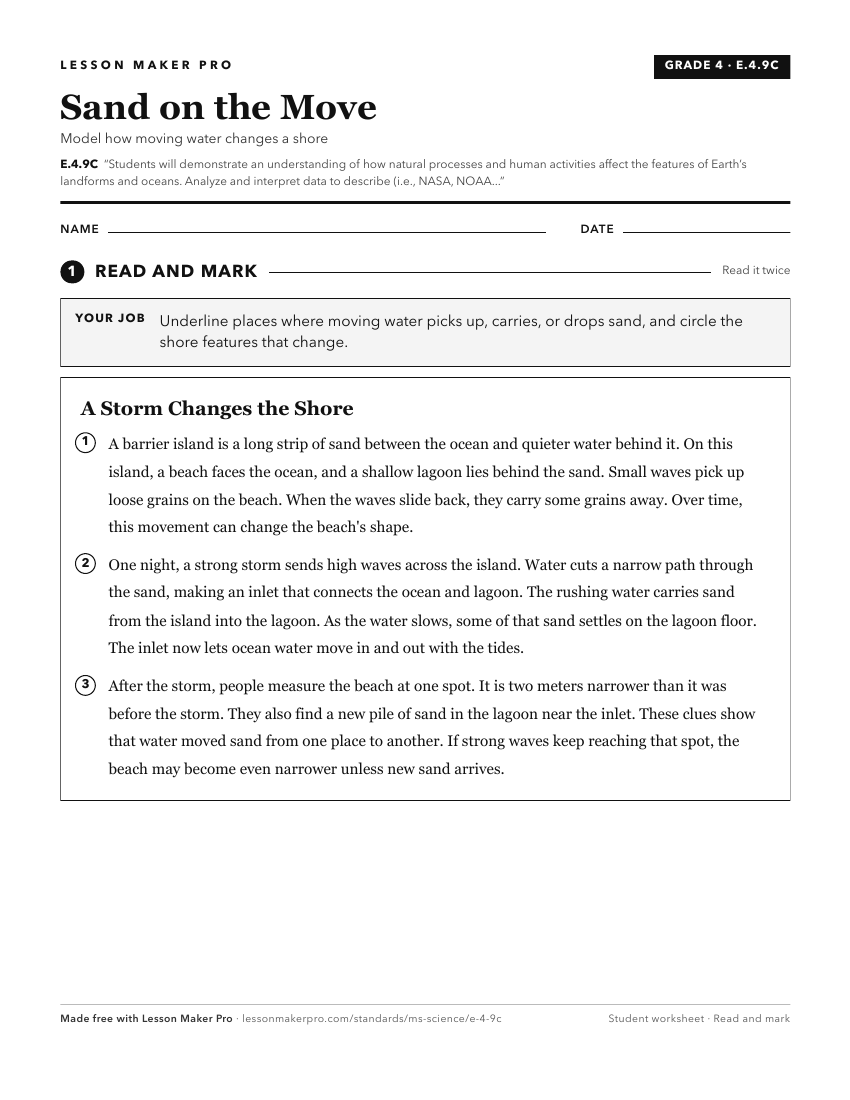
A ready-to-print activity worksheet aligned to E.4.9C, with an answer key for the teacher on its own page. No account needed.
PDF, US Letter, prints cleanly in black and white.
Download the worksheetKeep exploring
Related Standards
- E.3.9
Students will demonstrate an understanding of how the Earth’s systems (i.e., geosphere, hydrosphere, atmosphere, and biosphere) interact in multiple ways to aff...
- E.5.10
Students will demonstrate an understanding of the effects of human interaction with Earth and how Earth’s natural resources can be protected and conserved.
- E.3.7B
Students will demonstrate an understanding of the composition of Earth and the processes which change Earth's landforms.
- E.7.9B
Students will demonstrate an understanding of the relationship between natural phenomena, human activity, and global climate change.
Turn this cluster into a lesson
Grade, subject, topic, and the complete cluster are prefilled. Create one free, no account needed.
Also for this cluster:Make a WorksheetMake a QuizMake a Sub Lesson