Mississippi Science E.4.9C.1
The Standard
- E.4.9C
- Students will demonstrate an understanding of how natural processes and human activities affect the features of Earth's landforms and oceans.
Analyze and interpret data to describe (i.e., NASA, NOAA, USGS) and predict how natural processes (e.g., weathering, erosion, deposition, earthquakes, tsunamis, hurricanes, or storms) affect Earth’s surface.
2026 Mississippi College- and Career-Readiness Standards for Science · Earth’s Systems and Cycles
Teacher's field guide
What This Standard Means
What Students Need to Do
- Students compare dated photos or measurements to spot how a storm, flood, or earthquake changed the land. They use that evidence to predict what could happen next.
What Mastery Looks Like
- A student can tell whether sediment moved away or built up by comparing photos and measurements. They predict a likely change after a similar event and point to the data that support it.
Common Misconceptions
- Students often call rock cracking erosion, even when nothing moves. They may call sand piled at a river bend erosion instead of deposition. Some predict the same damage after every storm without checking the data.
How to Assess It
- Exit ticket: A beach is 20 meters wide before a storm, 17 meters after one storm, and 14 meters after a second similar storm. Name the process, predict its width after another similar storm, and cite the numbers that support your prediction.
Lesson moves
Ways to Teach It
Build a sand hill in a tray, pour one cup of water down it, then sketch where sand moved and where it settled.
Show NOAA before-and-after hurricane shoreline photos and ask, 'Where did the sand go, and what in the photos supports your answer?'
Give teams four paired river photos; have them sort the pairs into erosion and deposition, citing one visible change for each.
Show a photo of mud at a storm drain after rain; students mark a likely runoff path and predict where soil might collect next.
Free download
Printable E.4.9C.1 Worksheet
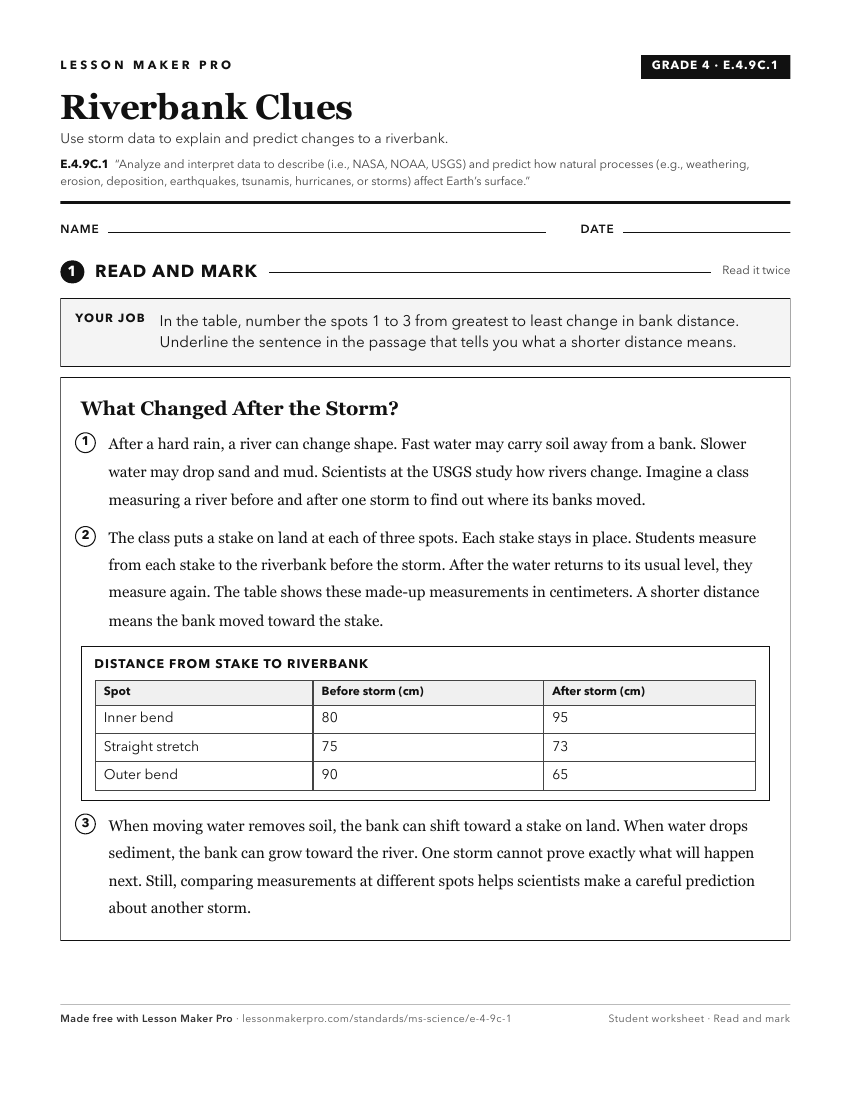
A ready-to-print activity worksheet aligned to E.4.9C.1, with an answer key for the teacher on its own page. No account needed.
PDF, US Letter, prints cleanly in black and white.
Download the worksheetKeep exploring
Related Standards
- E.6.8.7
Analyze and interpret data from the surface features of the Sun (e.g., photosphere, corona, sunspots, prominences, and solar flares) to predict how these featur...
- MAQ.4.6
Research, analyze, and communicate the effects of natural phenomena (e.g., hurricanes, floods, drought, and sea-level rise) on the aquatic ecosystems.
- ENV.3.2
Interpret data and climate models to predict how global and regional climate change can affect Earth’s systems (e.g., precipitation, temperature, impacts on sea...
- E.4.9B.1
Analyze and interpret data (e.g., temperature, precipitation, wind speed/direction, relative humidity, or cloud types) to predict changes in weather over time.
Turn this exact standard into a lesson
Grade, subject, topic, and the complete standard are prefilled. Create one free, no account needed.
Also for this standard:Make a WorksheetMake a QuizMake a Sub Lesson