Georgia 7.P.EICC.4
Georgia Standard (Expectation Cluster)
Writing Processes Compose a range of texts for a variety of purposes and audiences, flexibly engaging in writing processes to plan, draft, evaluate, revise, and edit texts.
Georgia's K-12 English Language Arts Standards · Practices (P)
Cluster contents
Expectations in This Standard
7.P.EICC.4 is a Georgia English Language Arts standard. These are the expectations under it.
- 7.P.EICC.4.a
Establish a purpose and goals for writing and identify a target audience. (C)
- 7.P.EICC.4.b
Plan how to organize the text by selecting modes, genres, and structures that will achieve the purpose and meet the needs of the target audience. (C)
- 7.P.EICC.4.c
Generate ideas for content by assessing prior knowledge, gathering information from texts, and engaging in discussions with others. (C)
- 7.P.EICC.4.d
Link ideas and information to the organization plan, highlighting ideas and information that are most relevant, useful, and impactful. (C)
- 7.P.EICC.4.e
Construct an initial draft by integrating ideas and information; selecting words, phrases, and sentences; and incorporating craft techniques that will best achi...
- 7.P.EICC.4.f
Evaluate the text’s effectiveness based on self-review or feedback from others, determining whether the text matches the purpose and goals for writing. (C)
- 7.P.EICC.4.g
Make changes to the text based on self-evaluation or external feedback, revising the organization, ideas, information, word choices, and craft techniques in ord...
- 7.P.EICC.4.h
Edit the text, ensuring it adheres to the conventions of written language. (C)
Teacher's field guide
What This Cluster Means
What Students Need to Do
- Students write narratives, explanations, arguments, and practical texts for named readers and clear goals. They gather ideas, plan, draft, reread, use feedback, revise content, and edit conventions as needed.
What Mastery Looks Like
- Students can produce narratives, explanations, arguments, and practical texts that fit a named audience and purpose. Their revisions strengthen content and structure, while their edits improve clarity and correctness.
Common Misconceptions
- Students often treat a first draft as finished or think every piece must follow the same fixed steps. They may confuse revision, which improves ideas and organization, with editing, which corrects sentences and conventions.
How to Assess It
- Ask students to write a six-sentence announcement persuading classmates to attend a book swap. Have them submit a quick plan, a draft, and two labeled revisions.
Lesson moves
Ways to Teach It
Give pairs a rough paragraph, colored pens, and revision cards directing them to add evidence, reorder ideas, clarify wording, and correct errors.
Ask students to explain which writing step helps them most, which they skip, and how that choice affects the finished piece.
Run a revision relay where teams improve one draft in rounds focused on ideas, organization, word choice, sentences, and conventions.
Have students write the same event announcement for classmates and the principal, changing details, tone, and format for each reader.
Free download
Printable 7.P.EICC.4 Worksheet
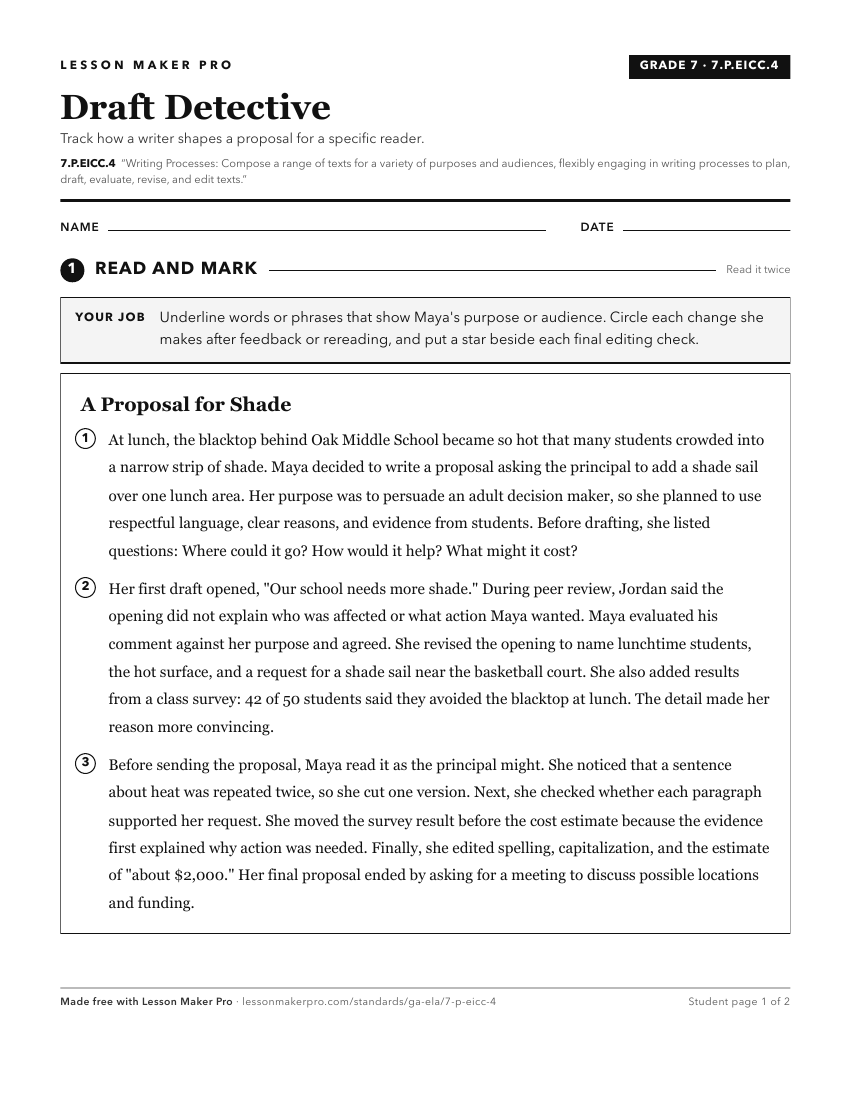
A ready-to-print activity worksheet aligned to 7.P.EICC.4, with an answer key for the teacher on its own page. No account needed.
PDF, US Letter, prints cleanly in black and white.
Download the worksheetKeep exploring
Related Standards
Turn this cluster into a lesson
Grade, subject, topic, and the complete cluster are prefilled. Create one free, no account needed.
Also for this cluster:Make a WorksheetMake a QuizMake a Sub Lesson