Georgia 4.P.EICC.1
Georgia Standard (Expectation Cluster)
Reader & Writer Identity Build an identity as a reader and writer, developing a repertoire of resources and tools to continuously expand participation as an active consumer and producer of texts.
Georgia's K-12 English Language Arts Standards · Practices (P)
Cluster contents
Expectations in This Standard
4.P.EICC.1 is a Georgia English Language Arts standard. These are the expectations under it.
- 4.P.EICC.1.a
Generate, understand, monitor, and discuss personal and academic reading and writing goals, revising as appropriate. (I/C)
- 4.P.EICC.1.b
Discuss or write about personal and academic reading and writing preferences, referring to specific techniques, topics, modes, and genres that resonate most. (I...
- 4.P.EICC.1.c
Select, read, and write texts of personal interest and academic relevance to grade-level texts and topics. (I/C)
- 4.P.EICC.1.d
Build a repertoire of comprehension and composition skills, strategies, and techniques, drawing from them as needed to aid the interpretation and construction o...
- 4.P.EICC.1.e
Participate in a community of readers and writers by developing group norms, discussing texts, sharing individual writing, listening as others share their writi...
- 4.P.EICC.1.f
Develop independence and autonomy as a reader and writer. (I/C)
Teacher's field guide
What This Cluster Means
What Students Need to Do
- Students develop a clear sense of who they are as readers and writers. They choose resources and strategies that help them understand texts and create their own. They reflect on their habits and set practical goals for growth.
What Mastery Looks Like
- Students choose texts, topics, and tools that fit their interests and purposes. They can explain how a notebook, mentor text, dictionary, annotation, or feedback helped them improve.
Common Misconceptions
- Students may label themselves as either good or bad readers and writers. They may think tools such as dictionaries, mentor texts, and peer feedback are only for students who struggle. They may also see reading and writing as school tasks rather than habits used outside class.
How to Assess It
- Give an exit ticket: Name one reading or writing tool you used today, explain how it helped, and name one tool you will try next.
Lesson moves
Ways to Teach It
Assemble reader-writer toolkits with sticky notes, dictionaries, notebooks, bookmarks, and mentor texts, then use one tool during independent work.
Write about a time reading or writing felt successful, then name the choice, habit, or resource that helped.
Play Resource Match by pairing task cards, such as revising dialogue or decoding a word, with the most useful tool.
Read two community event flyers, discuss their choices, then create a flyer for a real school event or club.
Free download
Printable 4.P.EICC.1 Worksheet
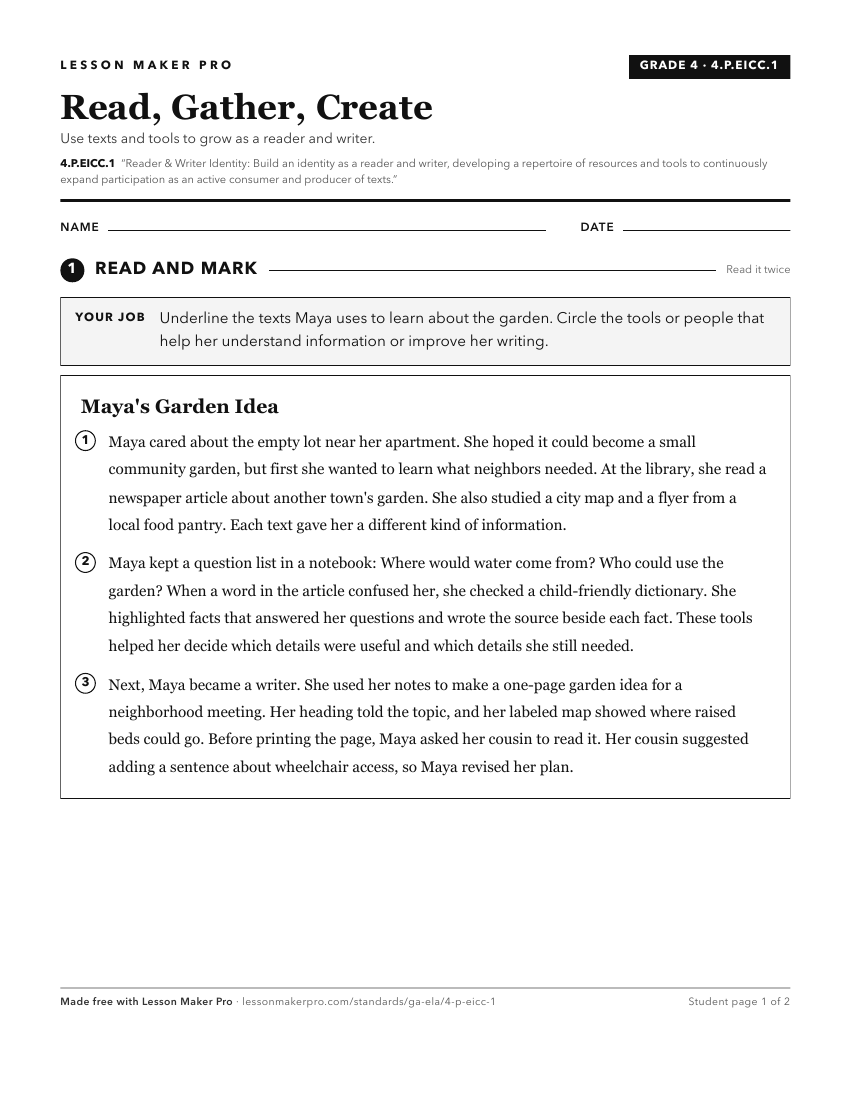
A ready-to-print activity worksheet aligned to 4.P.EICC.1, with an answer key for the teacher on its own page. No account needed.
PDF, US Letter, prints cleanly in black and white.
Download the worksheetKeep exploring
Related Standards
Turn this cluster into a lesson
Grade, subject, topic, and the complete cluster are prefilled. Create one free, no account needed.
Also for this cluster:Make a WorksheetMake a QuizMake a Sub Lesson