Virginia SOL 8.C.1
SOL Standard (Knowledge and Skills Cluster)
Communication, Listening, and Collaboration
Virginia Standards of Learning for English
Cluster contents
Knowledge and Skills in This Standard
8.C.1 is a Standards of Learning standard. These are the knowledge and skills expectations under it.
- 8.C.1.A.i
Listening actively, offering and seeking ideas, and setting guidelines for presentations and discussions.
- 8.C.1.A.ii
Working effectively and respectfully by actively contributing relevant and wellsupported ideas and opinions and sharing responsibility for the collaborative wor...
- 8.C.1.A.iii
Asking clarifying questions and responding appropriately to others’ questions to encourage discussion, foster understanding, and maintain focus on the topic.
- 8.C.1.A.iv
Communicating agreement or tactful disagreement with others’ ideas, using carefully constructed responses.
- 8.C.1.A.v
Thoughtfully paraphrasing and summarizing ideas made during discussions.
- 8.C.1.A.vi
Acknowledging new insights expressed by others, and, when justified, modifying their own views.
- 8.C.1.A.vii
Valuing contributions made by each group member while exhibiting a willingness to make necessary concessions to accomplish a common goal.
- 8.C.1.A.viii
Using self-reflection to evaluate one’s own role in preparation and participation in small-group activities.
Teacher's field guide
What This Cluster Means
What Students Need to Do
- Students prepare for group discussions, listen closely, and contribute relevant ideas supported by evidence. They ask clarifying questions, respond respectfully, paraphrase others, share responsibility, and reflect on their participation.
What Mastery Looks Like
- Students enter discussions prepared and support comments with details from the text or topic. They build on peers’ ideas, ask useful questions, and disagree without attacking anyone. They can summarize the group’s thinking and name how their own view changed.
Common Misconceptions
- Students may think participation means speaking often, even when comments repeat ideas or lack evidence. Some treat disagreement as personal criticism or ask questions that shift the topic. Others summarize only their own points and ignore how a peer’s idea changed their thinking.
How to Assess It
- Give groups a short editorial and six minutes to discuss whether its claim is convincing. Use a checklist for evidence, clarifying questions, paraphrasing, tactful disagreement, shared participation, and a brief self-reflection.
Lesson moves
Ways to Teach It
Give groups quote cards from a shared text, then have them arrange the strongest evidence while explaining and revising their choices.
Ask, “Which class discussion habit helps a group most, and why?” Require students to paraphrase one peer before adding their view.
Play Clarify, Paraphrase, Challenge, where students draw a response card and use that move during a timed discussion.
Hold a mock student council meeting about a school policy, with assigned roles, speaking guidelines, evidence, and a shared recommendation.
Free download
Printable 8.C.1 Worksheet
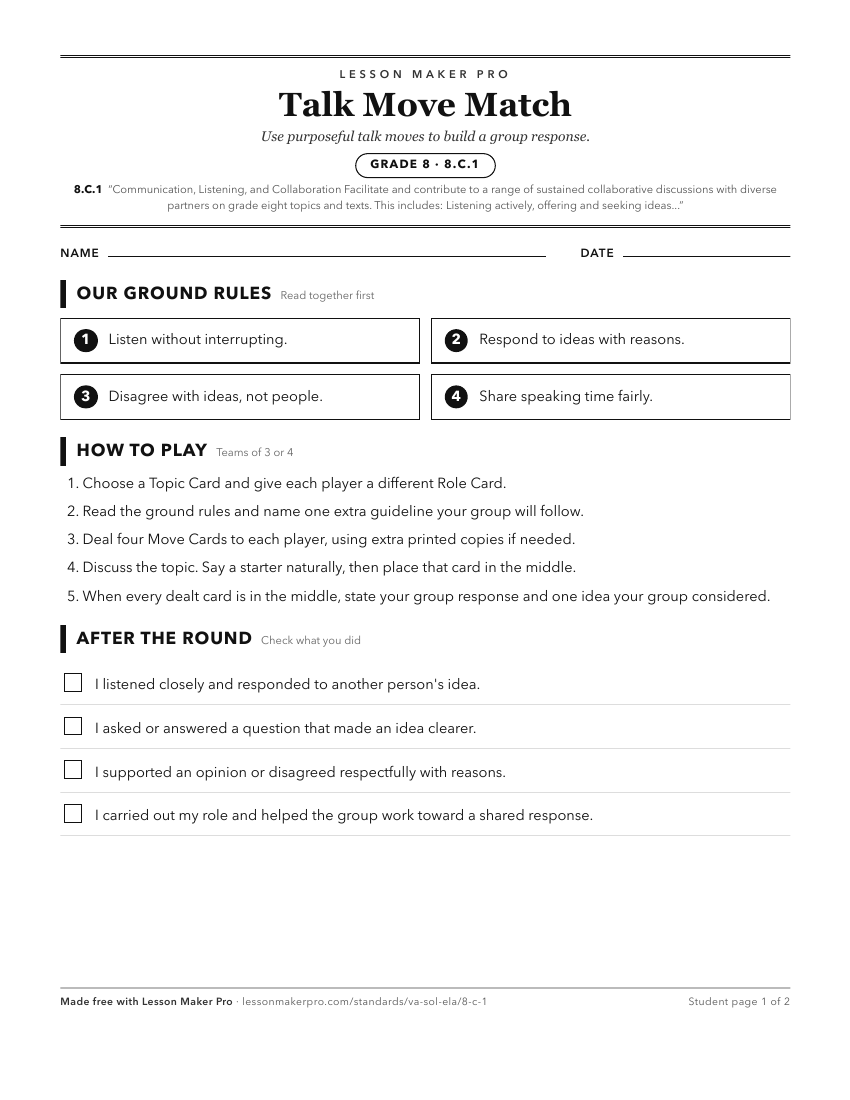
A ready-to-print activity worksheet aligned to 8.C.1, with an answer key for the teacher on its own page. No account needed.
PDF, US Letter, prints cleanly in black and white.
Download the worksheetKeep exploring
Related Standards
Turn this cluster into a lesson
Grade, subject, and topic are prefilled; the lesson picks the standards under this heading. Create one free, no account needed.
Also for this cluster:Make a WorksheetMake a QuizMake a Sub Lesson