Virginia SOL 6.RL
SOL Standard (Knowledge and Skills Cluster)
The student will use textual evidence to demonstrate comprehension and build knowledge from a variety of grade-level complex literary texts read to include short stories, literary nonfiction, novels, poetry, and drama.
Virginia Standards of Learning for English
Cluster contents
Knowledge and Skills in This Standard
6.RL is a Standards of Learning standard. These are the knowledge and skills expectations under it.
- 6.RL.1
Key Ideas and Plot Details
- 6.RL.1.A
Summarize texts, including determining the central theme of stories, plays, or poems, and how they are conveyed through specific details.
- 6.RL.1.B
Describe plot developments in stories and dramas by examining the exposition, initiating event, central conflict, rising action, climax, falling action, and res...
- 6.RL.1.C
Differentiate between internal and external conflicts (e.g., individual vs. Individual, individual vs. Nature, individual vs. Society, individual vs. Technology...
- 6.RL.1.D
Explain how static and dynamic characters impact the plot.
- 6.RL.1.E
Explain the role of the protagonist and antagonist on plot events.
- 6.RL.2
Craft and Style
- 6.RL.2.A
Describe the poetic elements in prose and poetry (e.g., rhyme, rhythm, repetition, alliteration, and onomatopoeia) and their intended impact on the reader.
- 6.RL.2.B
Explain elements of author’s style as purposeful choices (e.g., imagery, figurative language, and word choice) to develop tone.
- 6.RL.2.C
Explain how an author develops the point of view (e.g., first-person, third person limited, third-person omniscient) of the narrator or speaker in a text and in...
- 6.RL.3
Integration of Concepts
- 6.RL.3.A
Describe how the interactions between individuals, settings, events, and ideas within a text influence one another.
- 6.RL.3.B
Compare and contrast details in two or more paired literary fiction and nonfiction texts on the same topic or with similar themes, including how chapters, scene...
Teacher's field guide
What This Cluster Means
What Students Need to Do
- Students support their understanding of literary texts with accurate quotations and details. They summarize, determine themes, and analyze plot, conflict, characters, perspective, language, and structure. They also compare how related literary and nonfiction texts present similar topics or themes.
What Mastery Looks Like
- A student writes an objective summary and states a theme as a full idea, supported by precise details. They accurately trace plot stages, conflict, character roles, and character changes. They explain how perspective, language, and structure shape one text or distinguish paired texts.
Common Misconceptions
- Students may retell every event, name a one-word topic as the theme, or choose a quotation that does not support the claim. They often label the climax as the final event and treat any argument as an internal conflict. They may confuse the narrator with the author or name a technique without explaining its effect.
How to Assess It
- Give students a one-page story excerpt and ask: “State the theme, cite two supporting details, and explain how one conflict changes the protagonist or plot.”
Lesson moves
Ways to Teach It
Give groups event cards from a familiar story; students sequence them, label plot stages, and connect each event to a conflict or character change.
Ask: How would one key scene change if another character narrated it? Students rewrite six lines, then explain lost or gained information.
Run a quote sort: teams classify cards as imagery, figurative language, sound device, or tone, then defend each choice with its effect.
Pair a survival story with a news article about the same hazard; students compare details, structure, perspective, and the conflict each presents.
Free download
Printable 6.RL Worksheet
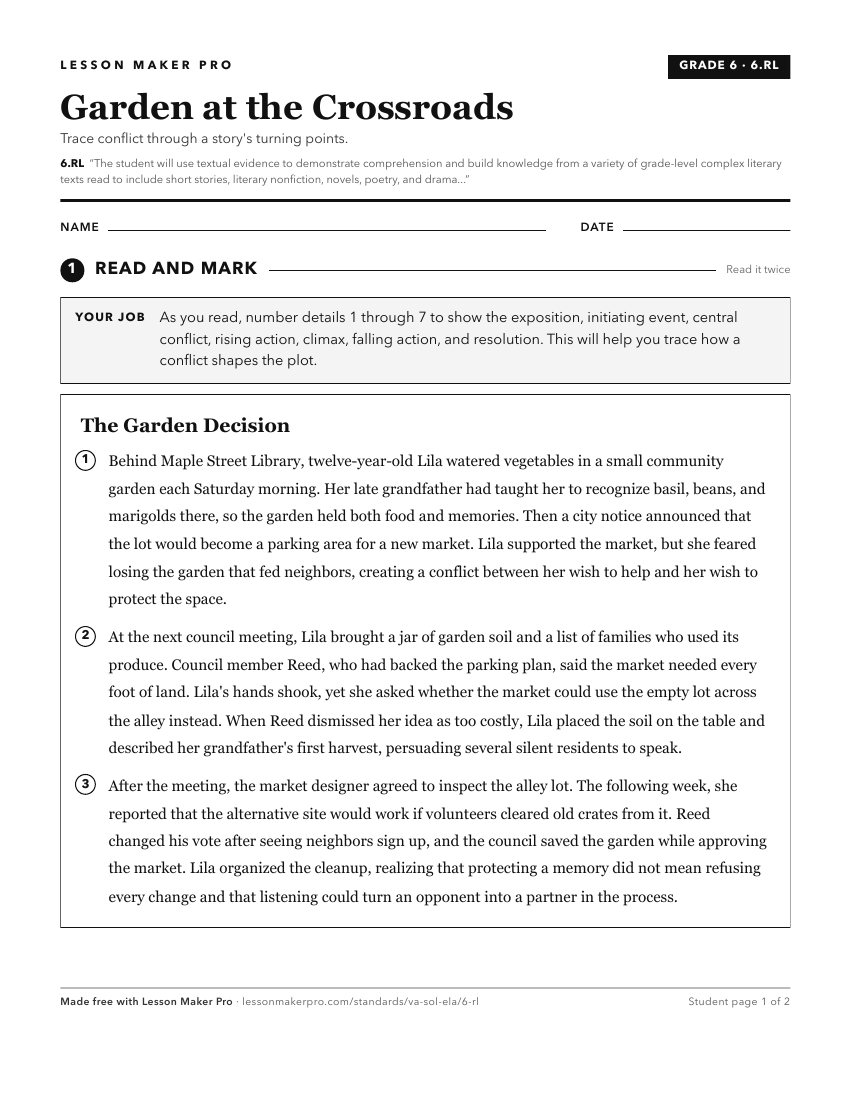
A ready-to-print activity worksheet aligned to 6.RL, with an answer key for the teacher on its own page. No account needed.
PDF, US Letter, prints cleanly in black and white.
Download the worksheetKeep exploring
Related Standards
- 10.RL
The student will use textual evidence to demonstrate comprehension and build knowledge from a variety of grade-level complex literary texts read to include lite...
- 8.RL
The 8th Grade version of this standard.
- 9.RL
The student will use textual evidence to demonstrate comprehension and build knowledge from a variety of grade-level complex literary texts read to include narr...
- 7.RL
The 7th Grade version of this standard.
Turn this cluster into a lesson
Grade, subject, topic, and the complete cluster are prefilled. Create one free, no account needed.
Also for this cluster:Make a WorksheetMake a QuizMake a Sub Lesson