Virginia SOL 6.RL.2
SOL Standard (Knowledge and Skills Cluster)
- 6.RL
- The student will use textual evidence to demonstrate comprehension and build knowledge from a variety of grade-level complex literary texts read to include short stories, literary nonfiction, novels, poetry, and drama.
Craft and Style Describe the poetic elements in prose and poetry (e.g., rhyme, rhythm, repetition, alliteration, and onomatopoeia) and their intended impact on the reader. Explain elements of author’s style as purposeful choices (e.g., imagery, figurative language, and word choice) to develop tone. Explain how an author develops the point of view (e.g., first-person, third person limited, third-person omniscient) of the narrator or speaker in a text and influences how events are described in stories, plays, or poems.
Virginia Standards of Learning for English
Cluster contents
Knowledge and Skills in This Standard
6.RL.2 is a Standards of Learning standard. These are the knowledge and skills expectations under it.
- 6.RL.2.A
Describe the poetic elements in prose and poetry (e.g., rhyme, rhythm, repetition, alliteration, and onomatopoeia) and their intended impact on the reader.
- 6.RL.2.B
Explain elements of author’s style as purposeful choices (e.g., imagery, figurative language, and word choice) to develop tone.
- 6.RL.2.C
Explain how an author develops the point of view (e.g., first-person, third person limited, third-person omniscient) of the narrator or speaker in a text and in...
Teacher's field guide
What This Cluster Means
What Students Need to Do
- Students identify sound devices and explain how they affect a reader’s experience. They analyze imagery, figurative language, and word choice to determine tone. They also explain how narration shapes what readers know and how events are described.
What Mastery Looks Like
- A student can point to exact words that create rhythm, sound, imagery, or figurative meaning and explain their impact. The student can identify the narrator’s point of view and explain how it limits or expands what readers know.
Common Misconceptions
- Students often name a device but do not explain its effect. They may confuse the narrator with the author or mix up third-person limited and omniscient narration. They may also describe mood instead of the author’s tone.
How to Assess It
- Give students a short narrative excerpt with strong sound and imagery. Ask them to name one device, identify the tone and point of view, and explain how the evidence supports each answer.
Lesson moves
Ways to Teach It
Give pairs printed poems and colored highlighters to mark rhyme, repetition, alliteration, onomatopoeia, imagery, and figurative language, then label each effect.
Ask students to rewrite one tense scene with calm word choices, then discuss how the new language changes the author’s tone.
Play a point-of-view sorting game using short passage cards labeled first person, third-person limited, or third-person omniscient, with evidence required.
Compare a song lyric and spoken-word performance, then explain how repetition, rhythm, and delivery shape tone and audience response.
Free download
Printable 6.RL.2 Worksheet
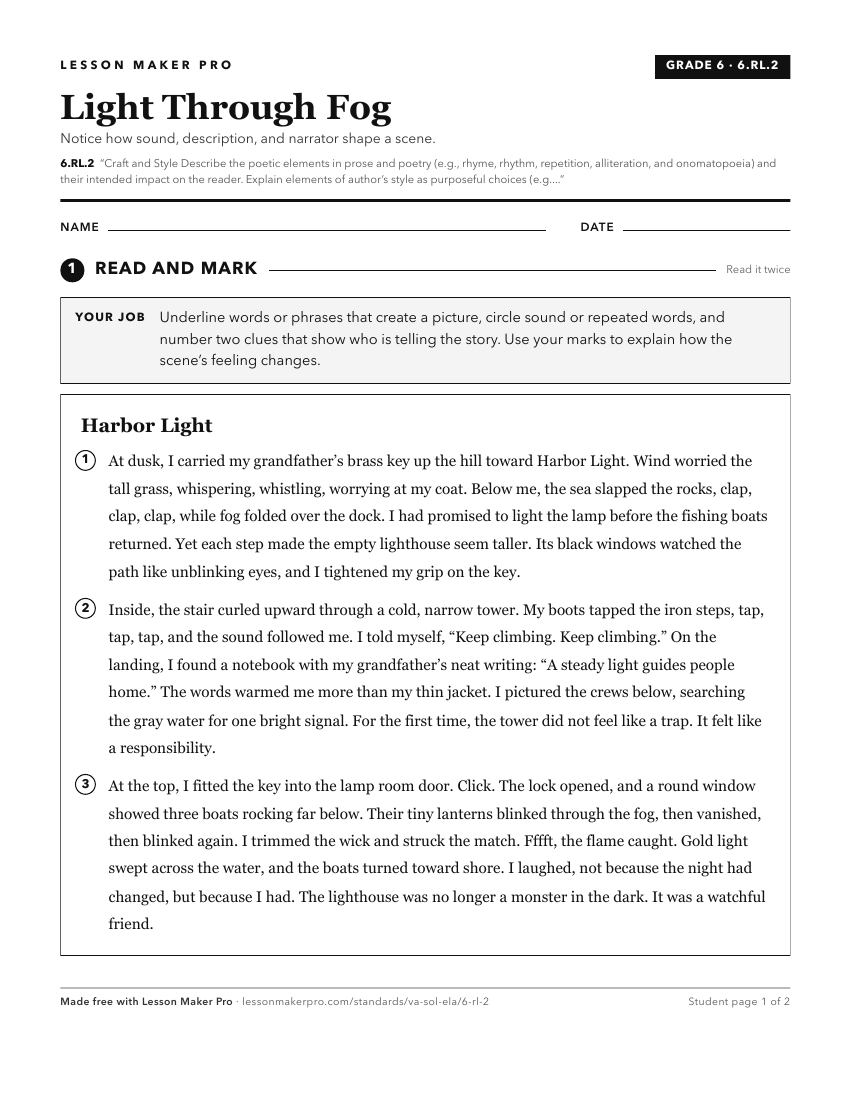
A ready-to-print activity worksheet aligned to 6.RL.2, with an answer key for the teacher on its own page. No account needed.
PDF, US Letter, prints cleanly in black and white.
Download the worksheetKeep exploring
Related Standards
Turn this cluster into a lesson
Grade, subject, and topic are prefilled; the lesson picks the standards under this heading. Create one free, no account needed.
Also for this cluster:Make a WorksheetMake a QuizMake a Sub Lesson