Virginia SOL 6.RL.2.A
The Standard
Describe the poetic elements in prose and poetry (e.g., rhyme, rhythm, repetition, alliteration, and onomatopoeia) and their intended impact on the reader.
Virginia Standards of Learning for English · Craft and Style
Teacher's field guide
What This Standard Means
What Students Need to Do
- Students find sound patterns and repeated language in poems and prose. They name the device and point to evidence. They explain how the choice affects sound, pace, mood, emphasis, or memory.
What Mastery Looks Like
- Students accurately name a sound device and quote the words that create it. They explain how it shapes pace, mood, emphasis, meaning, or memory. Their explanation connects the writer’s choice to a likely reader response.
Common Misconceptions
- Students may think rhyme only occurs at line endings or that rhythm and rhyme mean the same thing. They may label every repeated sound as alliteration or every vivid word as onomatopoeia. Some name a device but give a vague effect, such as “it makes the text interesting.”
How to Assess It
- Use this exit ticket: “The buzzing bees bumped by” repeats sounds and imitates a sound. Name both devices and explain one intended effect.
Lesson moves
Ways to Teach It
Give pairs word and line cards to sort under rhyme, rhythm, repetition, alliteration, or onomatopoeia, then defend one placement.
Ask students to write: How does repeating “Never again” change the speaker’s tone and the reader’s response?
Play Sound Device Relay: teams label a projected line and earn a bonus point for explaining its effect.
Have students examine a slogan, song chorus, or comic sound effect and explain why its sound pattern makes it memorable.
Free download
Printable 6.RL.2.A Worksheet
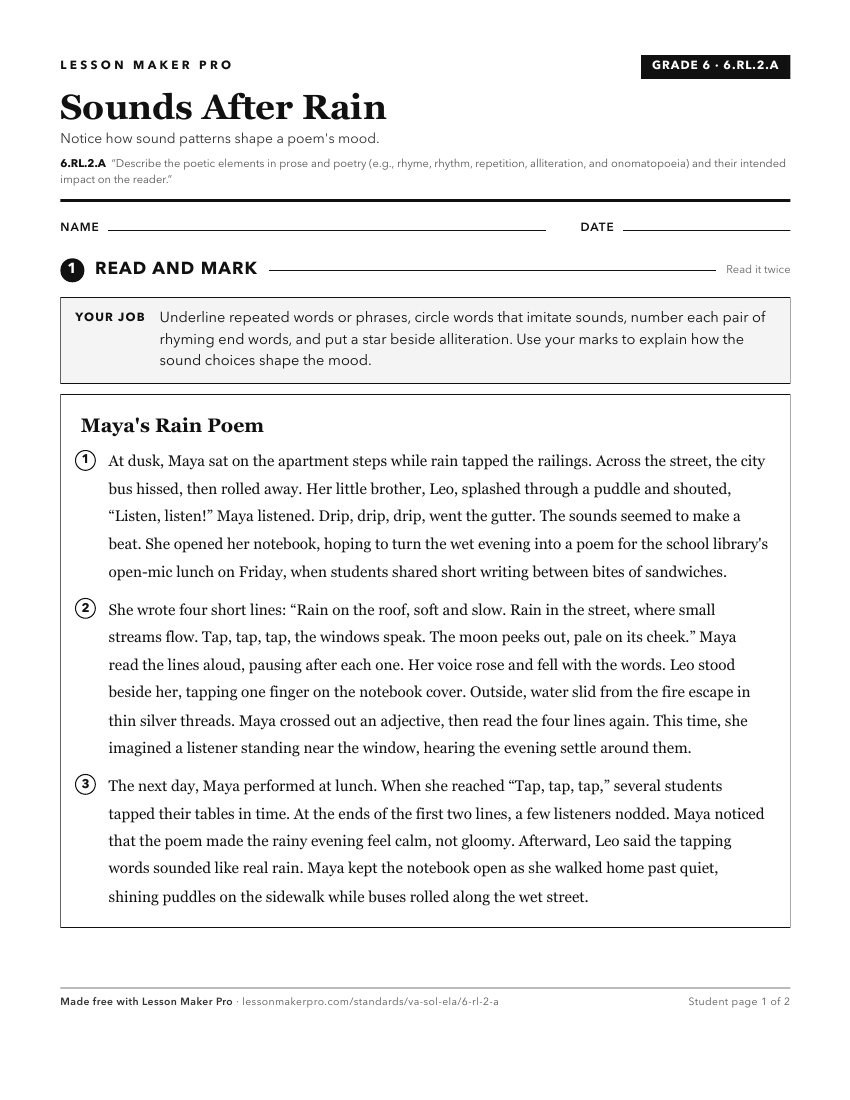
A ready-to-print activity worksheet aligned to 6.RL.2.A, with an answer key for the teacher on its own page. No account needed.
PDF, US Letter, prints cleanly in black and white.
Download the worksheetKeep exploring
Related Standards
- 5.RL.2.C
Analyze how the characteristics of a poem and the author’s use of patterns of sound (e.g., rhyme, rhythm, alliteration, consonance) impact meaning.
- 8.RL.2.A
Interpret the meaning and analyze the impact of poetic elements in prose and poetry (e.g., rhyme, rhythm, repetition, alliteration, and onomatopoeia) on the rea...
- 9.RL.2.A
Analyze the use of rhyme, rhythm, sound, imagery, and other literary devices in poetry to convey a message and elicit a reader’s emotions.
- 7.RL.2.A
Analyze how elements of authors’ styles (e.g., word choice, dialogue, form, voice, rhyme, rhythm, and/or sound devices) contribute to meaning in various forms o...
Turn this exact standard into a lesson
Grade, subject, topic, and the complete standard are prefilled. Create one free, no account needed.
Also for this standard:Make a WorksheetMake a QuizMake a Sub Lesson