Virginia SOL 5.RL.2.C
The Standard
Analyze how the characteristics of a poem and the author’s use of patterns of sound (e.g., rhyme, rhythm, alliteration, consonance) impact meaning.
Virginia Standards of Learning for English · Craft and Style
Teacher's field guide
What This Standard Means
What Students Need to Do
- Students identify rhyme, rhythm, alliteration, consonance, repetition, and structural features in a poem. They explain how these choices affect mood, pace, emphasis, and meaning.
What Mastery Looks Like
- Students accurately identify sound patterns and structural choices such as line breaks, stanzas, and repetition. They cite specific words or lines and explain how those choices shape mood, emphasis, pace, or meaning.
Common Misconceptions
- Students may label rhyme or alliteration without explaining its effect. They may confuse rhythm with rhyme or assume every repeated sound creates the same mood.
How to Assess It
- Give students a short poem and ask: “Mark one sound pattern, then explain how it affects the poem’s mood, pace, or meaning.”
Lesson moves
Ways to Teach It
Give groups word cards from a poem, then have them rearrange line breaks and read each version aloud to compare effects.
Ask students to write: “Which sound pattern most shapes this poem’s mood, and what words prove your answer?”
Play Sound Pattern Sort with poem lines labeled rhyme, rhythm, alliteration, consonance, or none, then require a reason for each choice.
Compare a song lyric, advertising jingle, and poem to see how repeated sounds make ideas memorable or create a particular feeling.
Free download
Printable 5.RL.2.C Worksheet
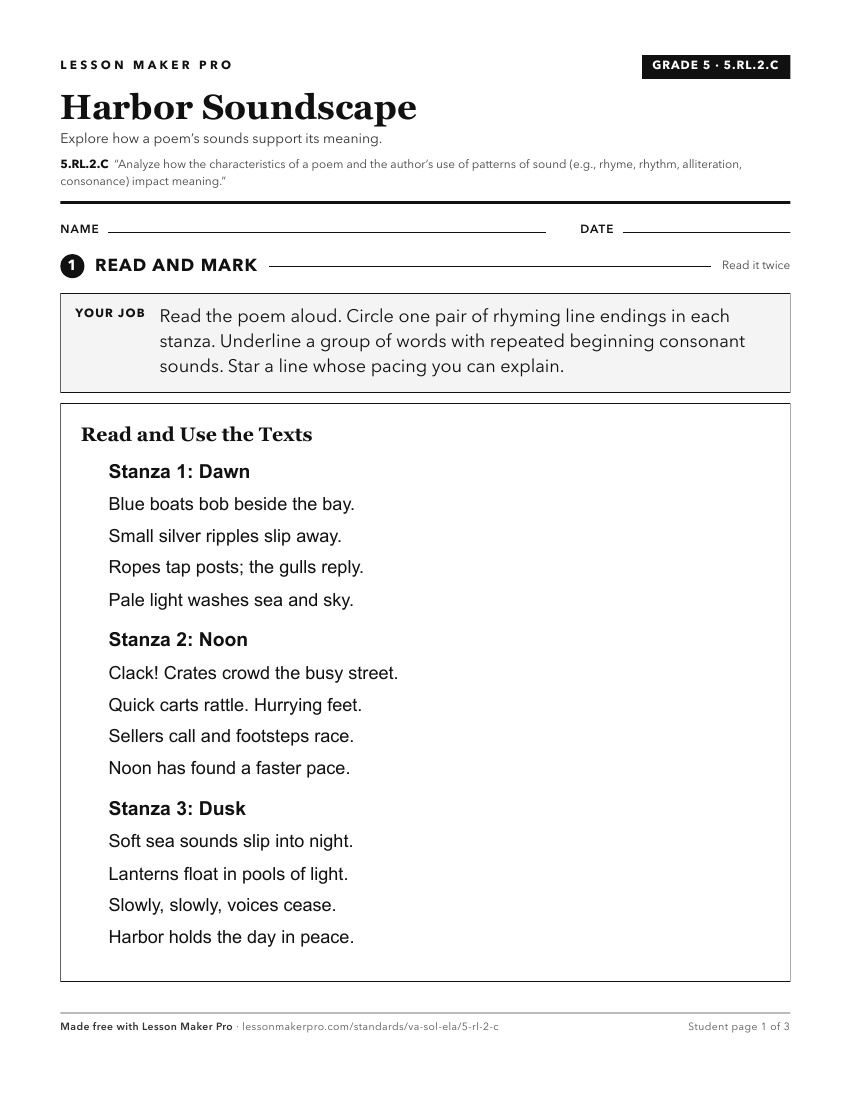
A ready-to-print activity worksheet aligned to 5.RL.2.C, with an answer key for the teacher on its own page. No account needed.
PDF, US Letter, prints cleanly in black and white.
Download the worksheetKeep exploring
Related Standards
- 8.RL.2.A
Interpret the meaning and analyze the impact of poetic elements in prose and poetry (e.g., rhyme, rhythm, repetition, alliteration, and onomatopoeia) on the rea...
- 11.RL.2.A
Interpret and analyze how the sound and imagery of poetry support the subject, mood, form, and theme and appeal to the reader’s senses.
- 9.RL.2.A
Analyze the use of rhyme, rhythm, sound, imagery, and other literary devices in poetry to convey a message and elicit a reader’s emotions.
- 7.RL.2.A
Analyze how elements of authors’ styles (e.g., word choice, dialogue, form, voice, rhyme, rhythm, and/or sound devices) contribute to meaning in various forms o...
Turn this exact standard into a lesson
Grade, subject, topic, and the complete standard are prefilled. Create one free, no account needed.
Also for this standard:Make a WorksheetMake a QuizMake a Sub Lesson