Virginia SOL 6.RL.2.C
The Standard
Explain how an author develops the point of view (e.g., first-person, third person limited, third-person omniscient) of the narrator or speaker in a text and influences how events are described in stories, plays, or poems.
Virginia Standards of Learning for English · Craft and Style
Teacher's field guide
What This Standard Means
What Students Need to Do
- Students identify who tells a literary text and determine what that narrator knows, sees, and believes. They explain how the author reveals that perspective and shapes the reader’s view of events.
What Mastery Looks Like
- A student correctly labels first person, third person limited, or third person omniscient and cites pronouns, thoughts, and access to information as evidence. The student explains how a scene would feel different if another character told it.
Common Misconceptions
- Students often label any text with “I” as first person, even when “I” appears only in dialogue. They may confuse the author with the narrator or assume third person always reveals every character’s thoughts.
How to Assess It
- Give students a short scene in which one character’s thoughts are shown but another’s are hidden. Ask: “Name the point of view, cite two clues, and explain how it shapes one event.”
Lesson moves
Ways to Teach It
Give pairs passage strips to sort into first person, third person limited, and omniscient, then have them underline evidence.
Read one scene from two characters’ perspectives, then have students discuss which details changed and why.
Play Point of View Detective, with teams earning points for naming the narrator type and proving it with one sentence.
Compare two eyewitness accounts of a school event, then connect missing or emphasized details to how narrators shape a story.
Free download
Printable 6.RL.2.C Worksheet
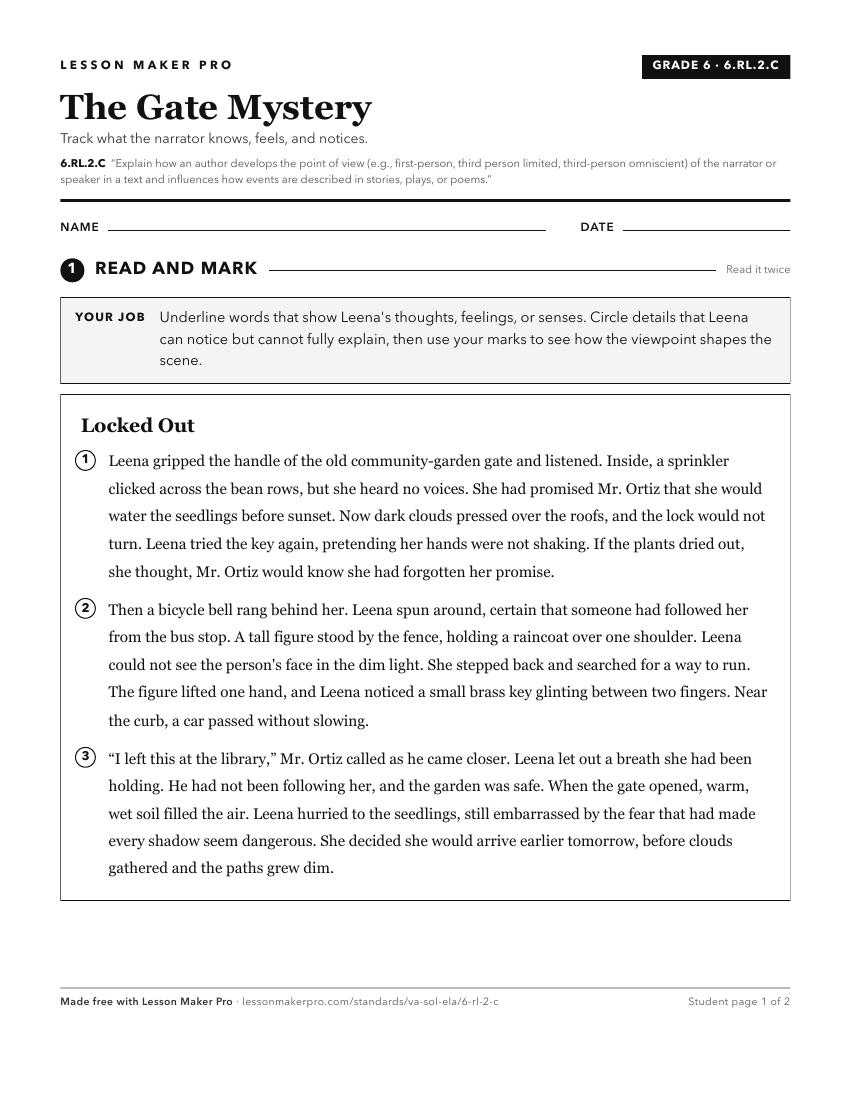
A ready-to-print activity worksheet aligned to 6.RL.2.C, with an answer key for the teacher on its own page. No account needed.
PDF, US Letter, prints cleanly in black and white.
Download the worksheetKeep exploring
Related Standards
- 11.RL.3.A
Explain the influence of the historical and cultural context on form, style, and point of view of texts that represent diverse voices and perspectives.
- 5.RL.3.B
Compare and contrast the point of view from which different stories are narrated, including the difference between first-and third-person narratives.
- 7.RL.2.C
Explain how an author develops the points of view of different characters in a text (e.g., first-person, third person limited, third-person omniscient) and how ...
- 8.RL.2.C
Analyze how an author develops and contrasts the points of view of different characters or narrators in a text.
Turn this exact standard into a lesson
Grade, subject, topic, and the complete standard are prefilled. Create one free, no account needed.
Also for this standard:Make a WorksheetMake a QuizMake a Sub Lesson