Virginia SOL 8.RL
SOL Standard (Knowledge and Skills Cluster)
The student will use textual evidence to demonstrate comprehension and build knowledge from a variety of grade-level complex literary texts read to include short stories, literary nonfiction, novels, poetry, and drama.
Virginia Standards of Learning for English
Cluster contents
Knowledge and Skills in This Standard
8.RL is a Standards of Learning standard. These are the knowledge and skills expectations under it.
- 8.RL.1
Key Ideas and Plot Details
- 8.RL.1.A
Analyze and explain the development of theme(s) over the course of texts and their relationship to the characters, settings, plots, and overall messages.
- 8.RL.1.B
Explain how different plot patterns (e.g., comedy, drama, tragedy) and subplots create meaning and examine their influence on characters, theme, pacing, and poi...
- 8.RL.1.C
Justify the decisions and actions of dynamic versus static characters using dialogue or specific events from the text.
- 8.RL.2
Craft and Style
- 8.RL.2.A
Interpret the meaning and analyze the impact of poetic elements in prose and poetry (e.g., rhyme, rhythm, repetition, alliteration, and onomatopoeia) on the rea...
- 8.RL.2.B
Analyze how the elements of an author’s style (e.g., dialogue, sentence structure and word choices) are used to influence and develop tone and voice.
- 8.RL.2.C
Analyze how an author develops and contrasts the points of view of different characters or narrators in a text.
- 8.RL.2.D
Analyze how an author’s use of literary devices including foreshadowing, flashback, symbolism, and irony are used to build mystery, suspense, or surprise.
- 8.RL.3
Integration of Concepts
- 8.RL.3.A
Compare and contrast the structure of two or more stories, poems, and plays and analyze how the differing structure of each literary text contributes to its mea...
- 8.RL.3.B
Compare and contrast fictional portrayals of a time, place, or character with historical accounts of the same period as a means of understanding how authors of ...
- 8.RL.3.C
Compare and contrast texts in different forms or genres (e.g., stories and poems; historical novels and fantasy stories; literary nonfiction and informational) ...
Teacher's field guide
What This Cluster Means
What Students Need to Do
- Students read complex literary works across forms and support interpretations with precise evidence. They trace themes through character, setting, plot, point of view, and style, then compare structures, genres, and fictional and historical portrayals.
What Mastery Looks Like
- Students explain how specific details and author choices create tone, suspense, pacing, voice, and meaning. They justify character analysis and text comparisons with well-chosen quotations or events rather than plot summary.
Common Misconceptions
- Students may name a topic like friendship as a theme, or summarize the plot instead of tracing an idea. They often label symbolism, irony, or foreshadowing without explaining its effect. In comparisons, they may list similarities and differences without connecting them to meaning.
How to Assess It
- Exit ticket: Choose one turning point from today’s reading. Quote one detail, then explain how the event develops a theme and changes a character or the reader’s response.
Lesson moves
Ways to Teach It
Give groups plot-event cards from a familiar story; have them arrange the cards, mark a subplot, and connect each turning point to theme.
Ask students to defend one character decision with two quotations, then discuss whether the character changes or remains static.
Play Craft Move Match: teams pair excerpt cards with tone, suspense, pacing, or voice effects and explain each match for a point.
Pair a historical fiction scene with a primary source, then have students highlight what the author kept, changed, or invented and why.
Free download
Printable 8.RL Worksheet
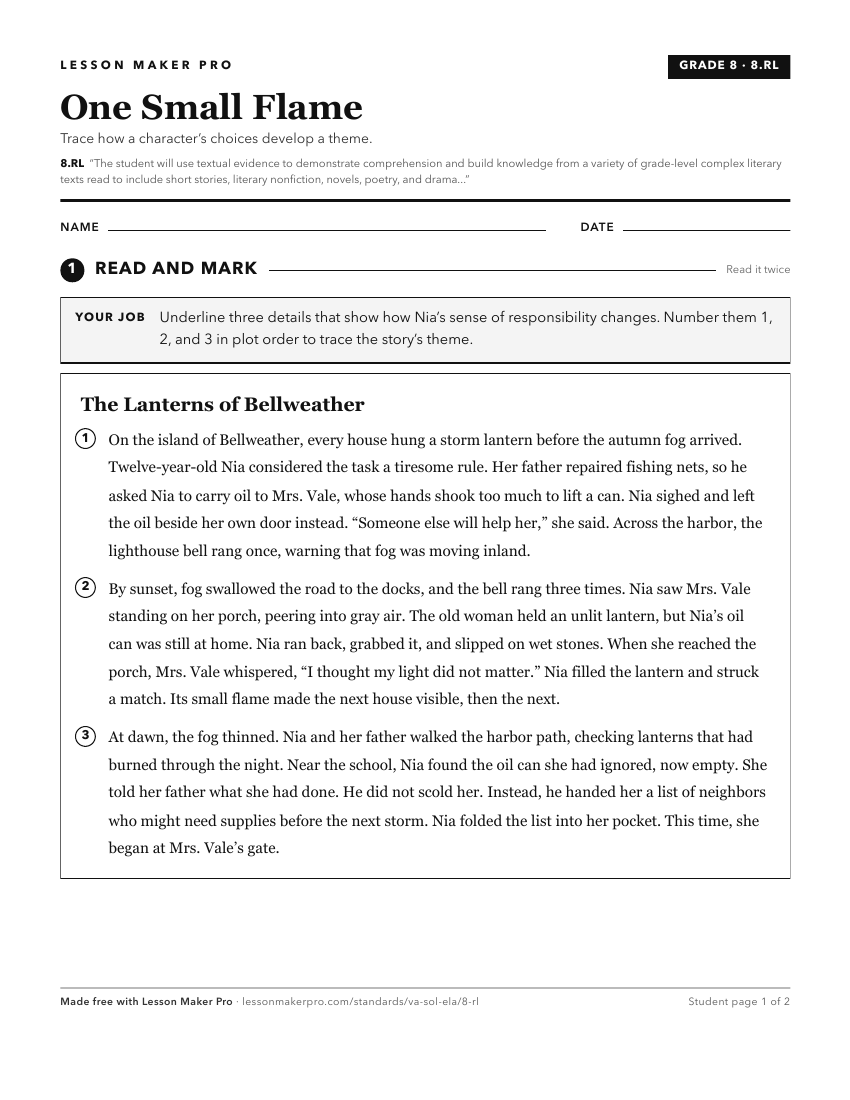
A ready-to-print activity worksheet aligned to 8.RL, with an answer key for the teacher on its own page. No account needed.
PDF, US Letter, prints cleanly in black and white.
Download the worksheetKeep exploring
Related Standards
- 6.RL
The 6th Grade version of this standard.
- 9.RL
The student will use textual evidence to demonstrate comprehension and build knowledge from a variety of grade-level complex literary texts read to include narr...
- 7.RL
The 7th Grade version of this standard.
- 11.RL
The student will use textual evidence to demonstrate comprehension and build knowledge from a variety of grade-level complex literary texts read to include lite...
Turn this cluster into a lesson
Grade, subject, topic, and the complete cluster are prefilled. Create one free, no account needed.
Also for this cluster:Make a WorksheetMake a QuizMake a Sub Lesson