Virginia SOL 8.RL.2.B
The Standard
Analyze how the elements of an author’s style (e.g., dialogue, sentence structure and word choices) are used to influence and develop tone and voice.
Virginia Standards of Learning for English · Craft and Style
Teacher's field guide
What This Standard Means
What Students Need to Do
- Students identify details such as dialogue, word choice, and sentence patterns in a literary passage. They explain how those choices shape the writer’s attitude and the narrator’s personality.
What Mastery Looks Like
- Students cite exact words, dialogue, or sentence patterns and explain the effect each creates. They distinguish tone from voice and describe how both develop across a passage.
Common Misconceptions
- Students often confuse tone, the writer’s attitude, with voice, the narrator’s distinct personality. They may name a tone word without linking it to dialogue, wording, or sentence patterns.
How to Assess It
- Use this exit ticket: “Choose one sentence from today’s passage. Name the tone or voice it creates, then explain how two specific language choices create that effect.”
Lesson moves
Ways to Teach It
Give pairs sentence strips from one passage to sort by diction, dialogue, and sentence pattern, then label each strip’s effect.
Ask students to write: “Which line best reveals the narrator’s personality, and what specific language makes that voice clear?”
Play Style Swap by having teams rewrite a neutral sentence as tense, playful, or bitter, then identify the changes they made.
Compare two restaurant reviews of the same place and identify how wording and sentence length create different tones and reviewer voices.
Free download
Printable 8.RL.2.B Worksheet
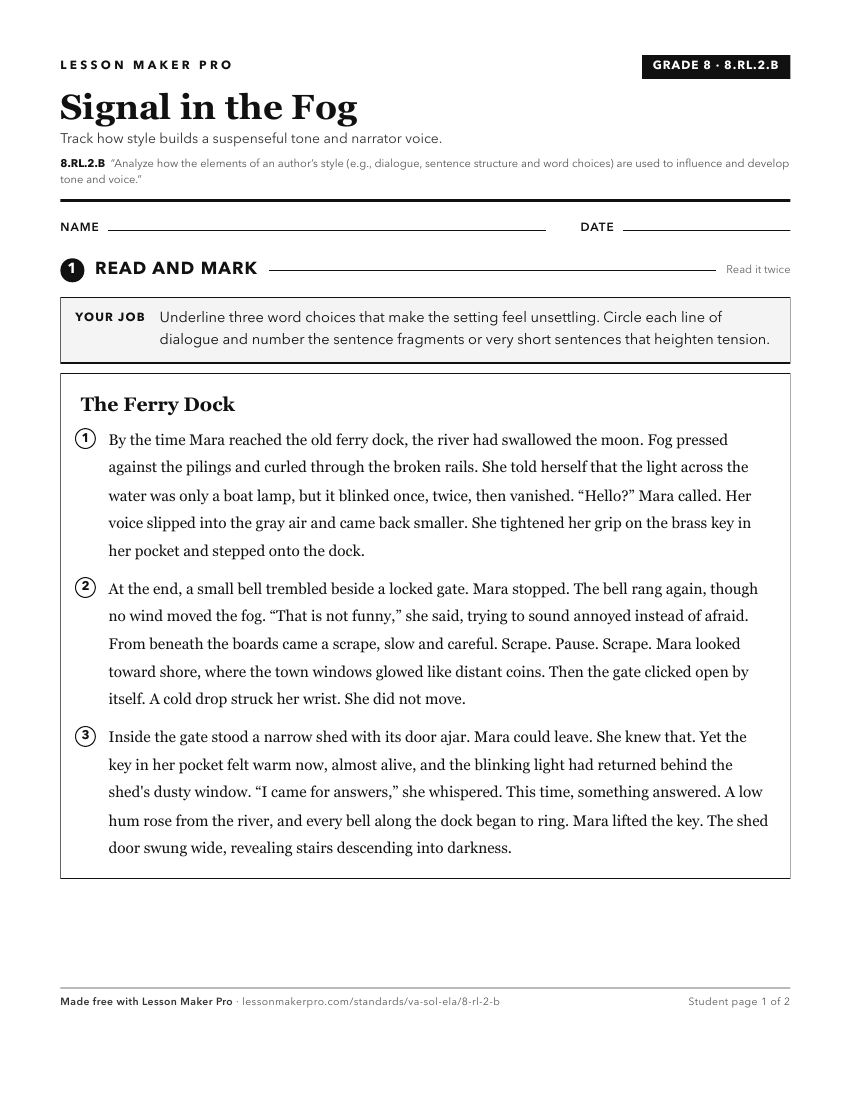
A ready-to-print activity worksheet aligned to 8.RL.2.B, with an answer key for the teacher on its own page. No account needed.
PDF, US Letter, prints cleanly in black and white.
Download the worksheetKeep exploring
Related Standards
- 10.RL.2.C
Analyze how authors use specific word choices, syntax, tone, and voice to convey the author’s intent and viewpoint.
- 7.RL.2.B
Analyze how the elements of an author’s style (e.g., word choice, sentence structure, dialogue, figurative language, imagery) are used to influence and develop ...
- 11.RL.2.B
Evaluate how authors use specific word choices, syntax, tone, and voice to convey the author’s intent and viewpoint.
- 7.RL.2.A
Analyze how elements of authors’ styles (e.g., word choice, dialogue, form, voice, rhyme, rhythm, and/or sound devices) contribute to meaning in various forms o...
Turn this exact standard into a lesson
Grade, subject, topic, and the complete standard are prefilled. Create one free, no account needed.
Also for this standard:Make a WorksheetMake a QuizMake a Sub Lesson