Virginia SOL 9.RL
SOL Standard (Knowledge and Skills Cluster)
The student will use textual evidence to demonstrate comprehension and build knowledge from a variety of grade-level complex literary texts read to include narratives, literary nonfiction, poetry, and drama.
Virginia Standards of Learning for English
Cluster contents
Knowledge and Skills in This Standard
9.RL is a Standards of Learning standard. These are the knowledge and skills expectations under it.
- 9.RL.1
Key Ideas and Plot Details
- 9.RL.1.A
Explain stated or implied themes, analyzing their development over the course of texts, and the relationship of characters, setting, and plot to those themes.
- 9.RL.1.B
Examine and analyze the characteristics that distinguish literary forms (e.g., fiction, nonfiction, poetry, prose, novel, drama, essay, speech) and analyze how ...
- 9.RL.1.C
Differentiate between character types in literary texts (e.g., dynamic/round character, static/flat character, and stereotype) and their impact on the theme.
- 9.RL.1.D
Identify and describe how dramatic conventions (e.g., soliloquy, aside, narration, direct address to the audience) contribute to the theme and effect of plays f...
- 9.RL.2
Craft and Style
- 9.RL.2.A
Analyze the use of rhyme, rhythm, sound, imagery, and other literary devices in poetry to convey a message and elicit a reader’s emotions.
- 9.RL.2.B
Explain how an author’s specific word choices, syntax, tone, and voice shape the meaning of the text.
- 9.RL.2.C
Explain the point of view and distinguish between what is implied or intended because of the use of hyperbole, irony, sarcasm, and understatement.
- 9.RL.3
Integration of Concepts
- 9.RL.3.A
Describe how the historical or social function of a text depends on its context (e.g., cultural, situational, historical, geographical).
- 9.RL.3.B
Explain the relationships between and among particular literary elements of a story or play, including how the setting shapes the plot and characters.
Teacher's field guide
What This Cluster Means
What Students Need to Do
- Students make claims about stated and implied themes, then support them with precise details and reasonable inferences. They trace how characters, setting, plot, and character types develop those themes. They also explain how form, structure, language, point of view, dramatic conventions, and context shape meaning, style, and emotional effect.
What Mastery Looks Like
- A student can state a defensible theme and trace its development with evidence from the beginning, middle, and end. The student explains why a character change, setting detail, plot turn, or dramatic convention matters. The student can connect choices in form, wording, syntax, sound, imagery, tone, voice, or point of view to a clear effect.
Common Misconceptions
- Students often name a topic, such as courage, instead of expressing a theme as an idea about courage. They may summarize events or label devices without explaining how the evidence supports meaning or effect. They also confuse narrator with author, sarcasm with all irony, and flat characters with poorly written characters.
How to Assess It
- Give students a one-page poem or dramatic scene. Ask them to state one implied theme, cite two details, and explain how one structural or language choice develops it.
Lesson moves
Ways to Teach It
Give groups a short story cut into plot strips; have them arrange events and attach theme, character, and setting evidence with sticky notes.
Ask students to defend which single line best reveals the theme, then write a paragraph explaining why two competing lines are weaker.
Run a device match game: students pair cards naming irony, imagery, sound, or dramatic conventions with excerpts and explain each effect.
Compare a protest poem with its historical context, then ask students how audience, place, and moment shape the poem's language and purpose.
Free download
Printable 9.RL Worksheet
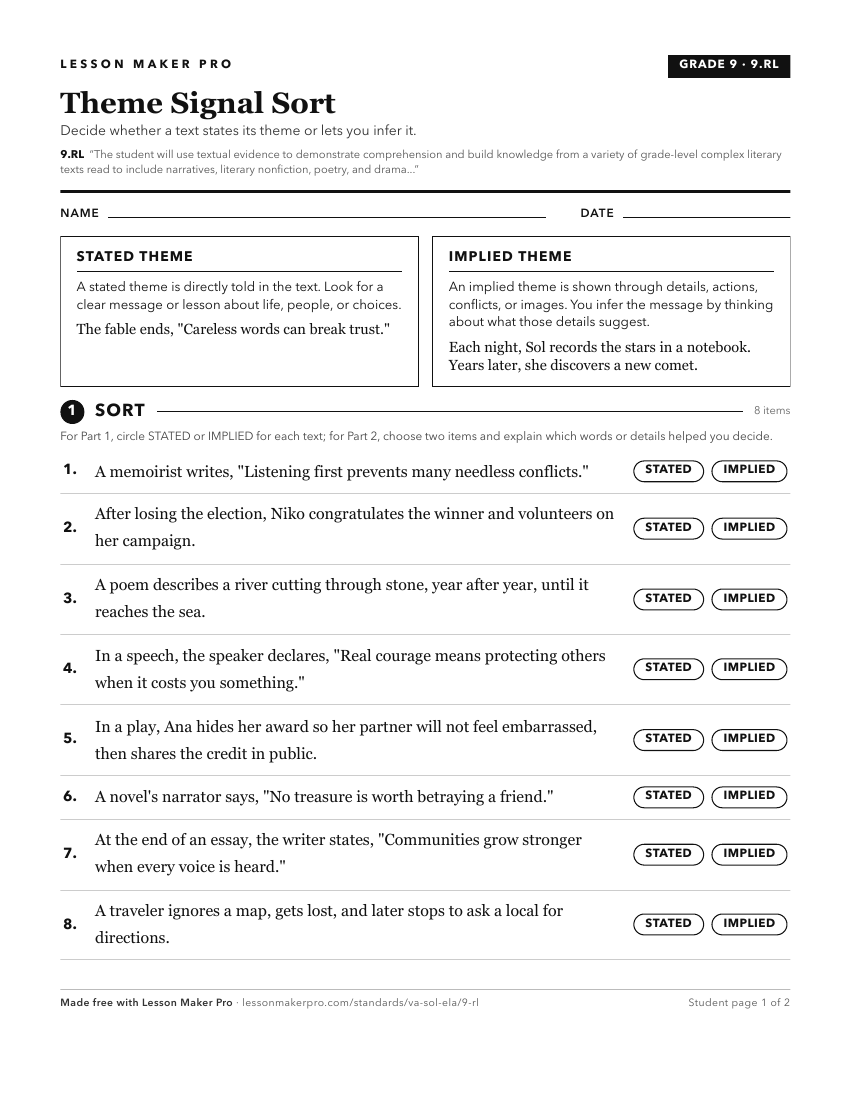
A ready-to-print activity worksheet aligned to 9.RL, with an answer key for the teacher on its own page. No account needed.
PDF, US Letter, prints cleanly in black and white.
Download the worksheetKeep exploring
Related Standards
- 10.RL
The student will use textual evidence to demonstrate comprehension and build knowledge from a variety of grade-level complex literary texts read to include lite...
- 8.RL
The student will use textual evidence to demonstrate comprehension and build knowledge from a variety of grade-level complex literary texts read to include shor...
- 6.RL
The student will use textual evidence to demonstrate comprehension and build knowledge from a variety of grade-level complex literary texts read to include shor...
- 7.RL
The student will use textual evidence to demonstrate comprehension and build knowledge from a variety of grade-level complex literary texts read to include shor...
Turn this cluster into a lesson
Grade, subject, topic, and the complete cluster are prefilled. Create one free, no account needed.
Also for this cluster:Make a WorksheetMake a QuizMake a Sub Lesson