Virginia SOL 9.RL.1.C
The Standard
Differentiate between character types in literary texts (e.g., dynamic/round character, static/flat character, and stereotype) and their impact on the theme.
Virginia Standards of Learning for English · Key Ideas and Plot Details
Teacher's field guide
What This Standard Means
What Students Need to Do
- Students identify whether characters are complex or simple, changing or unchanging, and whether they rely on stereotypes. They connect those character choices to the text’s larger message.
What Mastery Looks Like
- Students correctly classify a character by complexity and change, using specific details from the text. They explain how the character’s traits, choices, or growth help develop a complete theme statement.
Common Misconceptions
- Students may assume every main character changes or that all minor characters are flat. They may use round and dynamic as synonyms. They may name a topic, such as courage, instead of stating a theme.
How to Assess It
- Exit ticket: Classify one character from today’s reading in two ways, then cite one detail showing how the characterization supports a theme.
Lesson moves
Ways to Teach It
Give groups character evidence cards to sort by complexity, change, and stereotype, then match each pile to a possible theme statement.
Ask students to write: How would the theme change if the protagonist never learned from the central conflict?
Play Character Type Four Corners, where students move to a labeled corner and defend their choice with one textual detail.
Compare a character from a familiar film with one from the class text, focusing on how each shapes a message about life.
Free download
Printable 9.RL.1.C Worksheet
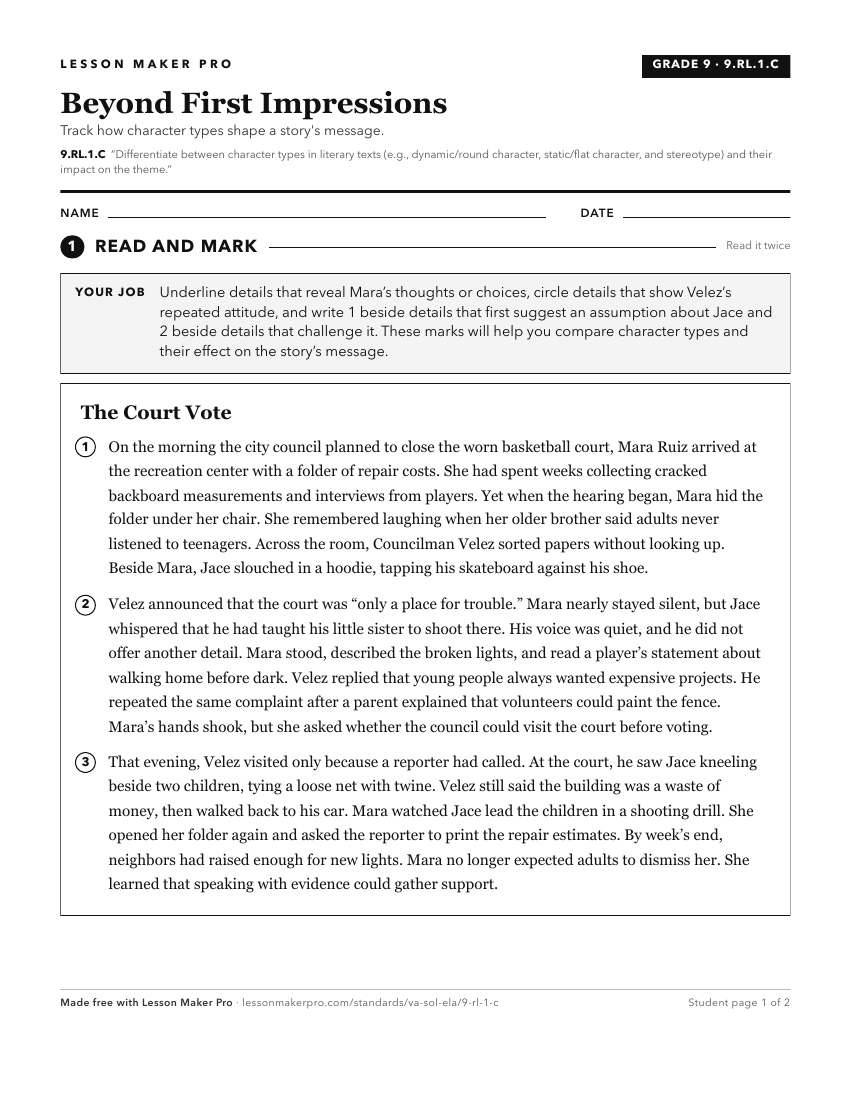
A ready-to-print activity worksheet aligned to 9.RL.1.C, with an answer key for the teacher on its own page. No account needed.
PDF, US Letter, prints cleanly in black and white.
Download the worksheetKeep exploring
Related Standards
- 12.RL.1.C
Analyze how complex characters-those with multiple or conflicting motivations-develop over the course of texts, interact with other characters, and advance the ...
- 4.RL.2.B
Identify the characteristics of different genres of literary texts (e.g., drama, poems, stories) and refer to the structural elements of each.
- 10.RL.1.C
Describe the different character roles in literary texts (e.g., foil, tragic, hero) and their impact on the theme.
- 8.RL.1.A
Analyze and explain the development of theme(s) over the course of texts and their relationship to the characters, settings, plots, and overall messages.
Turn this exact standard into a lesson
Grade, subject, topic, and the complete standard are prefilled. Create one free, no account needed.
Also for this standard:Make a WorksheetMake a QuizMake a Sub Lesson