Virginia SOL 12.RL.1.C
The Standard
Analyze how complex characters-those with multiple or conflicting motivations-develop over the course of texts, interact with other characters, and advance the plot.
Virginia Standards of Learning for English · Key Ideas and Plot Details
Teacher's field guide
What This Standard Means
What Students Need to Do
- Students trace changes in a character's goals, beliefs, choices, and relationships across a literary work. They explain how competing motives shape interactions and cause major plot turns, using evidence.
What Mastery Looks Like
- Students identify at least two motives and explain why they conflict. They use precise evidence to connect changes in motivation, character interactions, and key plot outcomes.
Common Misconceptions
- Students may confuse a personality trait, such as stubbornness, with a motive, such as protecting a reputation. They may treat characters as fixed or summarize events without explaining how motives cause choices and plot changes.
How to Assess It
- Use this exit ticket: Name two conflicting motives driving one character. Cite two moments that show which motive gains influence and explain one resulting plot change.
Lesson moves
Ways to Teach It
Give pairs six plot-event cards; have them arrange a timeline, then add sticky notes naming each motive, conflict, and resulting consequence.
Quick-write, then discuss: Which motive controls the character at the turning point, and how does another character push that choice?
Play Motive Detective: teams match quotations to motive cards and earn points only when they explain how each choice changes the plot.
Compare the character's conflict with a workplace whistleblower; map competing loyalties, risks, choices, and likely consequences.
Free download
Printable 12.RL.1.C Worksheet
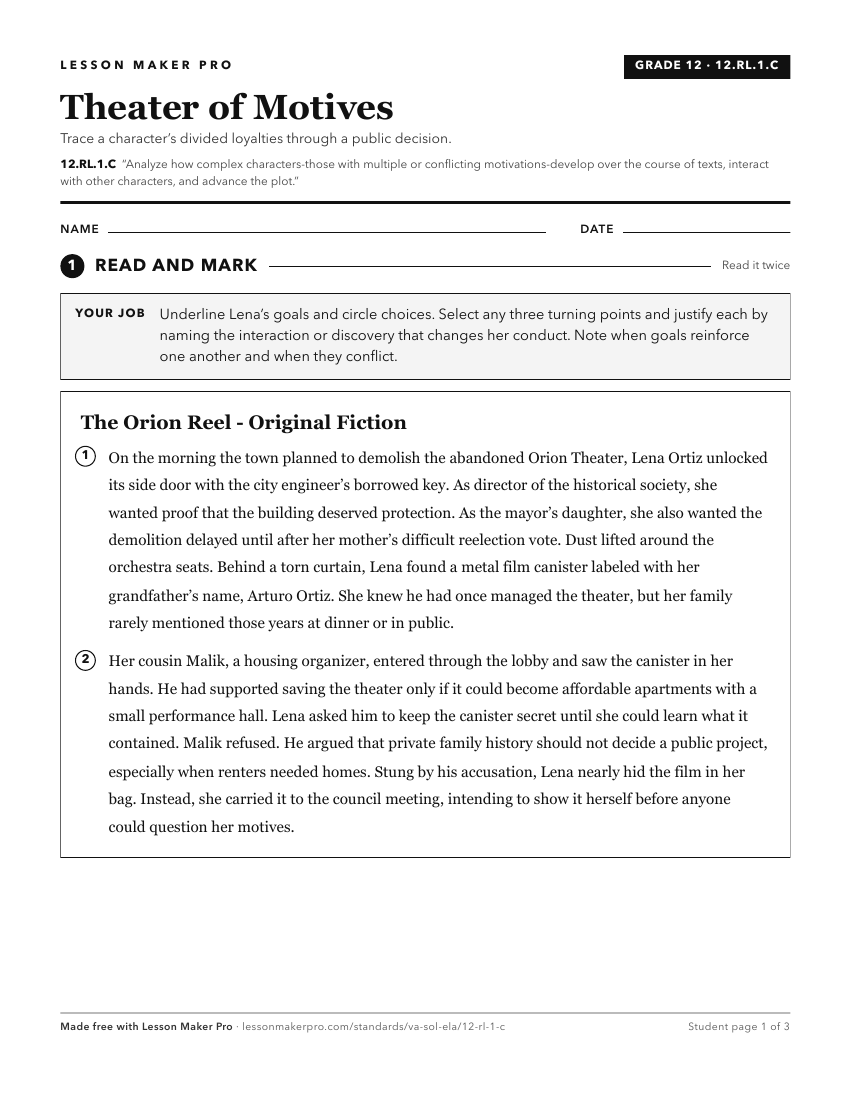
A ready-to-print activity worksheet aligned to 12.RL.1.C, with an answer key for the teacher on its own page. No account needed.
PDF, US Letter, prints cleanly in black and white.
Download the worksheetKeep exploring
Related Standards
- 4.RL.1.C
Analyze characters in-depth, drawing on specific details from the text, including their words, actions, or a character’s thoughts.
- 9.RL.1.A
Explain stated or implied themes, analyzing their development over the course of texts, and the relationship of characters, setting, and plot to those themes.
- 8.RL.2.C
Analyze how an author develops and contrasts the points of view of different characters or narrators in a text.
- 8.RL.1.A
Analyze and explain the development of theme(s) over the course of texts and their relationship to the characters, settings, plots, and overall messages.
Turn this exact standard into a lesson
Grade, subject, topic, and the complete standard are prefilled. Create one free, no account needed.
Also for this standard:Make a WorksheetMake a QuizMake a Sub Lesson