Virginia SOL 10.RL.1.C
The Standard
Describe the different character roles in literary texts (e.g., foil, tragic, hero) and their impact on the theme.
Virginia Standards of Learning for English · Key Ideas and Plot Details
Teacher's field guide
What This Standard Means
What Students Need to Do
- Students identify roles such as foil, hero, and tragic hero using details from the text. They explain how each character’s choices, relationships, and outcomes shape the text’s theme.
What Mastery Looks Like
- Students accurately label a character’s role and support the choice with traits, actions, relationships, or outcomes. They explain how the character’s conflict, contrast, or downfall reveals or complicates a theme.
Common Misconceptions
- Students may assume the hero is always morally good or that every foil is an antagonist. They may name a role without explaining its effect, or state a topic such as ambition instead of a full theme.
How to Assess It
- Exit ticket: Choose one character from today’s reading. Name the role, cite one detail, and explain how that role helps develop a theme.
Lesson moves
Ways to Teach It
Give groups character, evidence, and theme cards from a class text; students match them and draw arrows showing each character’s thematic effect.
Ask: How would the theme change if the foil were removed, and which two details support your claim?
Play Role Relay: teams identify a character role from a passage, cite evidence, and earn a point for linking it to theme.
Have students compare a tragic hero from the class text with a public figure whose flaw shaped a real outcome.
Free download
Printable 10.RL.1.C Worksheet
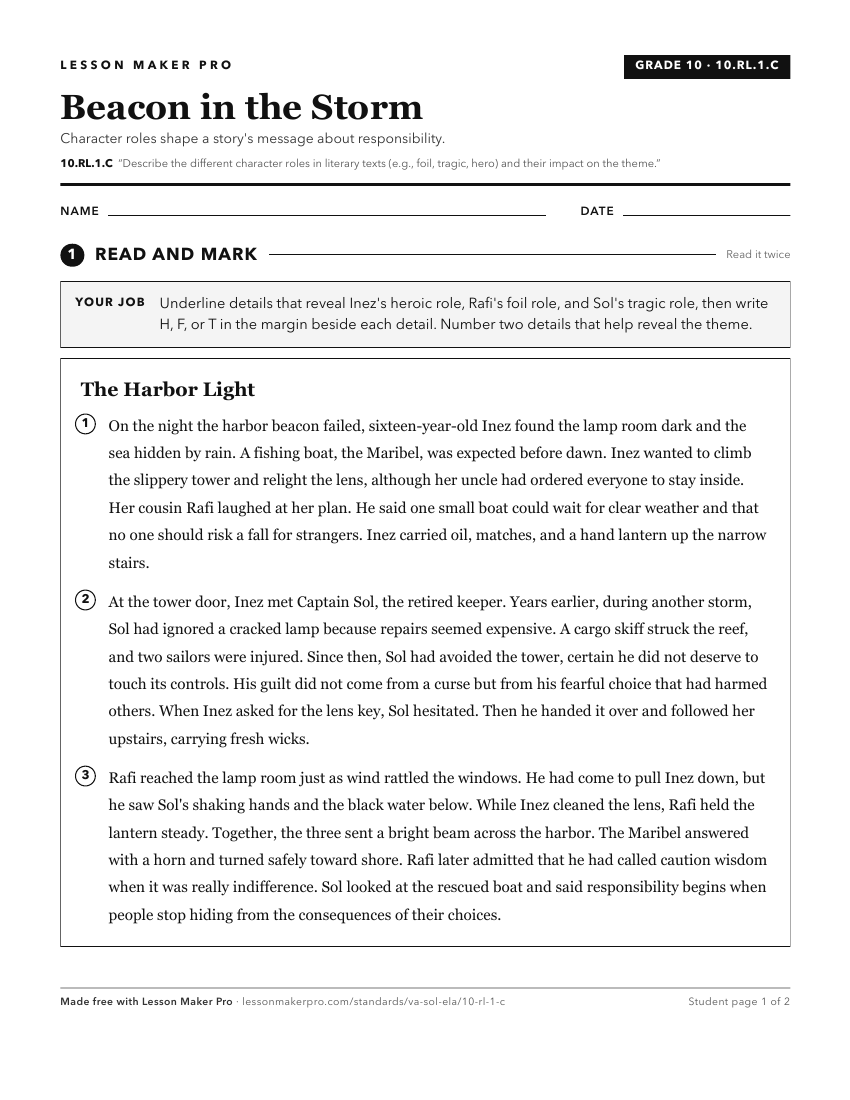
A ready-to-print activity worksheet aligned to 10.RL.1.C, with an answer key for the teacher on its own page. No account needed.
PDF, US Letter, prints cleanly in black and white.
Download the worksheetKeep exploring
Related Standards
- 4.RL.1.A
Summarize the theme of stories, dramas, or poetry, including the thematic topic (e.g., courage, loyalty, family) and how characters respond to challenges.
- 9.RL.1.C
Differentiate between character types in literary texts (e.g., dynamic/round character, static/flat character, and stereotype) and their impact on the theme.
- 8.RL.1.B
Explain how different plot patterns (e.g., comedy, drama, tragedy) and subplots create meaning and examine their influence on characters, theme, pacing, and poi...
- 8.RL.1.A
Analyze and explain the development of theme(s) over the course of texts and their relationship to the characters, settings, plots, and overall messages.
Turn this exact standard into a lesson
Grade, subject, topic, and the complete standard are prefilled. Create one free, no account needed.
Also for this standard:Make a WorksheetMake a QuizMake a Sub Lesson