Virginia SOL 6.RL.1.C
The Standard
Differentiate between internal and external conflicts (e.g., individual vs. Individual, individual vs. Nature, individual vs. Society, individual vs. Technology, and individual vs. Self) and explain how they impact character development and plot.
Virginia Standards of Learning for English · Key Ideas and Plot Details
Teacher's field guide
What This Standard Means
What Students Need to Do
- Students identify whether a character’s struggle happens within the character or against an outside force. They classify the conflict and explain how it shapes choices, growth, and plot events.
What Mastery Looks Like
- Students correctly classify a conflict and support the choice with details from the text. They explain how the struggle changes the character and causes later plot events.
Common Misconceptions
- Students may label any argument as external, even when the character’s main struggle is fear, guilt, or doubt. They may name the conflict correctly but fail to connect it to the character’s choices or later events.
How to Assess It
- Use an exit ticket: “Name the main conflict in today’s story, classify it, and explain one effect on the character and one effect on the plot.”
Lesson moves
Ways to Teach It
Give pairs conflict scenario cards to sort into internal and external groups, then label each external conflict by type.
Ask students to write: “Which conflict changes the protagonist most, and what choice proves that change?”
Play Conflict Detective by reading short scenes aloud while teams identify the conflict type and cite the clue that reveals it.
Use a school dilemma, such as following an unfair rule, to map how conflict can shape choices, consequences, and personal growth.
Free download
Printable 6.RL.1.C Worksheet
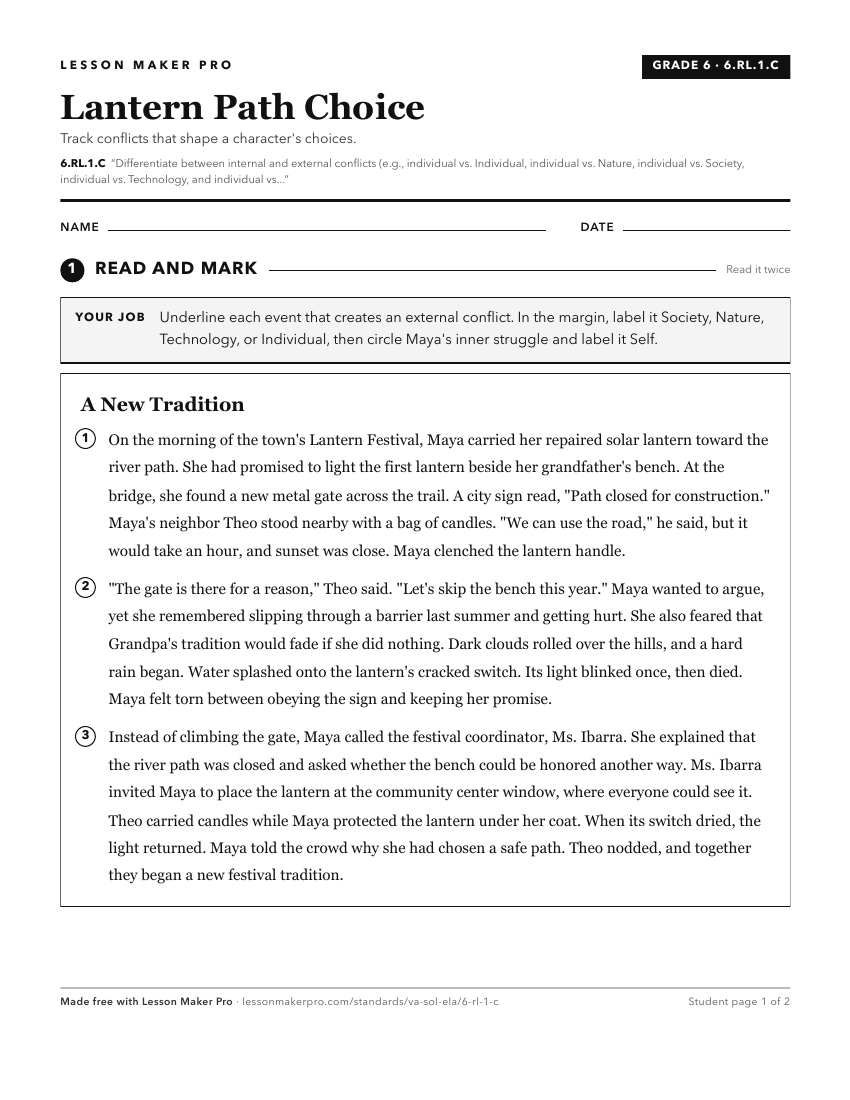
A ready-to-print activity worksheet aligned to 6.RL.1.C, with an answer key for the teacher on its own page. No account needed.
PDF, US Letter, prints cleanly in black and white.
Download the worksheetKeep exploring
Related Standards
- 7.RL.1.B
Analyze how the central conflict and key elements (e.g., exposition, initiating event, rising action, climax, falling action, and resolution) impact plot develo...
- 12.RL.1.C
Analyze how complex characters-those with multiple or conflicting motivations-develop over the course of texts, interact with other characters, and advance the ...
- 9.RL.1.C
Differentiate between character types in literary texts (e.g., dynamic/round character, static/flat character, and stereotype) and their impact on the theme.
- 2.RL.1.B
Identify a story’s central conflict using events from the plot as evidence.
Turn this exact standard into a lesson
Grade, subject, topic, and the complete standard are prefilled. Create one free, no account needed.
Also for this standard:Make a WorksheetMake a QuizMake a Sub Lesson