Virginia SOL 4.RL
SOL Standard (Knowledge and Skills Cluster)
The student will use textual evidence to demonstrate comprehension and build knowledge from a variety of grade-level complex literary texts read to include fantasy, humor, poetry, realistic fiction, historical fiction, biography, autobiography, and folklore/tall tales, with a focus on poetry, realistic fiction and historical fiction.
Virginia Standards of Learning for English
Cluster contents
Knowledge and Skills in This Standard
4.RL is a Standards of Learning standard. These are the knowledge and skills expectations under it.
- 4.RL.1
Key Ideas and Plot Details
- 4.RL.1.A
Summarize the theme of stories, dramas, or poetry, including the thematic topic (e.g., courage, loyalty, family) and how characters respond to challenges.
- 4.RL.1.B
Describe the central conflict and explain the resolution using an understanding of text structure and events from the plot as evidence.
- 4.RL.1.C
Analyze characters in-depth, drawing on specific details from the text, including their words, actions, or a character’s thoughts.
- 4.RL.2
Craft and Style
- 4.RL.2.A
Determine how an author uses language (dialogue, sensory language, and dialect), characters, and settings to advance the plot.
- 4.RL.2.B
Identify the characteristics of different genres of literary texts (e.g., drama, poems, stories) and refer to the structural elements of each.
- 4.RL.2.C
Identify the narrator of a story and the speaker of a poem.
- 4.RL.2.D
Differentiate between first-and third-person point of view.
- 4.RL.3
Integration of Concepts
- 4.RL.3.A
Set a purpose for reading by activating prior (experience) and background (content) knowledge.
- 4.RL.3.B
Compare and contrast details in paired literary and informational nonfiction texts including their treatment of similar themes, topics, and patterns of events.
- 4.RL.3.C
Explain the overall structure of stories, poems, and plays and how each successive part builds on earlier sections.
Teacher's field guide
What This Cluster Means
What Students Need to Do
- Students read varied literary texts and use specific details to explain theme, plot, conflict, resolution, and character choices. They examine narrator, point of view, genre features, language, setting, and structure. They also connect prior knowledge and compare literary texts with related fiction or nonfiction.
What Mastery Looks Like
- Students give a brief summary that names the theme, central conflict, major events, and resolution. They support character analysis with exact details and explain how viewpoint, language, setting, and structure shape the plot. They can compare a literary text with another text on the same topic.
Common Misconceptions
- Students may name a topic such as courage instead of stating a theme as a complete message. They may retell every event rather than summarize the conflict, key events, and resolution. They may confuse the author with the narrator or make claims about characters without citing words, actions, or thoughts.
How to Assess It
- Give students a one-page literary passage. Ask, “State the theme as a message, identify the conflict and resolution, and cite two details showing how the character responds.”
Lesson moves
Ways to Teach It
Give pairs plot-event cards from a short story to sequence, then label the conflict, character response, turning point, and resolution.
Ask students to write, “What message does the character’s response to the challenge reveal, and which two details support your answer?”
Play a card sort using short excerpts labeled first person, third person, poem, drama, realistic fiction, and historical fiction.
Compare a historical fiction scene with a short nonfiction source, then list what each text teaches and how its presentation differs.
Free download
Printable 4.RL Worksheet
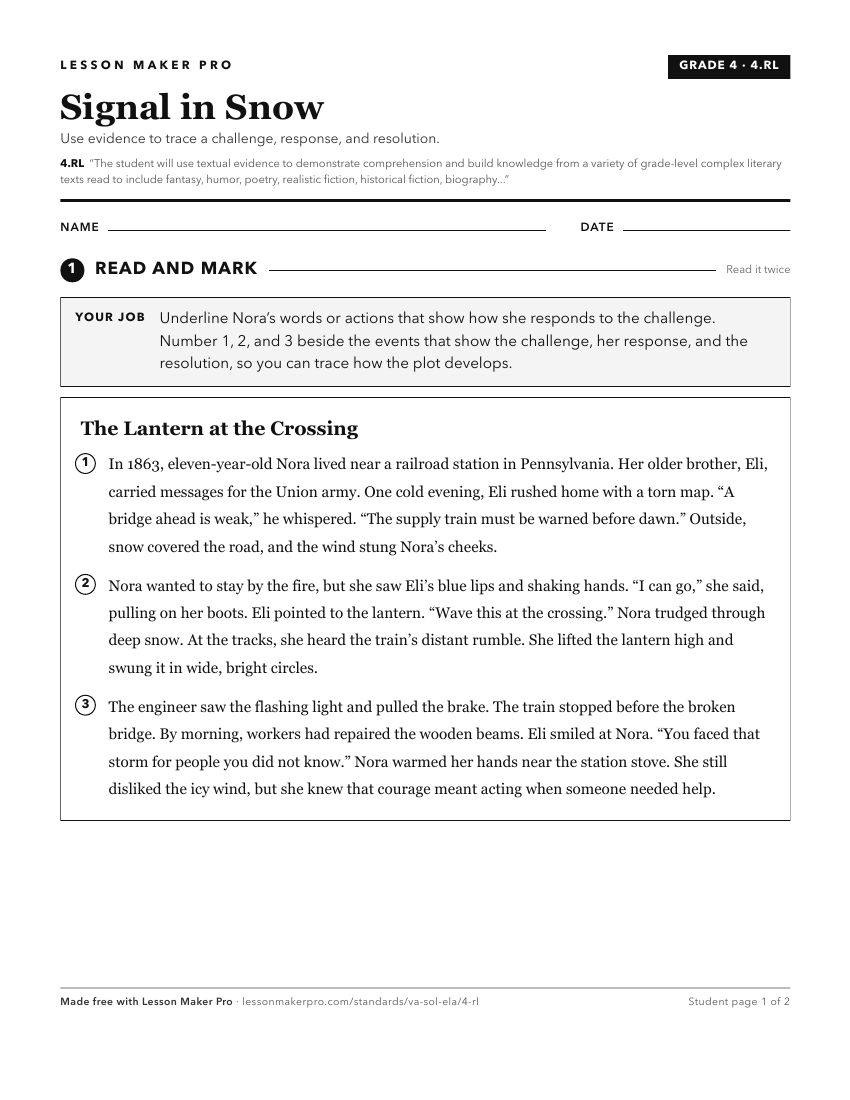
A ready-to-print activity worksheet aligned to 4.RL, with an answer key for the teacher on its own page. No account needed.
PDF, US Letter, prints cleanly in black and white.
Download the worksheetKeep exploring
Related Standards
- 8.RL
The student will use textual evidence to demonstrate comprehension and build knowledge from a variety of grade-level complex literary texts read to include shor...
- 2.RL
The student will use textual evidence to demonstrate comprehension and build knowledge from a variety of grade-level complex literary texts heard or read to inc...
- 5.RL
The student will use textual evidence to demonstrate comprehension and build knowledge from a variety of grade-level complex literary texts read to include poet...
- 3.RL
The student will use textual evidence to demonstrate comprehension and build knowledge from a variety of grade-level complex literary texts read to include fant...
Turn this cluster into a lesson
Grade, subject, topic, and the complete cluster are prefilled. Create one free, no account needed.
Also for this cluster:Make a WorksheetMake a QuizMake a Sub Lesson