Virginia SOL 3.RL
SOL Standard (Knowledge and Skills Cluster)
The student will use textual evidence to demonstrate comprehension and build knowledge from a variety of grade-level complex literary texts read to include fantasy, humor, fable/fairy tale, realistic fiction, historical fiction, biography, autobiography, and folklore/tall tale, with a focus on folklore and tall tales.
Virginia Standards of Learning for English
Cluster contents
Knowledge and Skills in This Standard
3.RL is a Standards of Learning standard. These are the knowledge and skills expectations under it.
- 3.RL.1
Key Ideas and Plot Details
- 3.RL.1.A
Identify thematic topics of stories (e.g. friendship, survival, determination) and the lessons learned.
- 3.RL.1.B
Identify the central conflict and resolution using events from the plot to summarize the text.
- 3.RL.1.C
Describe a character’s attributes, including their traits, motivations, or feelings and how they develop throughout the text.
- 3.RL.2
Craft and Style
- 3.RL.2.A
Discuss how an author uses characters and settings to advance the plot.
- 3.RL.2.B
Identify and explain how an author uses sensory language (e.g., sights, sounds, smells, and tastes) to impact a reader’s understanding of characters, settings, ...
- 3.RL.2.C
Identify the narrator of a story and the speaker of a poem.
- 3.RL.2.D
Identify the characteristics of different genres.
- 3.RL.3
Integration of Concepts
- 3.RL.3.A
Set a purpose for reading by looking at the illustrations and activating prior (experience) and background (content) knowledge.
- 3.RL.3.B
Compare and contrast details in paired literary and informational nonfiction texts including their treatment of similar themes, topics, and patterns of events.
- 3.RL.3.C
Compare and contrast the themes, settings, and plots of stories written by the same author about the same or similar characters.
Teacher's field guide
What This Cluster Means
What Students Need to Do
- Students use story details to explain conflict, resolution, theme, character traits, motivations, feelings, and changes. They identify who tells a story or speaks in a poem, recognize genre features, and explain how setting, characters, and sensory details shape events. They preview illustrations, set a purpose, and compare stories with other stories or nonfiction texts about similar topics.
What Mastery Looks Like
- After reading a tall tale, a student can name the main problem, retell key events in order, and explain the resolution with evidence. The student can describe character change and explain how exaggeration, setting, or sensory details shape the story. With two texts, the student can support one meaningful similarity and difference.
Common Misconceptions
- Students often name a topic, such as courage, but do not state the lesson the story teaches about it. They may confuse a temporary feeling with a lasting trait, or describe a character without citing actions, words, or thoughts. They may treat the author as the narrator, retell every event, or label any exaggerated story a tall tale.
How to Assess It
- Give students a one-page tall tale and ask, “What is the conflict, how is it resolved, and what lesson does the character learn?” Require two quoted or paraphrased details.
Lesson moves
Ways to Teach It
Give groups plot cards from a tall tale to sequence, then have them label conflict, turning point, resolution, and evidence.
Ask students to write, “What lesson does the hero learn, and which two events best prove it?” Then compare answers with a partner.
Play Genre Sort with passage cards. Students place each under folklore, fantasy, realistic fiction, or biography and defend one choice.
Compare a local legend with a factual article about the same place, listing what each teaches and which details differ.
Free download
Printable 3.RL Worksheet
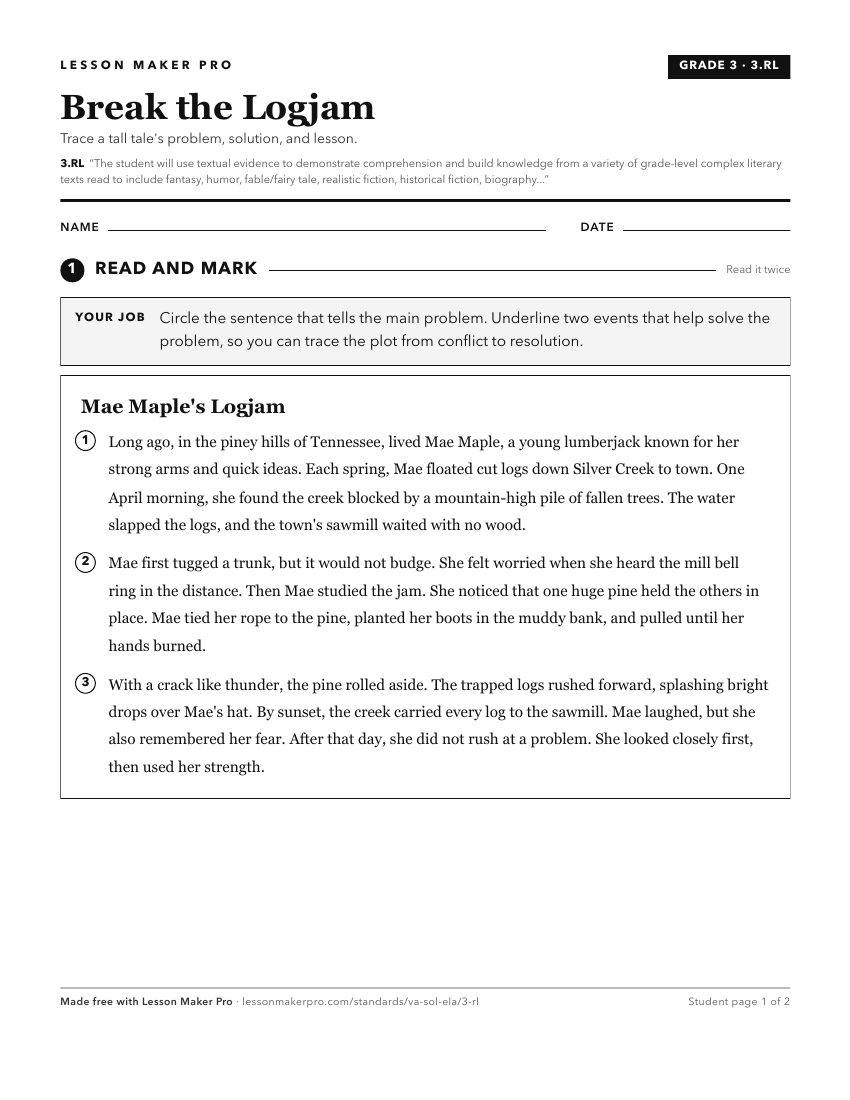
A ready-to-print activity worksheet aligned to 3.RL, with an answer key for the teacher on its own page. No account needed.
PDF, US Letter, prints cleanly in black and white.
Download the worksheetKeep exploring
Related Standards
- 2.RL
The student will use textual evidence to demonstrate comprehension and build knowledge from a variety of grade-level complex literary texts heard or read to inc...
- K.RL
The student will use textual evidence to demonstrate comprehension and build knowledge from a variety of literary texts heard, to include fantasy, humor, fable/...
- 4.RL
The student will use textual evidence to demonstrate comprehension and build knowledge from a variety of grade-level complex literary texts read to include fant...
- 1.RL
The student will use textual evidence to demonstrate comprehension and build knowledge from a variety of literary texts heard or read including fantasy, humor, ...
Turn this cluster into a lesson
Grade, subject, topic, and the complete cluster are prefilled. Create one free, no account needed.
Also for this cluster:Make a WorksheetMake a QuizMake a Sub Lesson