Virginia SOL 3.RL.2.B
The Standard
Identify and explain how an author uses sensory language (e.g., sights, sounds, smells, and tastes) to impact a reader’s understanding of characters, settings, and plot events.
Virginia Standards of Learning for English · Craft and Style
Teacher's field guide
What This Standard Means
What Students Need to Do
- Students find words and phrases that appeal to sight, sound, smell, taste, or touch. They explain how those details shape their understanding of characters, settings, or story events.
What Mastery Looks Like
- Students can point to a specific word or phrase and name the sense it appeals to. They can explain how that detail reveals a character’s feelings, builds the setting, or clarifies an event.
Common Misconceptions
- Students may look only for sight words and miss sounds, smells, tastes, and touch. They may identify a detail but say only that it makes the story interesting. Some confuse their own reaction with what the words show about the story.
How to Assess It
- Exit ticket: Read, “Cold rain drummed on Mia’s hood as she hurried past the dark houses.” Underline two sensory details and explain what they show.
Lesson moves
Ways to Teach It
Place objects in covered bags, then have students write sensory descriptions and discuss what setting or mood each description could create.
Ask, “How does the author help you picture the scene, and what do those details reveal about the character?”
Play Sensory Detail Sort by having teams classify story phrases by sense, then match each phrase to character, setting, or plot.
Have students write two playground safety announcements, one plain and one using sensory details to show the result of ignoring a rule.
Free download
Printable 3.RL.2.B Worksheet
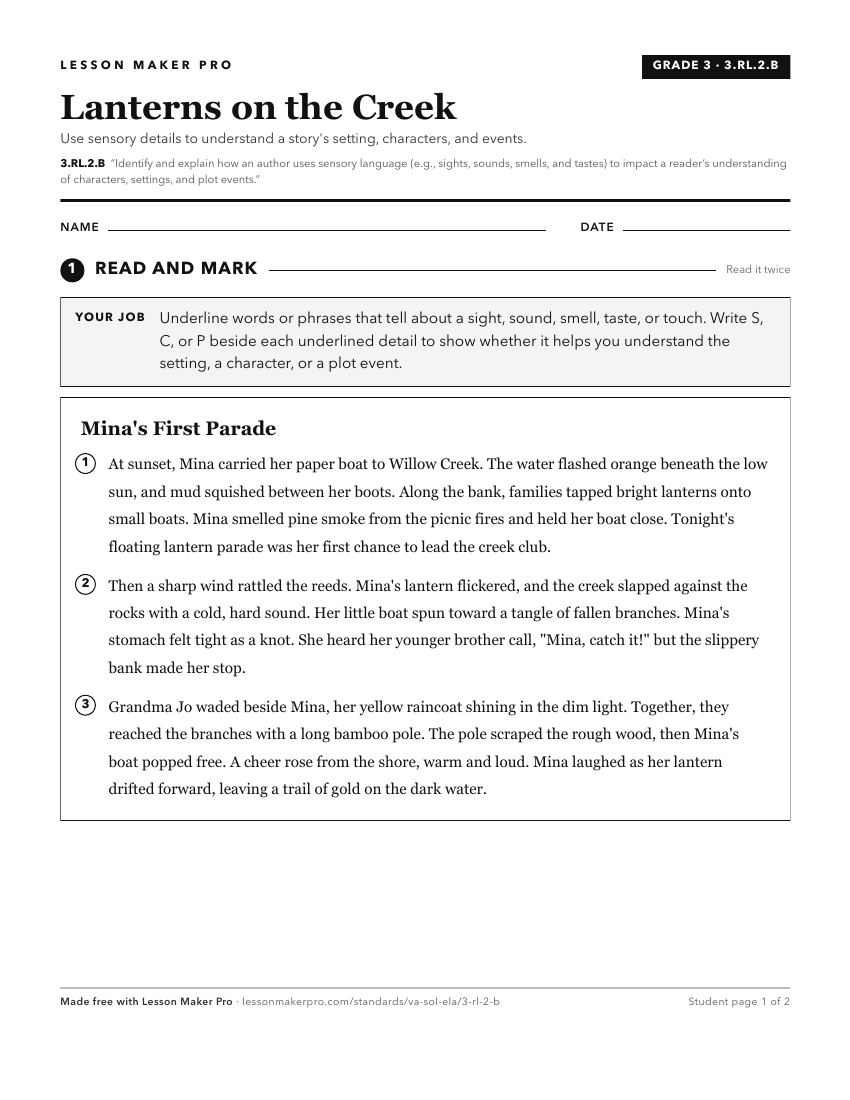
A ready-to-print activity worksheet aligned to 3.RL.2.B, with an answer key for the teacher on its own page. No account needed.
PDF, US Letter, prints cleanly in black and white.
Download the worksheetKeep exploring
Related Standards
- 4.RL.2.A
Determine how an author uses language (dialogue, sensory language, and dialect), characters, and settings to advance the plot.
- 7.RL.2.B
Analyze how the elements of an author’s style (e.g., word choice, sentence structure, dialogue, figurative language, imagery) are used to influence and develop ...
- 5.RL.2.B
Analyze the author’s use of language (e.g., synonyms, figurative language, sensory words, dialogue, dialect) and their impact on understanding characters, setti...
- 11.RL.2.A
Interpret and analyze how the sound and imagery of poetry support the subject, mood, form, and theme and appeal to the reader’s senses.
Turn this exact standard into a lesson
Grade, subject, topic, and the complete standard are prefilled. Create one free, no account needed.
Also for this standard:Make a WorksheetMake a QuizMake a Sub Lesson