Virginia SOL 4.RL.2.A
The Standard
Determine how an author uses language (dialogue, sensory language, and dialect), characters, and settings to advance the plot.
Virginia Standards of Learning for English · Craft and Style
Teacher's field guide
What This Standard Means
What Students Need to Do
- Students identify details in dialogue, sensory descriptions, dialect, characters, and settings. They explain how those details cause events, shape choices, build conflict, or move the story forward.
What Mastery Looks Like
- Students point to a specific story detail and connect it to a change, decision, conflict, or event. They explain the connection using clear cause-and-effect language and text evidence.
Common Misconceptions
- Students may identify dialogue, sensory details, dialect, characters, or setting without explaining their effect on events. They may confuse character traits with actions. They may also treat dialect as incorrect grammar rather than a deliberate author choice.
How to Assess It
- Give students a short story excerpt and ask, “Choose one detail about language, character, or setting. How does it cause or shape the next event?”
Lesson moves
Ways to Teach It
Give groups color-coded cards for dialogue, setting, character actions, and sensory details, then place each card beside the plot event it affects.
Ask students to write: “Which single detail most changes what happens next, and what would happen if the author removed it?”
Play Plot Detective by reading short passages and awarding points when teams identify a detail and explain its effect on the next event.
Compare dialogue from a realistic situation, such as a disagreement at lunch, with a story scene and discuss how each speaker’s words drive events.
Free download
Printable 4.RL.2.A Worksheet
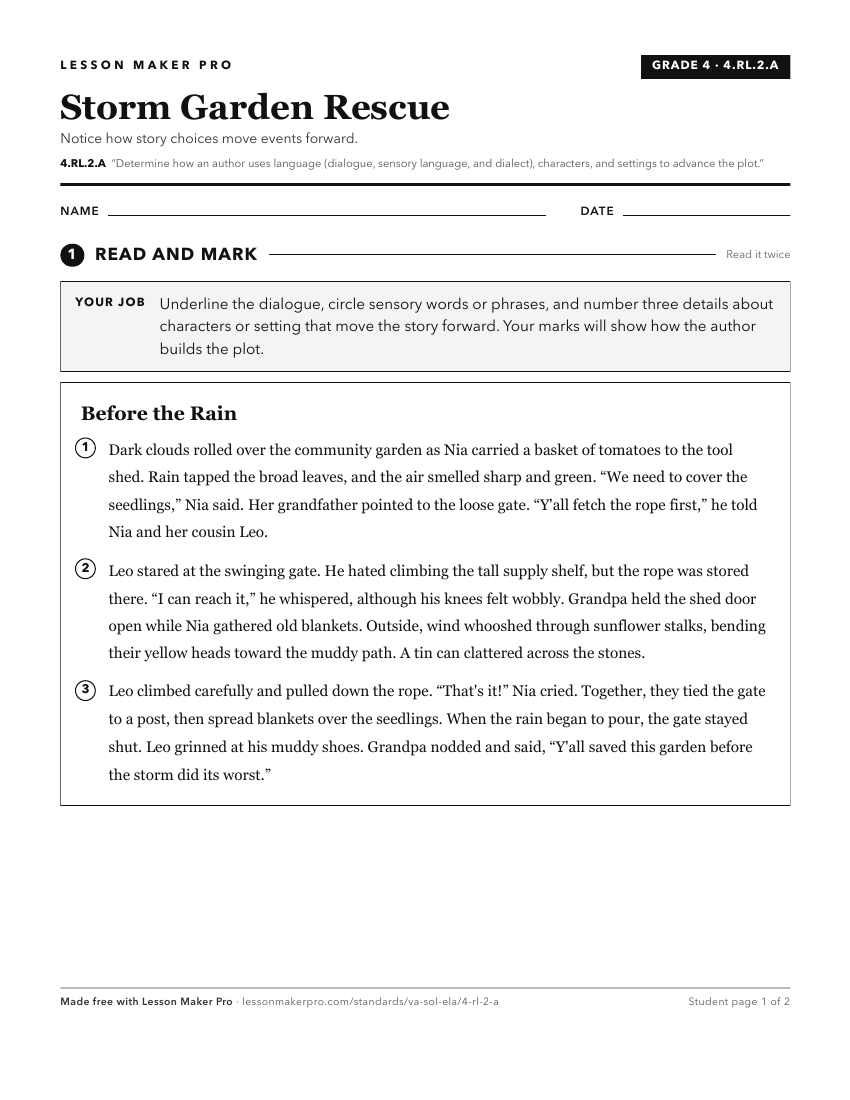
A ready-to-print activity worksheet aligned to 4.RL.2.A, with an answer key for the teacher on its own page. No account needed.
PDF, US Letter, prints cleanly in black and white.
Download the worksheetKeep exploring
Related Standards
- 3.RL.2.B
Identify and explain how an author uses sensory language (e.g., sights, sounds, smells, and tastes) to impact a reader’s understanding of characters, settings, ...
- 7.RL.2.B
Analyze how the elements of an author’s style (e.g., word choice, sentence structure, dialogue, figurative language, imagery) are used to influence and develop ...
- 5.RL.2.B
Analyze the author’s use of language (e.g., synonyms, figurative language, sensory words, dialogue, dialect) and their impact on understanding characters, setti...
- 3.RL.2.A
Discuss how an author uses characters and settings to advance the plot.
Turn this exact standard into a lesson
Grade, subject, topic, and the complete standard are prefilled. Create one free, no account needed.
Also for this standard:Make a WorksheetMake a QuizMake a Sub Lesson