Virginia SOL 3.RL.1.C
The Standard
Describe a character’s attributes, including their traits, motivations, or feelings and how they develop throughout the text.
Virginia Standards of Learning for English · Key Ideas and Plot Details
Teacher's field guide
What This Standard Means
What Students Need to Do
- Students identify what a character is like, what the character wants, and how the character feels. They use events, actions, dialogue, and thoughts to explain changes from beginning to end.
What Mastery Looks Like
- A student names a precise trait, feeling, or goal and supports it with actions, dialogue, or thoughts from the story. The student explains how key events affect the character over time.
Common Misconceptions
- Students may list appearance details instead of personality traits. They may confuse a temporary feeling with a lasting trait, choose labels without evidence, or miss how later events change the character.
How to Assess It
- Exit ticket: Name one way the main character changes from the beginning to the end. Cite one story detail from each part that shows the change.
Lesson moves
Ways to Teach It
Give pairs three event cards from the story to sequence, then add feeling and trait labels that show the character’s change.
Write: What does the character want, what blocks that goal, and how does the character respond? Use two story details.
Play Character Evidence Match by pairing trait, motivation, and feeling cards with matching actions or dialogue from a familiar story.
Create a two-column chart comparing the character’s response to a setback with a realistic response during a difficult group project.
Free download
Printable 3.RL.1.C Worksheet
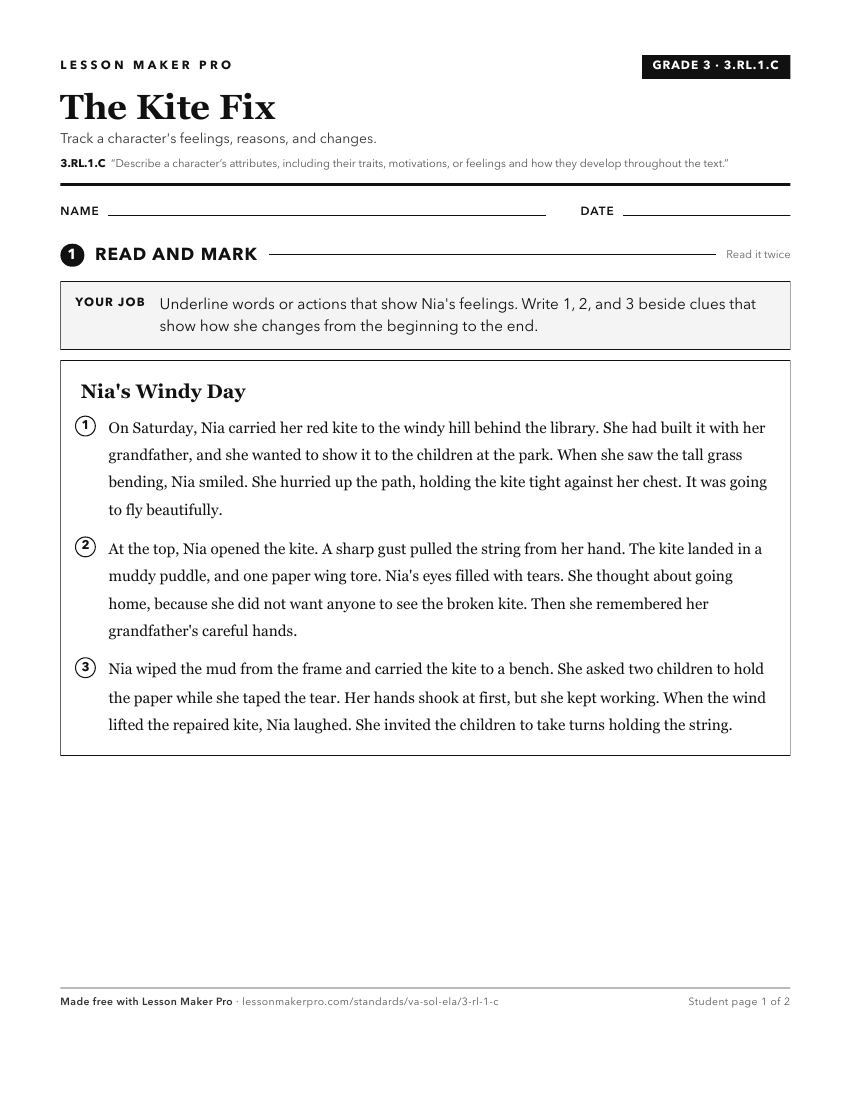
A ready-to-print activity worksheet aligned to 3.RL.1.C, with an answer key for the teacher on its own page. No account needed.
PDF, US Letter, prints cleanly in black and white.
Download the worksheetKeep exploring
Related Standards
- 2.RL.1.C
Describe character’s attributes (e.g., traits, motivations, or feelings) and how they respond to major events and challenges.
- 5.RL.2.A
Describe how an author develops a character through what characters say, think, do, and how other characters respond.
- 12.RL.1.C
Analyze how complex characters-those with multiple or conflicting motivations-develop over the course of texts, interact with other characters, and advance the ...
- 4.RL.1.C
Analyze characters in-depth, drawing on specific details from the text, including their words, actions, or a character’s thoughts.
Turn this exact standard into a lesson
Grade, subject, topic, and the complete standard are prefilled. Create one free, no account needed.
Also for this standard:Make a WorksheetMake a QuizMake a Sub Lesson