Virginia SOL 5.RL.2.A
The Standard
Describe how an author develops a character through what characters say, think, do, and how other characters respond.
Virginia Standards of Learning for English · Craft and Style
Teacher's field guide
What This Standard Means
What Students Need to Do
- Students track clues that reveal a character’s traits, motives, or changes. They explain how specific words, thoughts, actions, and reactions shape the character.
What Mastery Looks Like
- Students identify a character trait or change and support it with accurate details from the text. They explain how dialogue, thoughts, actions, or another character’s reaction shapes the reader’s view.
Common Misconceptions
- Students may name a trait without citing a specific clue. They may summarize the plot instead of explaining character development. They may also treat one action as proof without considering other clues.
How to Assess It
- Read: “Maya picked up the lost wallet. ‘Someone will need this,’ she said, handing it to the clerk. Ben smiled. ‘I knew you would.’” Describe Maya using two details.
Lesson moves
Ways to Teach It
Give groups passage evidence cards to sort into says, thinks, does, and others’ responses, then write one character claim.
Ask students to write: Which detail reveals the most about the character, and why is it stronger than another detail?
Play Character Detective by reading clue cards aloud while teams name a supported trait and explain their reasoning.
Read a short profile of a local athlete, then mark how quotations, choices, and others’ reactions shape the reader’s impression.
Free download
Printable 5.RL.2.A Worksheet
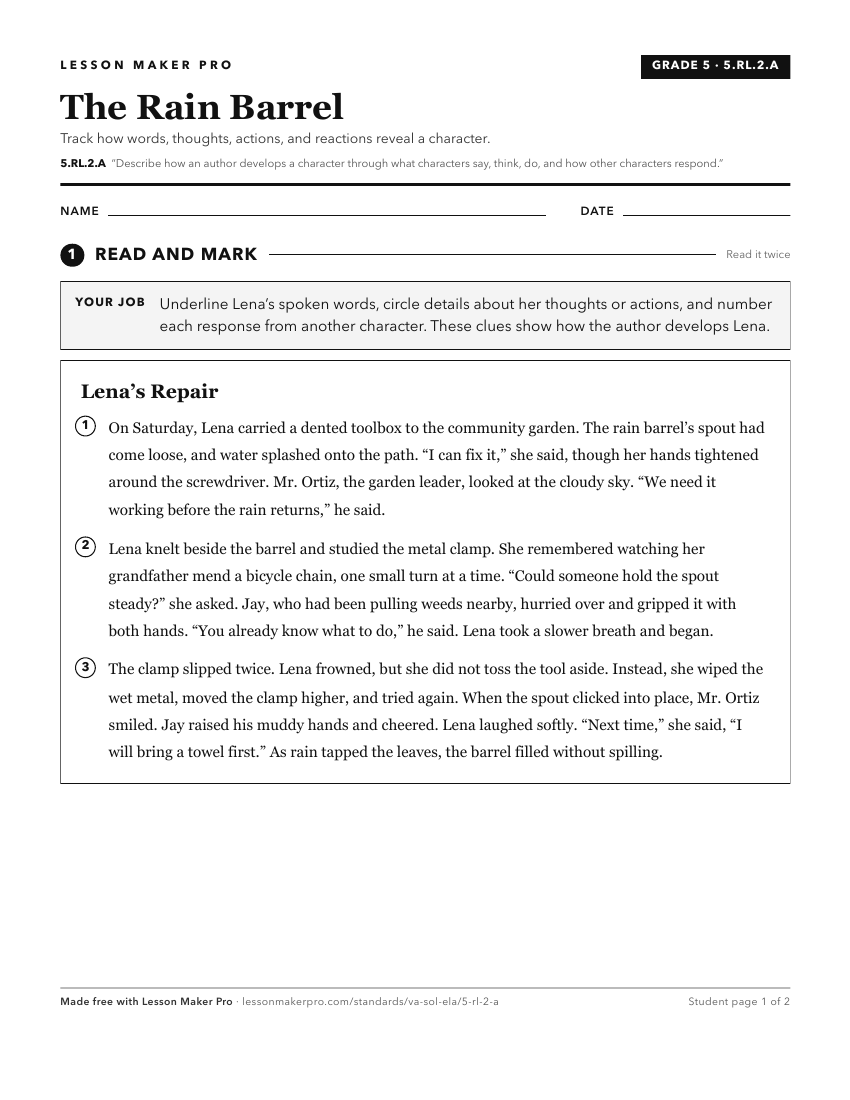
A ready-to-print activity worksheet aligned to 5.RL.2.A, with an answer key for the teacher on its own page. No account needed.
PDF, US Letter, prints cleanly in black and white.
Download the worksheetKeep exploring
Related Standards
- 3.RL.1.C
Describe a character’s attributes, including their traits, motivations, or feelings and how they develop throughout the text.
- 2.RL.1.C
Describe character’s attributes (e.g., traits, motivations, or feelings) and how they respond to major events and challenges.
- 4.RL.1.C
Analyze characters in-depth, drawing on specific details from the text, including their words, actions, or a character’s thoughts.
- 11.RL.1.C
Analyze how characters are revealed through particular lines of dialogue or events.
Turn this exact standard into a lesson
Grade, subject, topic, and the complete standard are prefilled. Create one free, no account needed.
Also for this standard:Make a WorksheetMake a QuizMake a Sub Lesson