Virginia SOL 11.RL.1.C
The Standard
Analyze how characters are revealed through particular lines of dialogue or events.
Virginia Standards of Learning for English · Key Ideas and Plot Details
Teacher's field guide
What This Standard Means
What Students Need to Do
- Students infer a character’s motives, values, traits, and conflicts from specific words and choices. They explain how those details shape the reader’s understanding of the character.
What Mastery Looks Like
- Students select precise evidence rather than summarize the whole scene. They make a reasonable claim about a character and explain how the chosen detail supports it.
Common Misconceptions
- Students may label a character with a trait but give no supporting detail. They may treat every statement as truthful or ignore how pressure, conflict, and context affect behavior.
How to Assess It
- Exit ticket: Choose one line or action from the passage. Name one trait or motive it suggests, then explain your inference in two sentences.
Lesson moves
Ways to Teach It
Give pairs printed dialogue and event cards from one scene; they sort each card under motive, value, conflict, or change and defend one choice.
Write: Which single moment most changes your view of the character, and what exact language or action causes that change?
Play Evidence Match: teams pair quoted lines with character claims, then challenge any match that lacks a clear inference.
Compare a character’s conflict dialogue with a short public apology transcript, then mark phrases that reveal priorities and self-image.
Free download
Printable 11.RL.1.C Worksheet
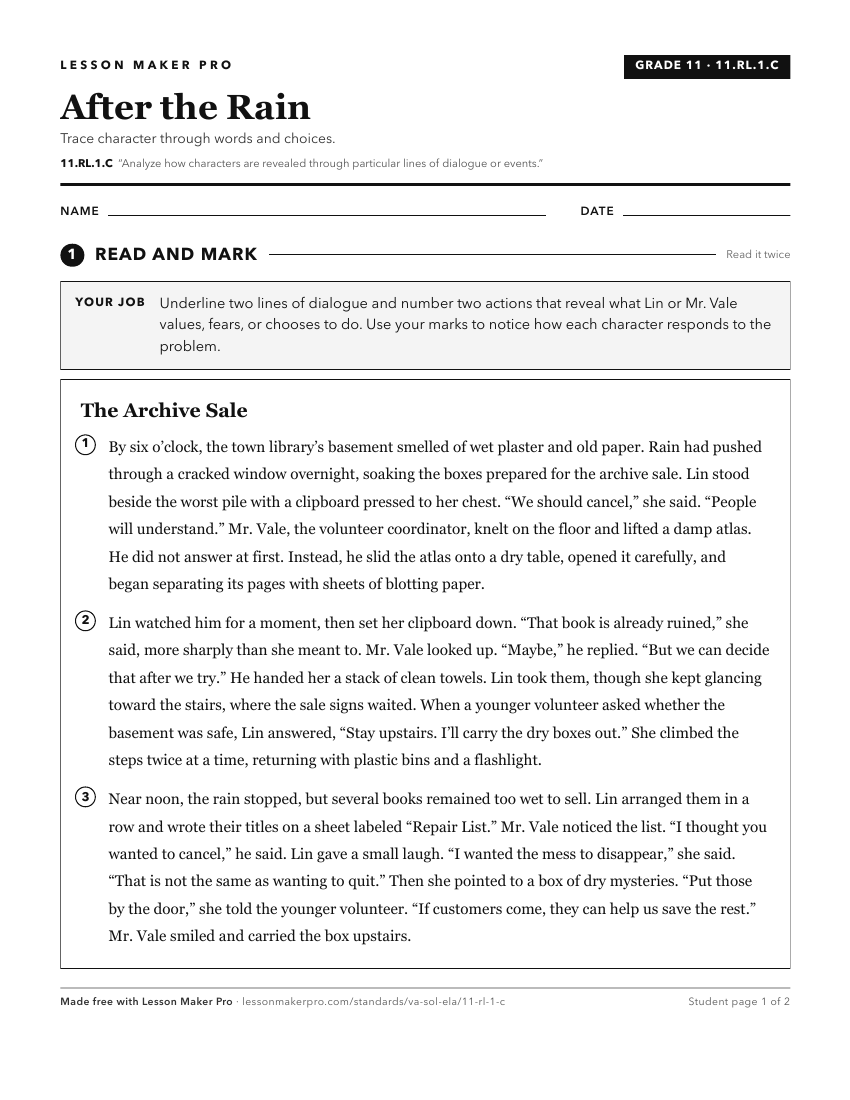
A ready-to-print activity worksheet aligned to 11.RL.1.C, with an answer key for the teacher on its own page. No account needed.
PDF, US Letter, prints cleanly in black and white.
Download the worksheetKeep exploring
Related Standards
- 4.RL.2.A
Determine how an author uses language (dialogue, sensory language, and dialect), characters, and settings to advance the plot.
- 5.RL.2.B
Analyze the author’s use of language (e.g., synonyms, figurative language, sensory words, dialogue, dialect) and their impact on understanding characters, setti...
- 4.RL.1.C
Analyze characters in-depth, drawing on specific details from the text, including their words, actions, or a character’s thoughts.
- 2.RL.3.B
Recognize dialogue in text and explain how it can reveal characters’ thoughts and perspectives.
Turn this exact standard into a lesson
Grade, subject, topic, and the complete standard are prefilled. Create one free, no account needed.
Also for this standard:Make a WorksheetMake a QuizMake a Sub Lesson