Virginia SOL 2.RL.3.B
The Standard
Recognize dialogue in text and explain how it can reveal characters’ thoughts and perspectives.
Virginia Standards of Learning for English · Integration of Concepts
Teacher's field guide
What This Standard Means
What Students Need to Do
- Students find the words a character says and identify who is speaking. They use those words to explain what the character thinks, feels, wants, or believes.
What Mastery Looks Like
- Given a short story, a student can mark a spoken line and name the speaker. The student can explain what the line shows about the character and cite specific words as support.
Common Misconceptions
- Students may confuse a character’s spoken words with the narrator’s words. They may assume speech always matches a character’s true feelings. They may make an inference without pointing to supporting words.
How to Assess It
- Read: Ben said, “I will sit with the new student. He should not eat alone.” Ask students what Ben’s words show about his viewpoint and why.
Lesson moves
Ways to Teach It
Give pairs dialogue and narration sentence strips to sort, then have them match each spoken line to a character feeling card.
Read a character’s spoken line and ask students to write what the character wants, thinks, or feels, using one phrase as evidence.
Play Dialogue Detective by having teams draw speech cards, identify the speaker, and earn points for a supported character inference.
Show a short playground disagreement and have students explain how each child’s words reveal a different view of what happened.
Free download
Printable 2.RL.3.B Worksheet
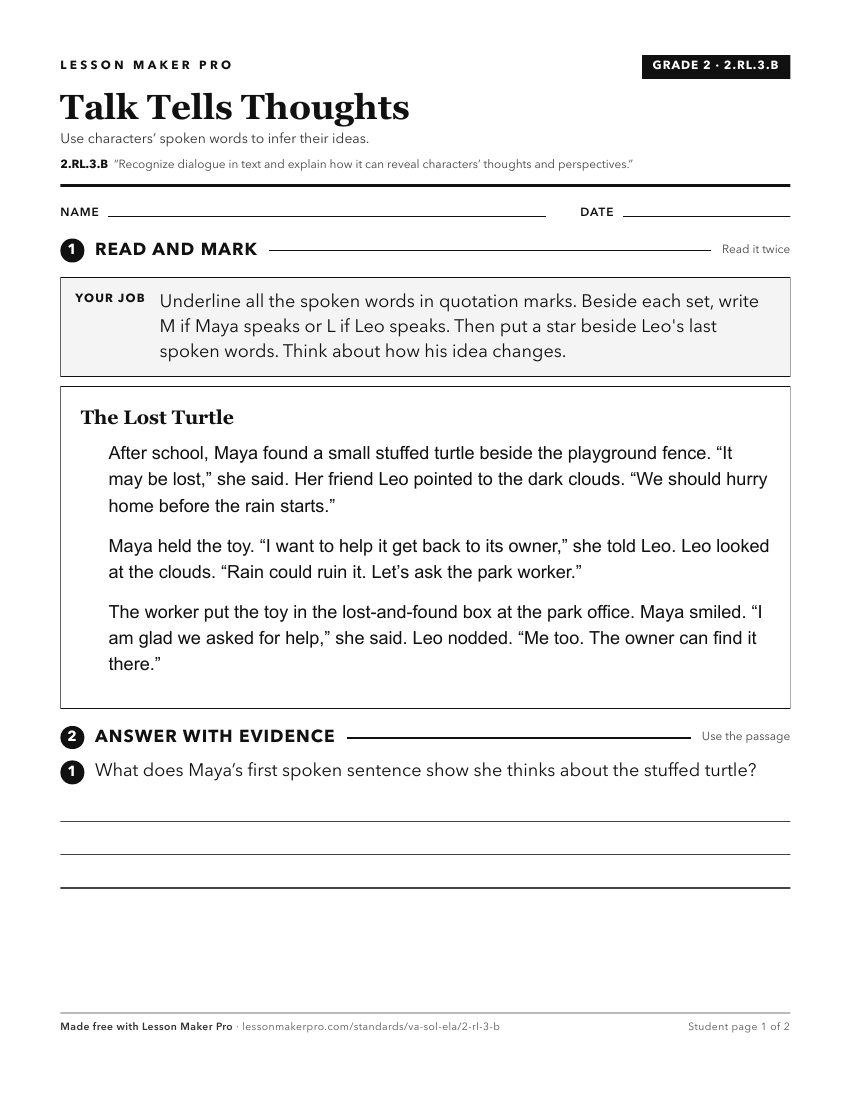
A ready-to-print activity worksheet aligned to 2.RL.3.B, with an answer key for the teacher on its own page. No account needed.
PDF, US Letter, prints cleanly in black and white.
Download the worksheetKeep exploring
Related Standards
- 8.RL.1.C
Justify the decisions and actions of dynamic versus static characters using dialogue or specific events from the text.
- 4.RL.2.A
Determine how an author uses language (dialogue, sensory language, and dialect), characters, and settings to advance the plot.
- 5.RL.2.B
Analyze the author’s use of language (e.g., synonyms, figurative language, sensory words, dialogue, dialect) and their impact on understanding characters, setti...
- 11.RL.1.C
Analyze how characters are revealed through particular lines of dialogue or events.
Turn this exact standard into a lesson
Grade, subject, topic, and the complete standard are prefilled. Create one free, no account needed.
Also for this standard:Make a WorksheetMake a QuizMake a Sub Lesson