Virginia SOL 2.RL
SOL Standard (Knowledge and Skills Cluster)
The student will use textual evidence to demonstrate comprehension and build knowledge from a variety of grade-level complex literary texts heard or read to include fantasy, humor, fable/fairy tale, realistic fiction, historical fiction, and folklore/tall tale, with a focus on fables/fairytales from a variety of cultures.
Virginia Standards of Learning for English
Cluster contents
Knowledge and Skills in This Standard
2.RL is a Standards of Learning standard. These are the knowledge and skills expectations under it.
- 2.RL.1
Key Ideas and Plot Details
- 2.RL.1.A
Retell stories sequentially, including their overall structure, essential story events, and the central message, lesson, or moral.
- 2.RL.1.B
Identify a story’s central conflict using events from the plot as evidence.
- 2.RL.1.C
Describe character’s attributes (e.g., traits, motivations, or feelings) and how they respond to major events and challenges.
- 2.RL.1.D
Generate predictions about story characters and events using the text.
- 2.RL.3
Integration of Concepts
- 2.RL.3.A
Set a purpose for reading by providing guiding questions, activating prior (experience) and background (content) knowledge.
- 2.RL.3.B
Recognize dialogue in text and explain how it can reveal characters’ thoughts and perspectives.
- 2.RL.3.C
Compare and contrast characters, settings, and plots in two versions of the same story from different cultures (e.g., Cinderella stories).
Teacher's field guide
What This Cluster Means
What Students Need to Do
- Students retell literary stories in order, including key events, story structure, conflict, and the central lesson. They use details to explain characters and support predictions. They set a reading purpose, interpret dialogue, and compare two cultural versions of a story.
What Mastery Looks Like
- Students give a clear retelling with the main events, conflict, resolution, and lesson. They use plot details and dialogue to explain character traits, motivations, feelings, responses, and predictions. They accurately compare characters, settings, and plots across two cultural versions.
Common Misconceptions
- Students may retell every detail, put events out of order, or state a topic instead of a lesson. They may confuse conflict with any exciting event, traits with temporary feelings, and predictions with unsupported guesses. They may notice dialogue or cultural differences without explaining what those details reveal.
How to Assess It
- Give students a short unfamiliar fable. Ask them to list three key events in order, identify the conflict, cite one supporting event, and state the moral.
Lesson moves
Ways to Teach It
Give groups five event cards from a familiar tale to sequence, label as setup, conflict, or resolution, and connect to the moral.
Read one dialogue exchange aloud, then ask, “What does each character think or want, and which words show it?”
Play Prediction Pause by stopping before a major event and awarding points for predictions supported by a specific story detail.
Compare two Cinderella picture books from different cultures using a Venn diagram for characters, settings, plots, and cultural details.
Free download
Printable 2.RL Worksheet
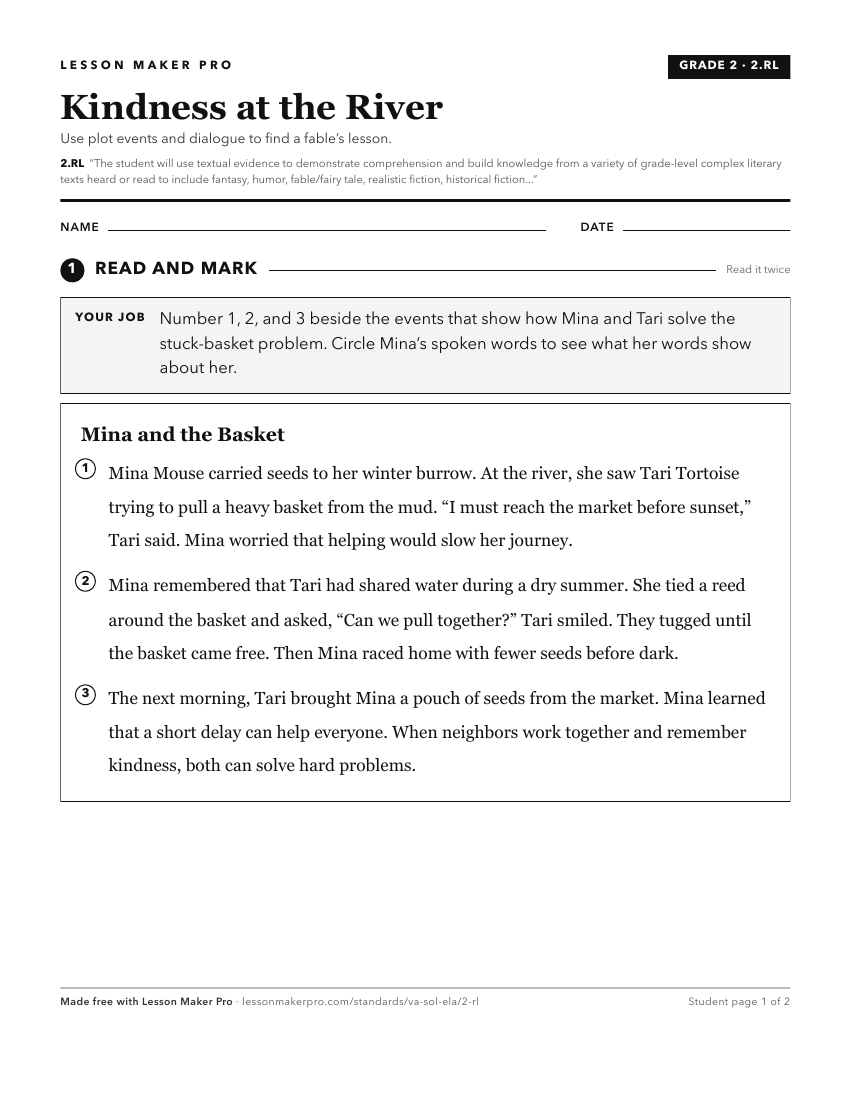
A ready-to-print activity worksheet aligned to 2.RL, with an answer key for the teacher on its own page. No account needed.
PDF, US Letter, prints cleanly in black and white.
Download the worksheetKeep exploring
Related Standards
- K.RL
The student will use textual evidence to demonstrate comprehension and build knowledge from a variety of literary texts heard, to include fantasy, humor, fable/...
- 5.RL
The student will use textual evidence to demonstrate comprehension and build knowledge from a variety of grade-level complex literary texts read to include poet...
- 3.RL
The student will use textual evidence to demonstrate comprehension and build knowledge from a variety of grade-level complex literary texts read to include fant...
- 1.RL
The student will use textual evidence to demonstrate comprehension and build knowledge from a variety of literary texts heard or read including fantasy, humor, ...
Turn this cluster into a lesson
Grade, subject, topic, and the complete cluster are prefilled. Create one free, no account needed.
Also for this cluster:Make a WorksheetMake a QuizMake a Sub Lesson