Virginia SOL 2.RL.1.D
The Standard
Generate predictions about story characters and events using the text.
Virginia Standards of Learning for English · Key Ideas and Plot Details
Teacher's field guide
What This Standard Means
What Students Need to Do
- Students use a character’s actions, words, feelings, and situation to decide what may happen next. They explain which story clue led to their idea.
What Mastery Looks Like
- Students make a reasonable prediction during reading and name a detail that supports it. They check and revise their prediction when the story gives new information.
Common Misconceptions
- Students may guess based on what they want to happen instead of using story clues. They may retell what already happened or refuse to change a prediction after reading new details.
How to Assess It
- Read a short passage aloud and stop before the ending. Ask, “What will the character probably do next, and which story detail supports your answer?”
Lesson moves
Ways to Teach It
Give pairs three illustrated story clues, then have them arrange the cards and predict what a character will do next.
Pause during a read-aloud and ask students to write, “I predict ___ because the story says ___.”
Play Prediction Detective by awarding one point for a likely prediction and one point for a matching text clue.
Read a story about losing an item, then connect the character’s likely next step to what students would do in that situation.
Free download
Printable 2.RL.1.D Worksheet
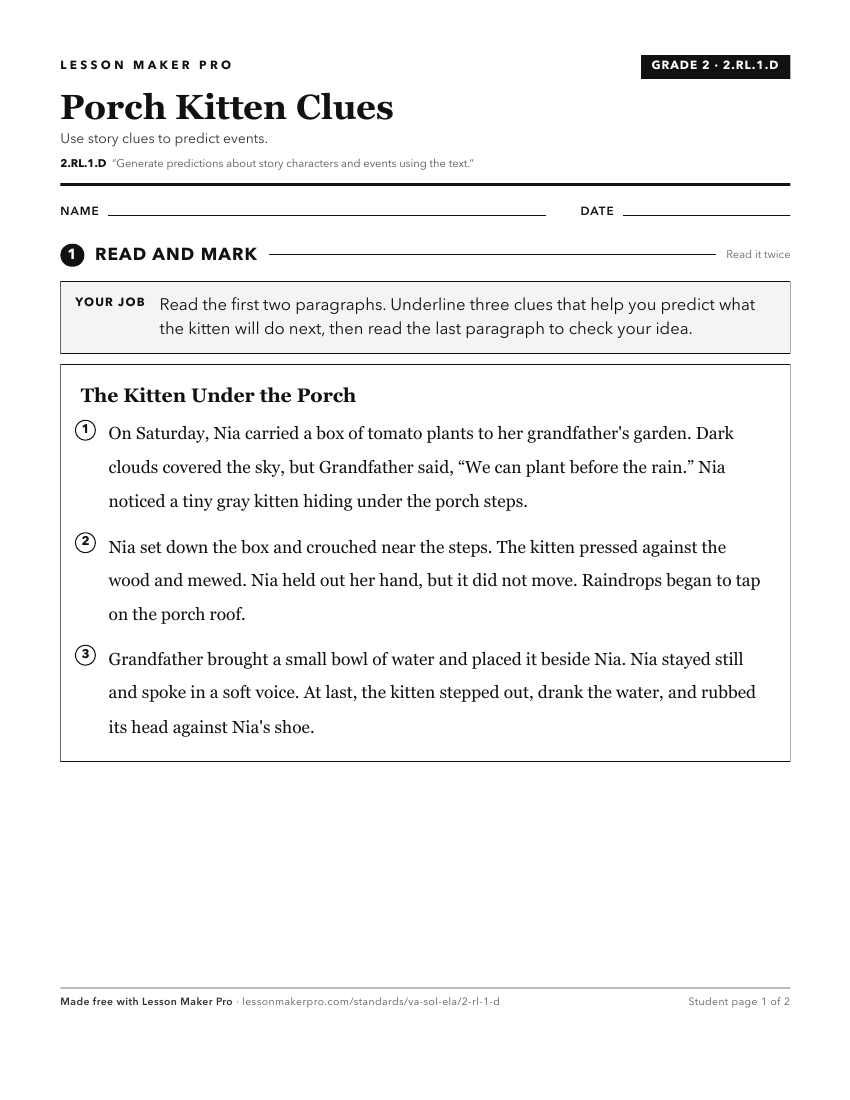
A ready-to-print activity worksheet aligned to 2.RL.1.D, with an answer key for the teacher on its own page. No account needed.
PDF, US Letter, prints cleanly in black and white.
Download the worksheetKeep exploring
Related Standards
- 4.RL.1.C
Analyze characters in-depth, drawing on specific details from the text, including their words, actions, or a character’s thoughts.
- K.RL.1.D
With prompting and support, generate predictions about story characters and events using the text
- 1.RL.1.D
The 1st Grade version of this standard.
- 10.RL.1.B
Analyze how authors structure texts to advance the plot, explaining how each event gives rise to the next or foreshadows a future event.
Turn this exact standard into a lesson
Grade, subject, topic, and the complete standard are prefilled. Create one free, no account needed.
Also for this standard:Make a WorksheetMake a QuizMake a Sub Lesson