Texas TEKS 3.9
TEKS Knowledge Statement (Expectation Cluster)
Citizenship. The student understands characteristics of good citizenship as exemplified by historical and contemporary figures and organizations. The student is expected to: identify characteristics of good citizenship, including truthfulness, justice, equality, respect for oneself and others, responsibility in daily life, and participation in government by educating oneself about the issues, respectfully holding public officials to their word, and voting; identify figures such as Helen Keller, Clara Barton, and Ruby Bridges who exemplify good citizenship; identify and describe individual acts of civic responsibility, including obeying laws, serving and improving the community, serving on a jury, and voting; identify examples of nonprofit and/or civic organizations such as the Red Cross and explain how they serve the common good; and use voting as a method for group decision making.
Texas Essential Knowledge and Skills for Social Studies
Cluster contents
Student Expectations in This Statement
3.9 is a TEKS knowledge and skills statement. These are the student expectations under it.
- 3.9.A
identify characteristics of good citizenship, including truthfulness, justice, equality, respect for oneself and others, responsibility in daily life, and parti...
- 3.9.B
identify figures such as Helen Keller, Clara Barton, and Ruby Bridges who exemplify good citizenship
- 3.9.C
identify and describe individual acts of civic responsibility, including obeying laws, serving and improving the community, serving on a jury, and voting
- 3.9.D
identify examples of nonprofit and/or civic organizations such as the Red Cross and explain how they serve the common good
- 3.9.E
use voting as a method for group decision making.
Teacher's field guide
What This Cluster Means
What Students Need to Do
- Students identify good citizenship in everyday actions and explain how Helen Keller, Clara Barton, and Ruby Bridges showed those traits. They describe civic duties, explain how nonprofit groups help the public, and use informed voting to make group decisions.
What Mastery Looks Like
- Given a scenario, students can name the citizenship trait or civic responsibility shown and support their answer with evidence. They can connect each named person and the Red Cross to specific actions, then conduct and explain a fair vote.
Common Misconceptions
- Students may think good citizenship only means obeying adults or being polite. They may confuse equality with everyone receiving the same thing, even when needs differ. They may also think voting means choosing friends, nonprofits cannot earn money, or jury service is optional for everyone.
How to Assess It
- Give an exit ticket with four prompts: name a trait Ruby Bridges showed, describe one civic duty, explain how the Red Cross helps, and outline a fair class vote.
Lesson moves
Ways to Teach It
Have pairs sort action cards under truthfulness, justice, equality, respect, responsibility, and participation, then defend one placement with evidence.
Ask students to write: How did Ruby Bridges show equality and responsibility, even when others treated her unfairly?
Run a mock class election with issue cards, candidate promises, secret ballots, a tally, and one respectful follow-up question to the winner.
Study a local Red Cross response, then have groups plan one realistic service action that would help people in their community.
Free download
Printable 3.9 Worksheet
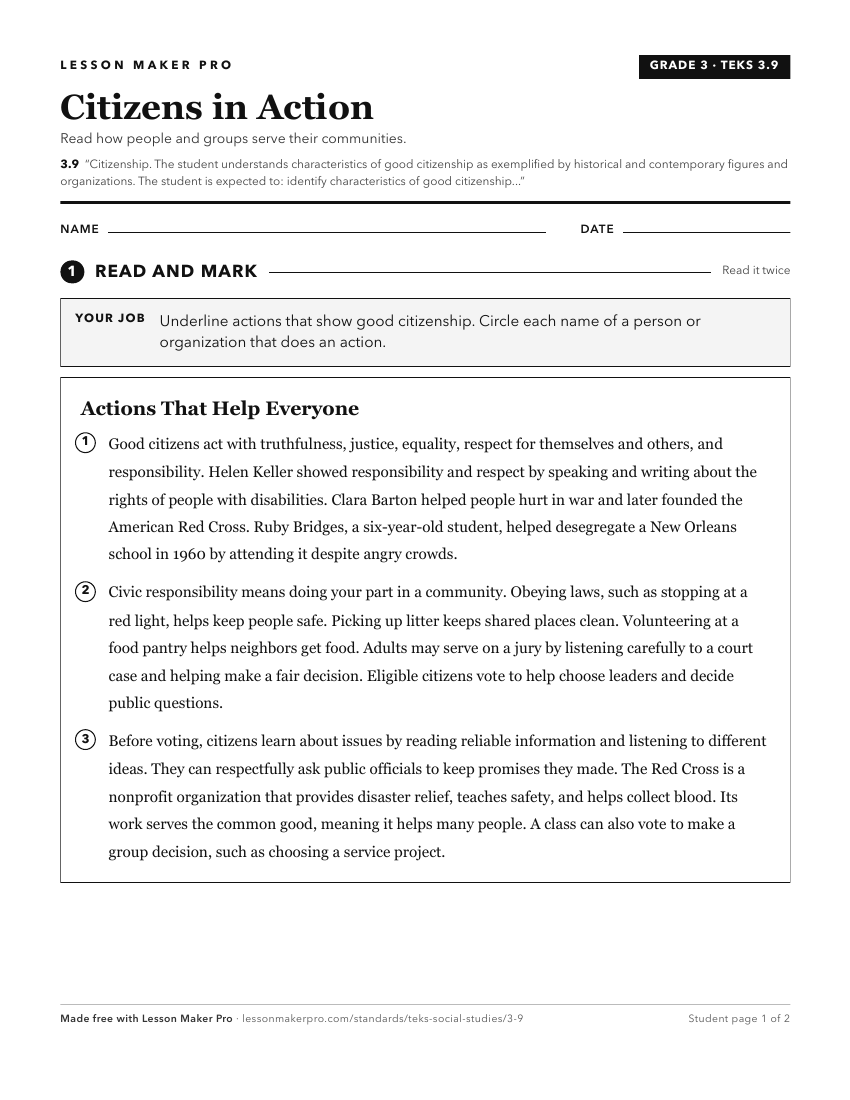
A ready-to-print activity worksheet aligned to 3.9, with an answer key for the teacher on its own page. No account needed.
PDF, US Letter, prints cleanly in black and white.
Download the worksheetKeep exploring
Related Standards
- 7.17
Citizenship. The student understands the importance of effective leadership in a democratic society. The student is expected to:
- 8.19
Citizenship. The student understands the rights and responsibilities of citizens of the United States. The student is expected to:
- 1.12
Citizenship. The student understands characteristics of good citizenship as exemplified by historical figures and other individuals. The student is expected to:
- 2.10
Citizenship. The student understands characteristics of good citizenship as exemplified by historical figures and other individuals. The student is expected to:
Turn this cluster into a lesson
Grade, subject, topic, and the complete cluster are prefilled. Create one free, no account needed.
Also for this cluster:Make a WorksheetMake a QuizMake a Sub Lesson