Texas TEKS 1.12
TEKS Knowledge Statement (Expectation Cluster)
Citizenship. The student understands characteristics of good citizenship as exemplified by historical figures and other individuals. The student is expected to: identify characteristics of good citizenship, including truthfulness, justice, equality, respect for oneself and others, responsibility in daily life, and participation in government by educating oneself about the issues, respectfully holding public officials to their word, and voting; and identify historical figures and other individuals who have exemplified good citizenship such as Benjamin Franklin and Eleanor Roosevelt.
Texas Essential Knowledge and Skills for Social Studies
Cluster contents
Student Expectations in This Statement
1.12 is a TEKS knowledge and skills statement. These are the student expectations under it.
- 1.12.A
identify characteristics of good citizenship, including truthfulness, justice, equality, respect for oneself and others, responsibility in daily life, and parti...
- 1.12.B
identify historical figures and other individuals who have exemplified good citizenship such as Benjamin Franklin and Eleanor Roosevelt.
Teacher's field guide
What This Cluster Means
What Students Need to Do
- Students recognize honesty, fairness, equal treatment, respect, responsibility, and civic participation in everyday actions. They explain how Benjamin Franklin, Eleanor Roosevelt, or another person showed these traits. They describe how citizens learn about issues, question leaders respectfully, and vote when eligible.
What Mastery Looks Like
- Given a short scenario, students name the citizenship trait shown and point to evidence. They connect Franklin or Roosevelt to a specific public action. They know children can learn and speak up, while eligible adults vote.
Common Misconceptions
- Students may think good citizenship only means obeying rules or being nice. They may think equality means everyone is identical or always gets the same outcome, and justice only means punishment. Some think children can vote in public elections or that respectfully questioning a leader is rude.
How to Assess It
- Exit ticket: Choose Benjamin Franklin or Eleanor Roosevelt. Write one action the person took, name the citizenship trait it shows, and list one way a child can participate before voting age.
Lesson moves
Ways to Teach It
Students sort picture cards showing honest, fair, respectful, responsible, and civic actions, then match Franklin and Roosevelt fact cards to traits.
Ask, “Which citizen action would improve our classroom most?” Students choose one, give a reason, and respond respectfully to a partner.
Play Citizen Action Bingo using scenario cards, with students covering the trait shown and explaining each match before keeping it.
Examine a sample city ballot, learn about one local issue, ask a respectful question, and hold a class vote.
Free download
Printable 1.12 Worksheet
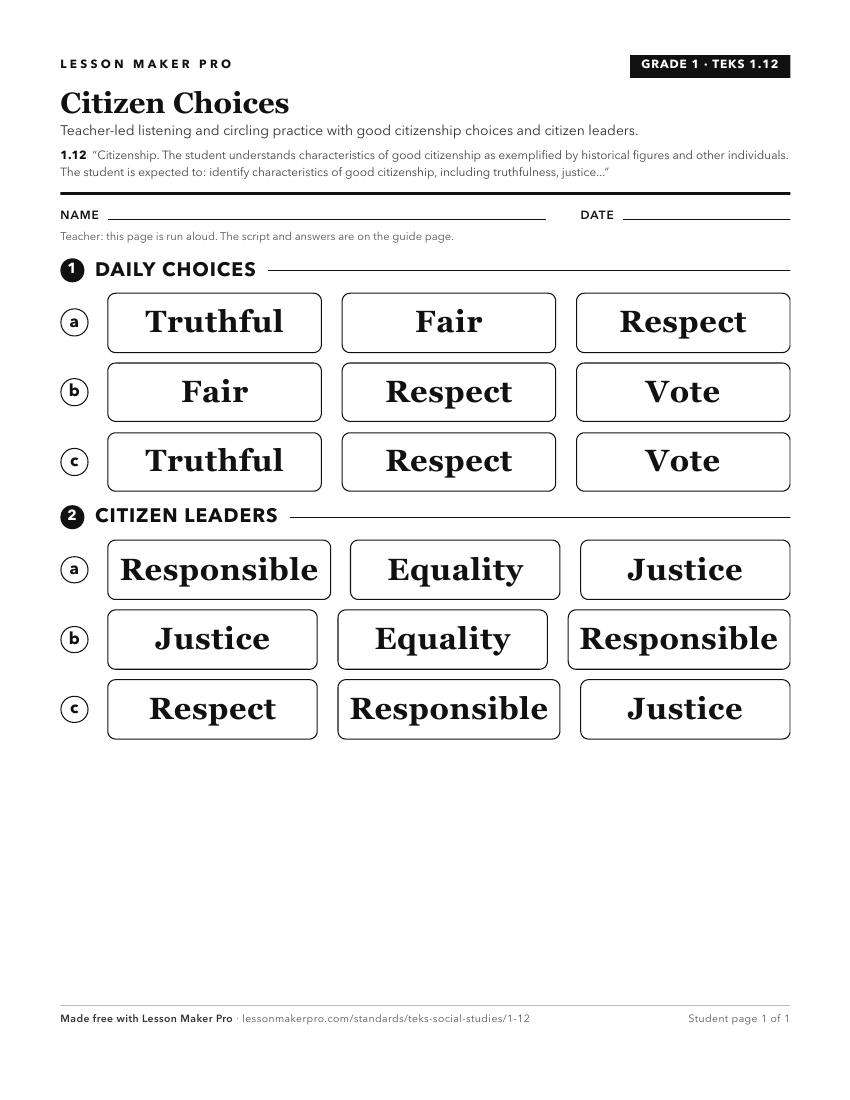
A ready-to-print activity worksheet aligned to 1.12, with an answer key for the teacher on its own page. No account needed.
PDF, US Letter, prints cleanly in black and white.
Download the worksheetKeep exploring
Related Standards
- 3.9
Citizenship. The student understands characteristics of good citizenship as exemplified by historical and contemporary figures and organizations. The student is...
- 7.17
Citizenship. The student understands the importance of effective leadership in a democratic society. The student is expected to:
- 8.19
Citizenship. The student understands the rights and responsibilities of citizens of the United States. The student is expected to:
- 2.10
Citizenship. The student understands characteristics of good citizenship as exemplified by historical figures and other individuals. The student is expected to:
Turn this cluster into a lesson
Grade, subject, topic, and the complete cluster are prefilled. Create one free, no account needed.
Also for this cluster:Make a WorksheetMake a QuizMake a Sub Lesson