Texas TEKS 2.6
TEKS Knowledge Statement (Expectation Cluster)
Matter and its properties. The student knows that matter has physical properties that determine how it is described, classified, and used. The student is expected to: classify matter by observable physical properties, including texture, flexibility, and relative temperature, and identify whether a material is a solid or liquid; conduct a descriptive investigation to explain how physical properties can be changed through processes such as cutting, folding, sanding, melting, or freezing; and demonstrate that small units such as building blocks can be combined or reassembled to form new objects for different purposes and explain the materials chosen based on their physical properties.
Texas Essential Knowledge and Skills for Science
Cluster contents
Student Expectations in This Statement
2.6 is a TEKS knowledge and skills statement. These are the student expectations under it.
- 2.6.A
classify matter by observable physical properties, including texture, flexibility, and relative temperature, and identify whether a material is a solid or liqui...
- 2.6.B
conduct a descriptive investigation to explain how physical properties can be changed through processes such as cutting, folding, sanding, melting, or freezing
- 2.6.C
demonstrate that small units such as building blocks can be combined or reassembled to form new objects for different purposes and explain the materials chosen ...
Teacher's field guide
What This Cluster Means
What Students Need to Do
- Students observe materials, identify solids and liquids, and sort samples by surface feel, bendability, and warmer or cooler temperature. They describe changes after cutting, folding, sanding, melting, or freezing. They combine and rearrange small parts into useful objects, then explain why each material fits the job.
What Mastery Looks Like
- A student sorts an unfamiliar set correctly and names the observed evidence for each group. They record changes in shape, texture, or state without claiming matter disappeared. They rebuild the same pieces for a new use and link each choice to a property.
Common Misconceptions
- Students often call powders or soft materials liquids because they pour or bend. They may treat warmer and cooler as fixed labels rather than comparisons between samples. They may think cutting, melting, or freezing creates a completely new material.
How to Assess It
- Exit ticket: Show foil, water, sandpaper, ice, and linking cubes. Ask students to label solids and liquids, describe two properties, explain one change, and sketch a new cube object with one material-choice reason.
Lesson moves
Ways to Teach It
Give pairs paper, foil, craft sticks, sandpaper, and ice to record properties before and after cutting, folding, sanding, or melting.
Ask students to write: Which material would you choose for a rain hat, and which properties make it a good choice?
Play Property Sort Relay with object cards placed under solid, liquid, flexible, rigid, rough, smooth, warmer, or cooler.
Give groups linking cubes and craft sticks to build a tool holder, rebuild it as a bridge, and explain each material choice.
Free download
Printable 2.6 Worksheet
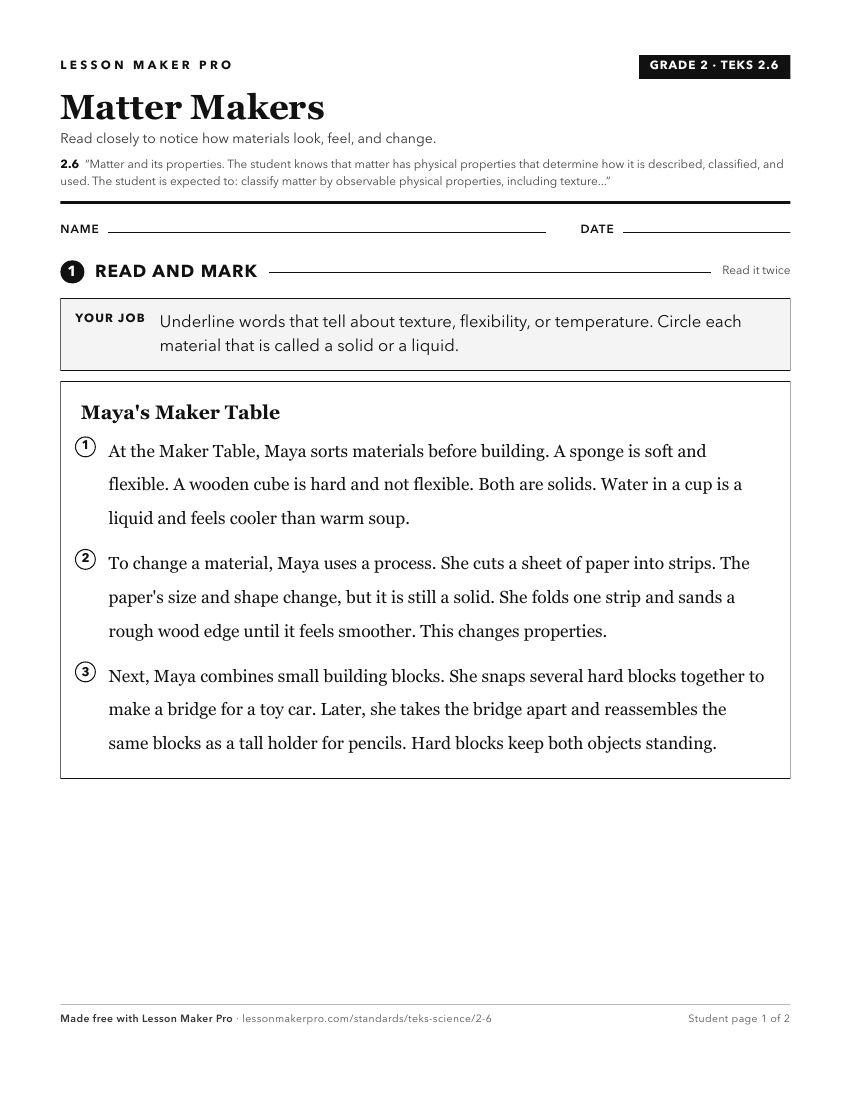
A ready-to-print activity worksheet aligned to 2.6, with an answer key for the teacher on its own page. No account needed.
PDF, US Letter, prints cleanly in black and white.
Download the worksheetKeep exploring
Related Standards
- 5.6
Matter and energy. The student knows that matter has measurable physical properties that determine how matter is identified, classified, changed, and used. The ...
- 3.6
Matter and energy. The student knows that matter has measurable physical properties that determine how matter is identified, classified, changed, and used. The ...
- 4.6
Matter and energy. The student knows that matter has measurable physical properties that determine how matter is identified, classified, changed, and used. The ...
- 1.6
Matter and its properties. The student knows that objects have physical properties that determine how they are described and classified. The student is expected...
Turn this cluster into a lesson
Grade, subject, topic, and the complete cluster are prefilled. Create one free, no account needed.
Also for this cluster:Make a WorksheetMake a QuizMake a Sub Lesson