Texas TEKS 4.6
TEKS Knowledge Statement (Expectation Cluster)
Matter and energy. The student knows that matter has measurable physical properties that determine how matter is identified, classified, changed, and used. The student is expected to: classify and describe matter using observable physical properties, including temperature, mass, magnetism, relative density (the ability to sink or float in water), and physical state (solid, liquid, gas); investigate and compare a variety of mixtures, including solutions that are composed of liquids in liquids and solids in liquids; and demonstrate that matter is conserved when mixtures such as soil and water or oil and water are formed.
Texas Essential Knowledge and Skills for Science
Cluster contents
Student Expectations in This Statement
4.6 is a TEKS knowledge and skills statement. These are the student expectations under it.
- 4.6.A
classify and describe matter using observable physical properties, including temperature, mass, magnetism, relative density (the ability to sink or float in wat...
- 4.6.B
investigate and compare a variety of mixtures, including solutions that are composed of liquids in liquids and solids in liquids
- 4.6.C
demonstrate that matter is conserved when mixtures such as soil and water or oil and water are formed.
Teacher's field guide
What This Cluster Means
What Students Need to Do
- Students measure and observe samples, then sort them by mass, temperature, magnet response, state, and whether they sink or float. They compare mixtures and solutions, then use measurements to show that combining materials does not make matter disappear.
What Mastery Looks Like
- A student can choose a useful property, collect accurate data, and explain a classification with evidence. The student can identify a solution and compare total mass before and after mixing materials in a sealed container.
Common Misconceptions
- Students may think heavy objects always sink, all metals attract magnets, or dissolved solids have vanished. They may also expect materials to gain or lose mass when layers form or particles cannot be seen.
How to Assess It
- Give an exit ticket showing 10 grams of salt added to 100 grams of water. Ask students to predict the total mass, identify the mixture type, and explain where the salt went.
Lesson moves
Ways to Teach It
Have groups measure classroom samples with a balance, thermometer, magnet, and water cup, then mix salt water in sealed cups and compare mass.
Ask students to write: Where did the salt go after it dissolved, and what evidence shows it is still present?
Run a card sort where teams classify pictured materials by state, magnetism, and sinking behavior, then defend one disputed placement.
Examine a sealed bottle of salad dressing, predict its layers after settling, and explain why shaking changes appearance but not total mass.
Free download
Printable 4.6 Worksheet
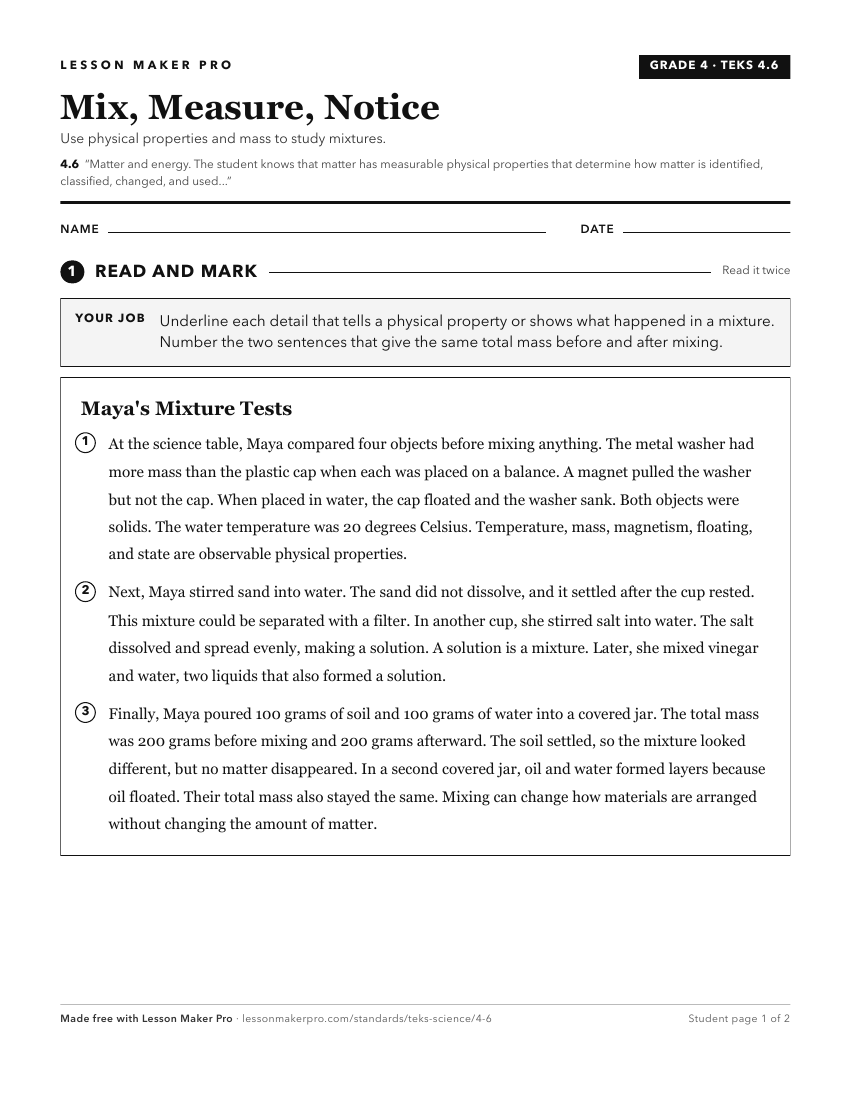
A ready-to-print activity worksheet aligned to 4.6, with an answer key for the teacher on its own page. No account needed.
PDF, US Letter, prints cleanly in black and white.
Download the worksheetKeep exploring
Related Standards
- 5.6
The 5th Grade version of this standard.
- 3.6
The 3rd Grade version of this standard.
- 2.6
Matter and its properties. The student knows that matter has physical properties that determine how it is described, classified, and used. The student is expect...
- 6.6
Matter and energy. The student knows that matter is made of atoms, can be classified according to its properties, and can undergo changes. The student is expect...
Turn this cluster into a lesson
Grade, subject, topic, and the complete cluster are prefilled. Create one free, no account needed.
Also for this cluster:Make a WorksheetMake a QuizMake a Sub Lesson