Texas TEKS 4.6.A
The Standard
- 4.6
- Matter and energy. The student knows that matter has measurable physical properties that determine how matter is identified, classified, changed, and used. The student is expected to:
classify and describe matter using observable physical properties, including temperature, mass, magnetism, relative density (the ability to sink or float in water), and physical state (solid, liquid, gas)
Texas Essential Knowledge and Skills for Science
Teacher's field guide
What This Standard Means
What Students Need to Do
- Students observe and measure properties of materials, then sort them using evidence. They compare temperature, mass, magnetic response, state, and whether an object sinks or floats.
What Mastery Looks Like
- Students accurately describe an unknown sample with measurements and observations. They place it in a group and explain the choice using two or more properties.
Common Misconceptions
- Students may think every heavy object sinks, every light object floats, or all metals attract magnets. They may confuse mass with size or assume temperature determines whether something is solid, liquid, or gas.
How to Assess It
- Give students data for three objects, including mass, temperature, magnetic response, state, and sink or float results. Ask them to group two objects and cite two supporting properties.
Lesson moves
Ways to Teach It
Set up stations with balances, thermometers, magnets, water tubs, and material samples for students to test, record, and classify.
Ask students to write which two properties would best identify a mystery material and explain why.
Play Property Sort by giving teams object cards to group, then award points for each grouping supported by accurate evidence.
Compare materials used in a lunchbox, such as a metal spoon, plastic container, ice pack, and juice, using observed and measured properties.
Free download
Printable 4.6.A Worksheet
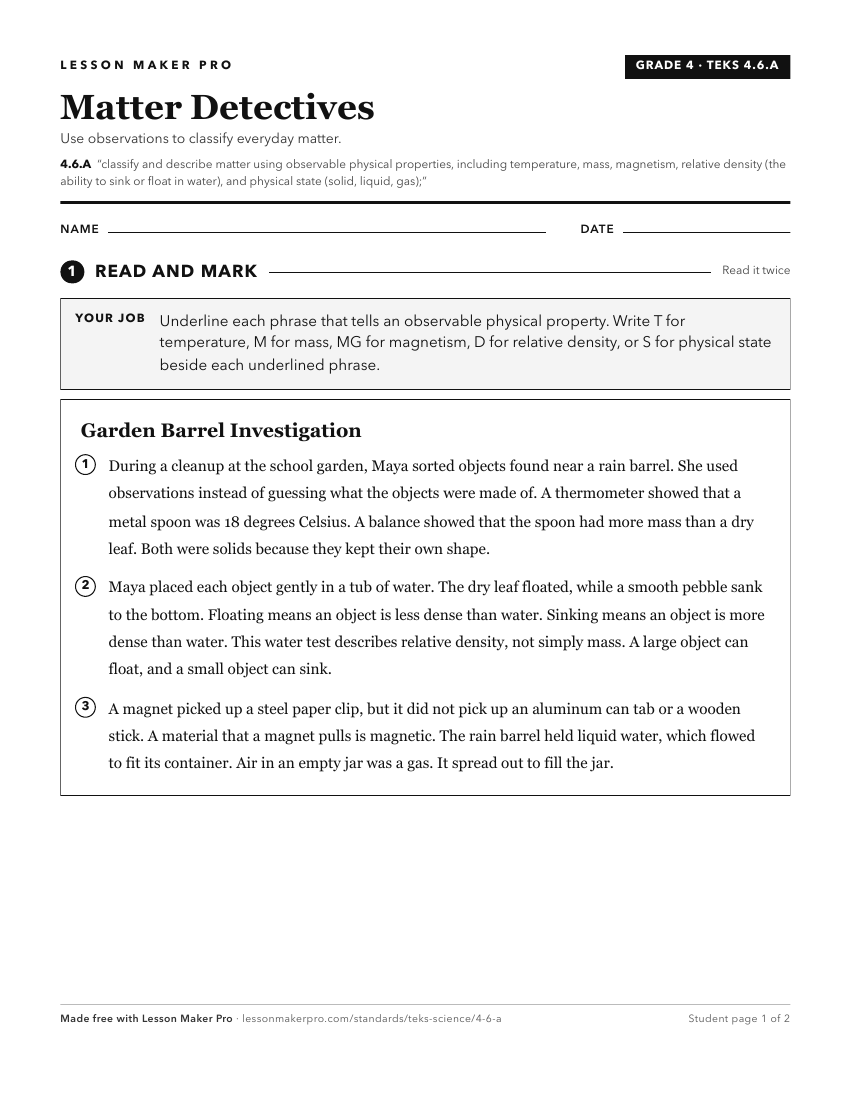
A ready-to-print activity worksheet aligned to 4.6.A, with an answer key for the teacher on its own page. No account needed.
PDF, US Letter, prints cleanly in black and white.
Download the worksheetKeep exploring
Related Standards
- 2.6.A
classify matter by observable physical properties, including texture, flexibility, and relative temperature, and identify whether a material is a solid or liqui...
- 1.6
Matter and its properties. The student knows that objects have physical properties that determine how they are described and classified. The student is expected...
- 3.6.A
measure, test, and record physical properties of matter, including temperature, mass, magnetism, and the ability to sink or float in water
- 5.6.A
compare and contrast matter based on measurable, testable, or observable physical properties, including mass, magnetism, relative density (sinking and floating ...
Turn this exact standard into a lesson
Grade, subject, topic, and the complete standard are prefilled. Create one free, no account needed.
Also for this standard:Make a WorksheetMake a QuizMake a Sub Lesson