Texas TEKS 5.6.A
The Standard
- 5.6
- Matter and energy. The student knows that matter has measurable physical properties that determine how matter is identified, classified, changed, and used. The student is expected to:
compare and contrast matter based on measurable, testable, or observable physical properties, including mass, magnetism, relative density (sinking and floating using water as a reference point), physical state (solid, liquid, gas), volume, solubility in water, and the ability to conduct or insulate thermal energy and electric energy
Texas Essential Knowledge and Skills for Science
Teacher's field guide
What This Standard Means
What Students Need to Do
- Students observe and test materials, then compare their physical properties. They use measurements and test results to describe similarities and differences between samples.
What Mastery Looks Like
- Students can select a fair test for each property and record clear results. They can compare two materials using evidence about mass, volume, state, magnetism, sinking, solubility, and energy conduction.
Common Misconceptions
- Students may think heavier objects always sink or that larger objects always have more mass. They may think dissolved matter disappears or that all metals are magnetic. They may also confuse thermal conduction with electrical conduction.
How to Assess It
- Give students a data table for two materials. Ask them to write two similarities and two differences, using specific results from the table.
Lesson moves
Ways to Teach It
Run stations where students measure mass and volume, test magnetism, observe sinking, check solubility, and use simple circuits and thermal tests.
Ask students to explain which properties would best identify an unknown material and why.
Play a property sorting game with material cards labeled by state, magnetism, solubility, sinking, and conduction results.
Compare materials used for frying pans, electrical cords, and life jackets, then connect each choice to a tested property.
Free download
Printable 5.6.A Worksheet
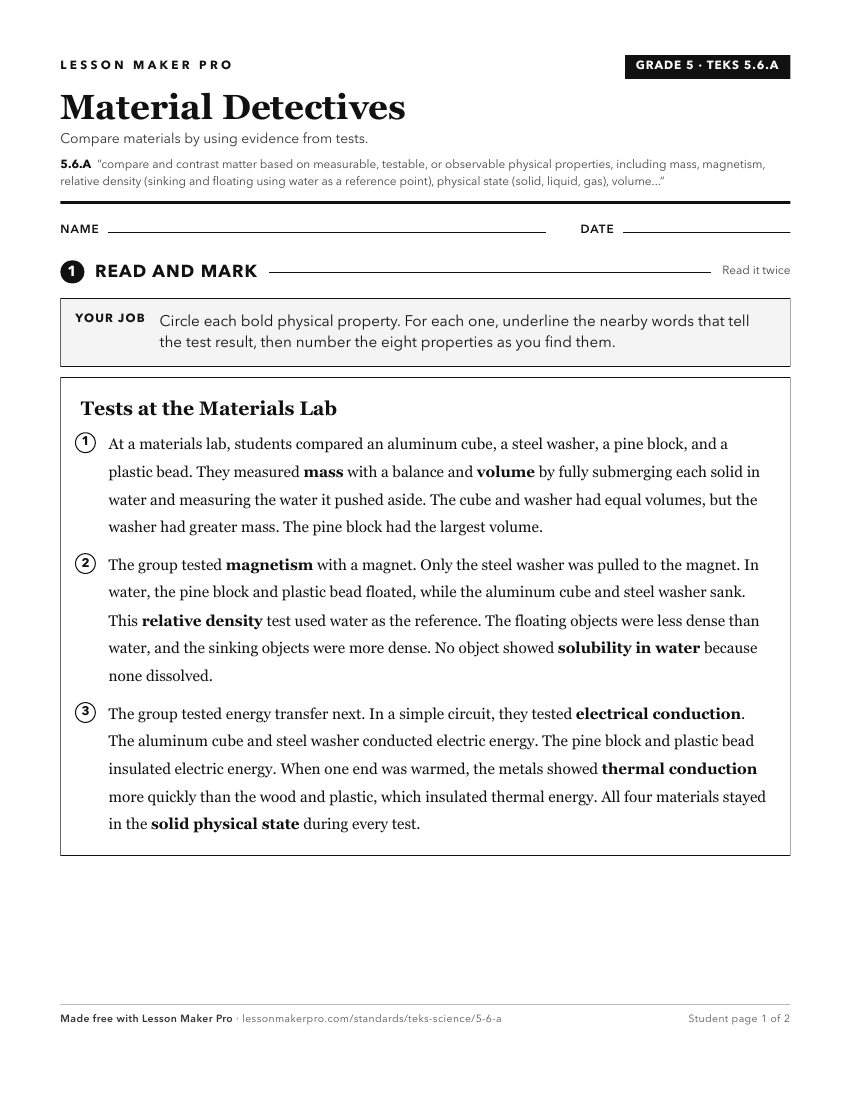
A ready-to-print activity worksheet aligned to 5.6.A, with an answer key for the teacher on its own page. No account needed.
PDF, US Letter, prints cleanly in black and white.
Download the worksheetKeep exploring
Related Standards
- 2.6.A
classify matter by observable physical properties, including texture, flexibility, and relative temperature, and identify whether a material is a solid or liqui...
- 4.6
Matter and energy. The student knows that matter has measurable physical properties that determine how matter is identified, classified, changed, and used. The ...
- 4.6.A
classify and describe matter using observable physical properties, including temperature, mass, magnetism, relative density (the ability to sink or float in wat...
- 3.6.A
measure, test, and record physical properties of matter, including temperature, mass, magnetism, and the ability to sink or float in water
Turn this exact standard into a lesson
Grade, subject, topic, and the complete standard are prefilled. Create one free, no account needed.
Also for this standard:Make a WorksheetMake a QuizMake a Sub Lesson