Oklahoma Social Studies USH.C.1
Standard Cluster
Analyze the transformation of the United States of America through its civil rights struggles, immigrant experiences, and settlement of the American West during the Post Civil War Era. Explain the constitutional issues that arise in the post-Civil War era. Summarize the fundamental principles of the United States of America’s constitutional republic and how events of the post-war era affected the Constitution’s balance of the public good with the protection of individual rights. Analyze the Constitution’s concepts of federalism, separation of powers, and the system of checks and balances to changing relationships in American politics as the nation rebuilt following the Civil War. Examine the meaning and effects of the Reconstruction Amendments (13th, 14th, and 15th Amendments) and the Civil Rights Act of 1867, assessing the extent to which each enabled social, political, and economic change. Analyze the post-Reconstruction civil rights struggles of African Americans. Identify the significance of Juneteenth in relation to emancipation and modern-day commemorations. Explain the reasons for adoption of Black Codes immediately following the Civil War and their limitations on economic opportunities and property ownership. Describe how some Southerners responded to political and social change brought about by Reconstruction, including the rise of the Ku Klux Klan, its methods of intimidation and terror, including lynching, disenfranchisement, and the passage of segregation laws. Analyze the causes and effects of the continuing westward migration and territorial growth after the Civil War. Explain the impact of the Homestead Act, the completion of the Transcontinental Railroad, and the purchase of Alaska on settlement patterns and Native populations. Describe Grant’s Peace Policy including the establishment of reservations and the use of religious organizations to assimilate American Indians through religious instruction and agricultural training. Examine American Indian perspectives on westward expansion and the end of the Indian Wars in the late nineteenth century, including the events at Wounded Knee Massacre, as expressed by leaders such as Red Cloud, Quanah Parker, and Chief Joseph, while also examining the federal government’s goals of territorial expansion and national development. Describe the intent and effects of assimilation policies during the late nineteenth and early twentieth centuries, including the establishment of Indian boarding schools and their impact on Native cultures, languages, and community life. Reference context teachers may include: Carlisle Indian Industrial School. Explain how federal policies such as allotment and assimilation contributed to the restructuring of Tribal governments and land ownership in Indian Territory prior to Oklahoma statehood. Analyze the impact of immigration on settlement patterns in American society and economic growth. Summarize the reasons for immigration and the immigrant experiences at processing centers such as Ellis Island and Angel Island. Describe the Americanization programs which sought to integrate and assimilate immigrants (e.g., political party machines, Tammany Hall) through instruction in English and the United States of America’s system of government. Examine the rise and motivations of Nativism against a new wave of Eastern European immigrants. Describe the contributions of Chinese immigrants to the national economy and nativist opposition to their continued immigration. Explain changes in federal immigration policy including the Chinese Exclusion Act, the Gentlemen’s Agreement, and the Supreme Court’s application of the 14th Amendment.
Oklahoma Academic Standards for Social Studies (2026)
Cluster contents
Standards in This Cluster
USH.C.1 is a cluster heading. These are the individual standards under it.
- USH.C.1.1
Explain the constitutional issues that arise in the post-Civil War era.
- USH.C.1.1.A
Summarize the fundamental principles of the United States of America’s constitutional republic and how events of the post-war era affected the Constitution’s ba...
- USH.C.1.1.B
Analyze the Constitution’s concepts of federalism, separation of powers, and the system of checks and balances to changing relationships in American politics as...
- USH.C.1.1.C
Examine the meaning and effects of the Reconstruction Amendments (13th, 14th, and 15th Amendments) and the Civil Rights Act of 1867, assessing the extent to whi...
- USH.C.1.2
Analyze the post-Reconstruction civil rights struggles of African Americans.
- USH.C.1.2.A
Identify the significance of Juneteenth in relation to emancipation and modern-day commemorations.
- USH.C.1.2.B
Explain the reasons for adoption of Black Codes immediately following the Civil War and their limitations on economic opportunities and property ownership.
- USH.C.1.2.C
Describe how some Southerners responded to political and social change brought about by Reconstruction, including the rise of the Ku Klux Klan, its methods of i...
- USH.C.1.3
Analyze the causes and effects of the continuing westward migration and territorial growth after the Civil War.
- USH.C.1.3.A
Explain the impact of the Homestead Act, the completion of the Transcontinental Railroad, and the purchase of Alaska on settlement patterns and Native populatio...
- USH.C.1.3.B
Describe Grant’s Peace Policy including the establishment of reservations and the use of religious organizations to assimilate American Indians through religiou...
- USH.C.1.3.C
Examine American Indian perspectives on westward expansion and the end of the Indian Wars in the late nineteenth century, including the events at Wounded Knee M...
- USH.C.1.3.D
Describe the intent and effects of assimilation policies during the late nineteenth and early twentieth centuries, including the establishment of Indian boardin...
- USH.C.1.3.E
Explain how federal policies such as allotment and assimilation contributed to the restructuring of Tribal governments and land ownership in Indian Territory pr...
- USH.C.1.4
Analyze the impact of immigration on settlement patterns in American society and economic growth.
- USH.C.1.4.A
Summarize the reasons for immigration and the immigrant experiences at processing centers such as Ellis Island and Angel Island.
- USH.C.1.4.B
Describe the Americanization programs which sought to integrate and assimilate immigrants (e.g., political party machines, Tammany Hall) through instruction in ...
- USH.C.1.4.C
Examine the rise and motivations of Nativism against a new wave of Eastern European immigrants.
- USH.C.1.4.D
Describe the contributions of Chinese immigrants to the national economy and nativist opposition to their continued immigration.
- USH.C.1.4.E
Explain changes in federal immigration policy including the Chinese Exclusion Act, the Gentlemen’s Agreement, and the Supreme Court’s application of the 14th Am...
Teacher's field guide
What This Cluster Means
What Students Need to Do
- Track changes in freedom, citizenship, land, and voting after the Civil War. Compare what Congress, presidents, courts, and states did with what African Americans, Native peoples, and immigrants experienced. Use historical sources to explain who gained rights and who faced new limits.
What Mastery Looks Like
- Students can explain how the Reconstruction Amendments expanded rights while Black Codes, Klan violence, and segregation limited them. They can connect railroads, reservations, allotment, and boarding schools to Native land loss and cultural harm. They can compare Ellis Island and Angel Island, then explain how nativism, exclusion laws, and a court ruling on birthright citizenship shaped immigrant lives.
Common Misconceptions
- Students may think Juneteenth ended slavery nationwide or that emancipation reached everyone at once. They may assume new voting rights stopped intimidation immediately, or that western land was empty. They may think Ellis Island and Angel Island treated arrivals the same way.
How to Assess It
- Give students cards labeled Black Codes, the Dawes Act, and the Chinese Exclusion Act. Ask them to choose two, name who made each policy, and explain one right or opportunity each restricted.
Lesson moves
Ways to Teach It
Give groups cards for Juneteenth, the amendments, the Homestead Act, boarding schools, and Chinese Exclusion; build a timeline of gains and losses.
Pair Chief Joseph's 1879 speech with Grant's 1869 annual message; ask, 'Who controls land, and whose idea of peace shaped policy?'
Run a policy match: students pair Black Codes, the Fifteenth Amendment, allotment, and Chinese Exclusion with affected groups and the level of government involved.
Show General Order No. 3 and a current local Juneteenth event listing; ask what the event marks and what freedom did not ensure.
Free download
Printable USH.C.1 Worksheet
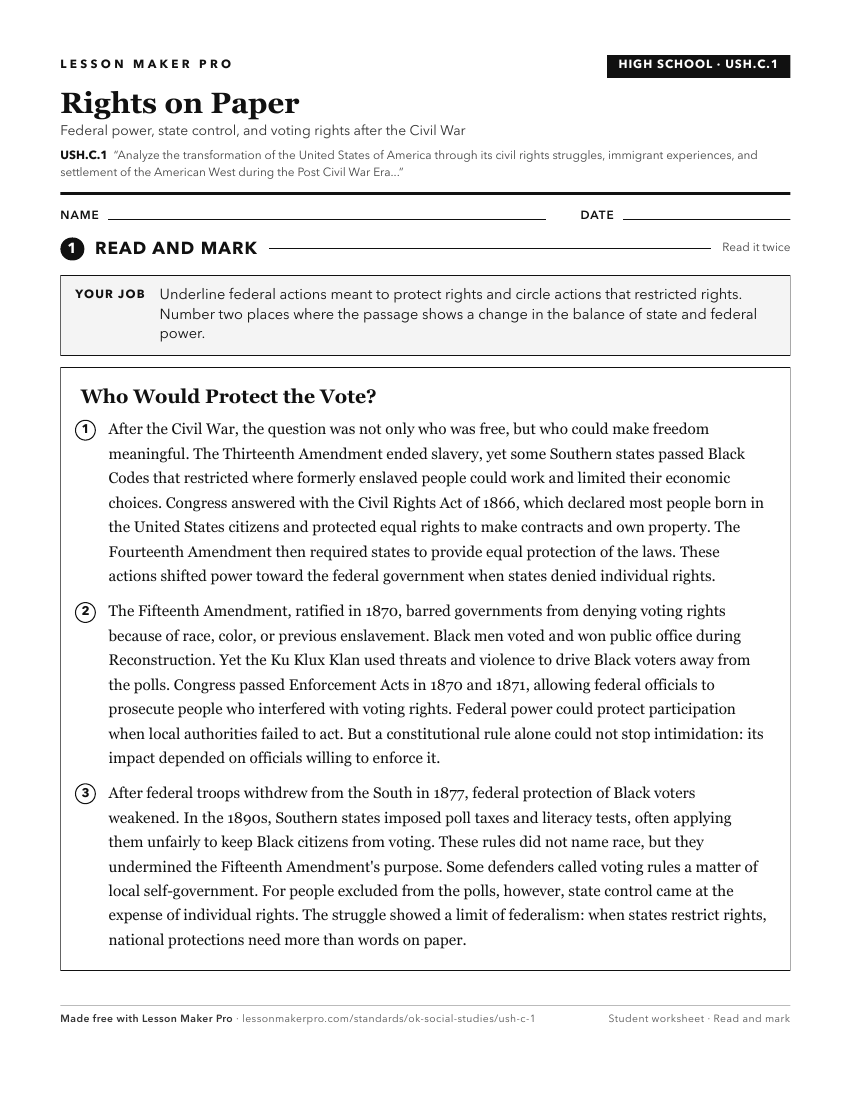
A ready-to-print activity worksheet aligned to USH.C.1, with an answer key for the teacher on its own page. No account needed.
PDF, US Letter, prints cleanly in black and white.
Download the worksheetKeep exploring
Related Standards
Turn this cluster into a lesson
Grade, subject, topic, and the complete cluster are prefilled. Create one free, no account needed.
Also for this cluster:Make a WorksheetMake a QuizMake a Sub Lesson