Oklahoma Social Studies 4.P.2
Standard Cluster
Use interdisciplinary tools to acquire, apply, and evaluate content understanding of the four strands of social studies. Demonstrate an understanding of the principles of government, the benefits of democratic systems, and their responsibilities as citizens. Explain democratic principles in historic documents by identifying examples of civic virtues and principles at work in state and national settings. Explain the structure, responsibilities, and powers exercised by officials of the national government and describe ways informed citizens can and should participate. Examine the principles of the Constitution of the United States of America, including how laws are made in a democratic society and are used to protect individual rights. Develop skills which demonstrate an understanding of historical events and the people who shaped our history. Compare and analyze primary and secondary sources from the past and present, including the intended audience and author’s purpose. Compare perspectives of individuals and groups from different regions and experiences, including the past and present. Explain multiple causes and effects of events and developments of the past or present; create timelines to identify multiple causes and effects from given information. Demonstrate a mastery of geographic concepts and the use of geographic tools to understand the impact of geography on the past and present. Answer geographic questions by organizing geographic information from historical as well as contemporary perspectives. Analyze human and physical features of the nation by drawing conclusions and explaining spatial relationships of physical and human places from geographic representations. Explain how environmental factors affected historical events and continue to impact contemporary human activities. Identify the principles of economic systems and develop an understanding of the benefits of a market system in local, national, and global settings. Interpret and draw conclusions from economic data on charts and graphs. Explain how the concept of supply and demand operates in a market economy, using historical and contemporary examples. Analyze the importance of innovation and entrepreneurship in a market economy.
Oklahoma Academic Standards for Social Studies (2026)
Cluster contents
Standards in This Cluster
4.P.2 is a cluster heading. These are the individual standards under it.
- 4.P.2.1
Demonstrate an understanding of the principles of government, the benefits of democratic systems, and their responsibilities as citizens.
- 4.P.2.1.A
Explain democratic principles in historic documents by identifying examples of civic virtues and principles at work in state and national settings.
- 4.P.2.1.B
Explain the structure, responsibilities, and powers exercised by officials of the national government and describe ways informed citizens can and should partici...
- 4.P.2.1.C
Examine the principles of the Constitution of the United States of America, including how laws are made in a democratic society and are used to protect individu...
- 4.P.2.2
Develop skills which demonstrate an understanding of historical events and the people who shaped our history.
- 4.P.2.2.A
Compare and analyze primary and secondary sources from the past and present, including the intended audience and author’s purpose.
- 4.P.2.2.B
Compare perspectives of individuals and groups from different regions and experiences, including the past and present.
- 4.P.2.2.C
Explain multiple causes and effects of events and developments of the past or present; create timelines to identify multiple causes and effects from given infor...
- 4.P.2.3
Demonstrate a mastery of geographic concepts and the use of geographic tools to understand the impact of geography on the past and present.
- 4.P.2.3.A
Answer geographic questions by organizing geographic information from historical as well as contemporary perspectives.
- 4.P.2.3.B
Analyze human and physical features of the nation by drawing conclusions and explaining spatial relationships of physical and human places from geographic repre...
- 4.P.2.3.C
Explain how environmental factors affected historical events and continue to impact contemporary human activities.
- 4.P.2.4
Identify the principles of economic systems and develop an understanding of the benefits of a market system in local, national, and global settings.
- 4.P.2.4.A
Interpret and draw conclusions from economic data on charts and graphs.
- 4.P.2.4.B
Explain how the concept of supply and demand operates in a market economy, using historical and contemporary examples.
- 4.P.2.4.C
Analyze the importance of innovation and entrepreneurship in a market economy.
Teacher's field guide
What This Cluster Means
What Students Need to Do
- Students use documents, maps, timelines, and graphs to explain what happened and why. They compare accounts of the past, explain how federal laws are made, and describe ways citizens can speak up. They use supply and demand to explain changes in prices.
What Mastery Looks Like
- A student can compare a diary with a textbook account and use a map to explain why a town grew beside a river. They can identify Congress as the branch that makes laws and name a way to contact a representative. They can read a price graph and explain how a smaller supply can raise prices.
Common Misconceptions
- Students may treat a diary and a textbook as equally firsthand, or assume a town's location had no effect on its growth. They may think the president makes laws alone or that citizens have no role after an election. They may assume a higher price always means more buyers, even when supply has fallen.
How to Assess It
- Show a simple map with a river and town, plus this diary line: 'We sold our corn to boats at the dock.' Ask, 'Why might this town have grown beside the river, and is the diary a firsthand or later account?'
Lesson moves
Ways to Teach It
Give pairs a river map and dated cards for farms, boat arrivals, and town growth; have them place the cards on a timeline and explain the town's location.
Read a short Bill of Rights excerpt and ask, 'Which right does it protect, and how could a citizen speak up for that right?'
Play a two-round paper-apple market: halve the apples in round two, let buyers bid, then graph the prices.
Print a short summary of a current bill from Congress.gov; have students draft one question about it for their representative.
Free download
Printable 4.P.2 Worksheet
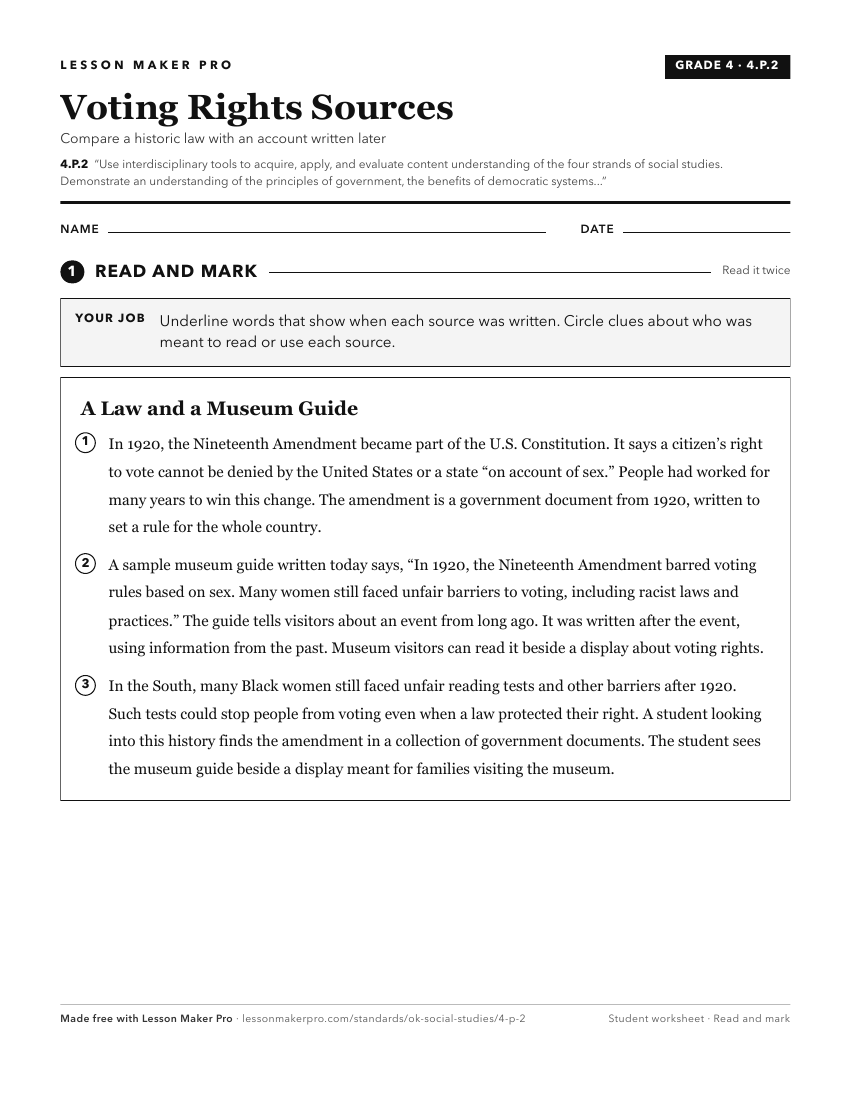
A ready-to-print activity worksheet aligned to 4.P.2, with an answer key for the teacher on its own page. No account needed.
PDF, US Letter, prints cleanly in black and white.
Download the worksheetKeep exploring
Related Standards
Turn this cluster into a lesson
Grade, subject, topic, and the complete cluster are prefilled. Create one free, no account needed.
Also for this cluster:Make a WorksheetMake a QuizMake a Sub Lesson