Oklahoma Social Studies 4.P.2.2
Standard Cluster
- 4.P.2
- Use interdisciplinary tools to acquire, apply, and evaluate content understanding of the four strands of social studies.
Develop skills which demonstrate an understanding of historical events and the people who shaped our history. Compare and analyze primary and secondary sources from the past and present, including the intended audience and author’s purpose. Compare perspectives of individuals and groups from different regions and experiences, including the past and present. Explain multiple causes and effects of events and developments of the past or present; create timelines to identify multiple causes and effects from given information.
Oklahoma Academic Standards for Social Studies (2026) · 4.P.2
Cluster contents
Standards in This Cluster
4.P.2.2 is a cluster heading. These are the individual standards under it.
- 4.P.2.2.A
Compare and analyze primary and secondary sources from the past and present, including the intended audience and author’s purpose.
- 4.P.2.2.B
Compare perspectives of individuals and groups from different regions and experiences, including the past and present.
- 4.P.2.2.C
Explain multiple causes and effects of events and developments of the past or present; create timelines to identify multiple causes and effects from given infor...
Teacher's field guide
What This Cluster Means
What Students Need to Do
- Students compare firsthand records with later accounts of a historical event. They identify who made each source, its audience, and its purpose. They compare views across places and times, then use a timeline to show several causes and effects.
What Mastery Looks Like
- A student uses an Oklahoma farmer’s account and a California resident’s account to explain two views of Dust Bowl migration. They identify each source’s author, audience, and purpose. Their timeline shows how grassland plowing and drought led to crop loss and migration.
Common Misconceptions
- Students may call an old textbook a primary source because it describes the past. They may think a photograph tells the whole story or that people in different places had the same experience. They may list events in order without explaining how one led to another.
How to Assess It
- For an exit ticket, show a 1930s farmer’s letter excerpt and a later museum paragraph about the Dust Bowl. Ask students to name each source type, audience, and purpose, then place plowing, drought, crop loss, and migration on a timeline and draw cause arrows.
Lesson moves
Ways to Teach It
Tape four dated event cards onto a paper timeline: grassland plowing, drought, crop loss, and migration. Draw arrows between linked events.
Read a 1930s Oklahoma migrant’s account and a California resident’s account. Write two sentences explaining why their views differ.
Race to sort six Dust Bowl source cards, including letters, newspaper photos, and museum summaries. Label each source’s maker, audience, and purpose.
Check today’s local weather forecast, then compare its audience and purpose with a 1930s Dust Bowl newspaper report.
Free download
Printable 4.P.2.2 Worksheet
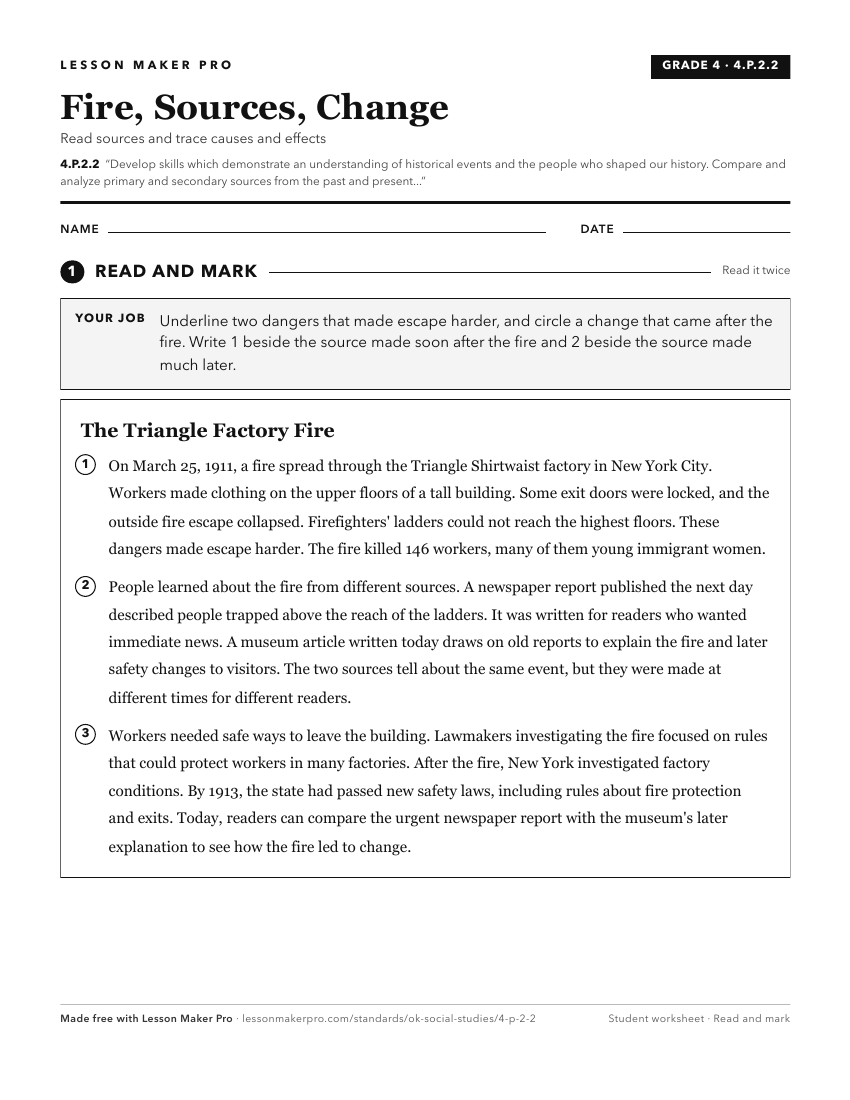
A ready-to-print activity worksheet aligned to 4.P.2.2, with an answer key for the teacher on its own page. No account needed.
PDF, US Letter, prints cleanly in black and white.
Download the worksheetKeep exploring
Related Standards
Turn this cluster into a lesson
Grade, subject, topic, and the complete cluster are prefilled. Create one free, no account needed.
Also for this cluster:Make a WorksheetMake a QuizMake a Sub Lesson